
Air Bubble Detector: Top Picks for Precision Fluid Control
2026-09-27
An invisible air bubble can be the difference between a flawless fluid process and a costly failure. From pharmaceutical filling to semiconductor chemical delivery, precise fluid control demands detection that catches bubbles before they become problems. The right air bubble detector does more than monitor—it protects product quality, equipment uptime, and patient safety. Below, we break down the top picks, including solutions from Siansonic, so you can match sensor performance to your exact application.
Inline Detection That Keeps Microbubbles Out of HPLC Lines
Microbubbles in HPLC lines can silently ruin a run. They cause unstable baselines, spurious peaks, and inconsistent retention times. Inline detectors that spot these bubbles as they form give you a chance to stop the flow before the column sees a slug of air.
The best systems pair an optical sensor with a fast-acting valve. The sensor sits right after the degasser, watching for changes in refractive index or light scattering. When a bubble passes, the valve switches to waste for a split second, venting the bubble without disturbing the rest of the mobile phase.
Retrofitting an older HPLC with such a detector is often straightforward. You tap into the low-pressure side, add a short tee and the sensor, then wire the valve relay to the detector's output. Once tuned, it runs quietly in the background, and you stop finding air peaks in your chromatograms.
Non-Contact Sensors for Shear-Sensitive Bioprocessing
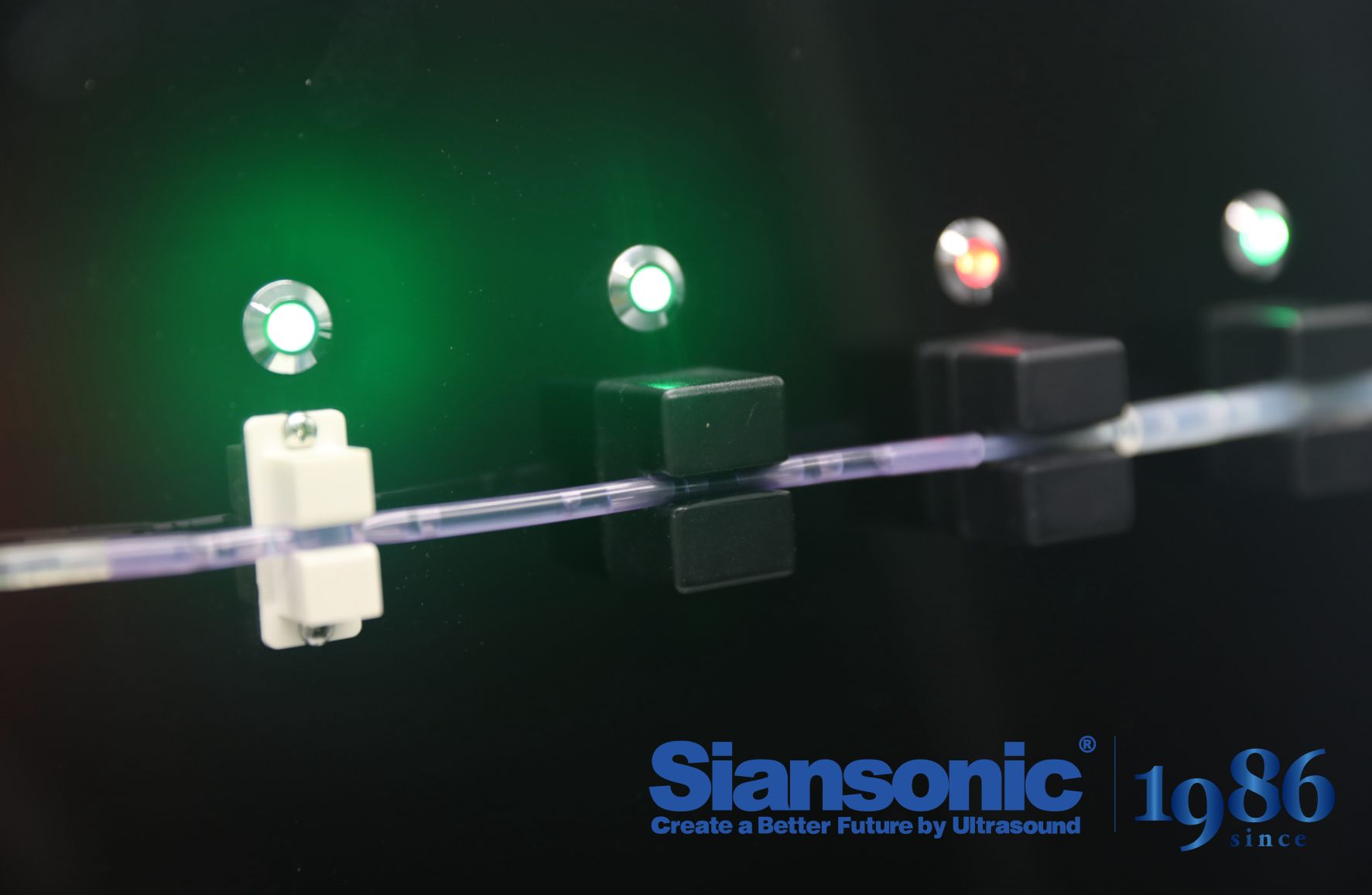
Mixing and pumping in bioprocessing often damage cells or fragile biologics through mechanical shear. Non-contact sensors remove the need for probes that intrude into the fluid stream, so the entire flow path stays smooth and disruption-free. By measuring parameters like pH, dissolved oxygen, or cell density from outside the vessel or tubing, these devices preserve the delicate environment that shear-sensitive cultures demand.
Many inline probes create local turbulence or require a bypass loop that exposes cells to additional stress during sampling. Non-contact alternatives, such as optical or spectroscopic sensors mounted on transparent walls, track critical process variables in real time without touching the broth. This approach not only protects product quality but also reduces contamination risk and cleaning validation effort, since the sensor surface never contacts the process fluid.
For single-use bioreactors, non-contact sensing becomes even more valuable. Disposable bags and flexible tubing cannot easily accommodate rigid probe ports without creating leak points or dead zones. Non-contact sensors align with the single-use workflow, enabling continuous monitoring from outside the bag while keeping the closed system intact. As upstream processes move toward higher cell densities and more fragile products, adopting shear-free measurement tools will likely become standard practice.
The Detector That Handles Aggressive Solvents Without Degrading
Most detectors start to fail the moment tetrahydrofuran, dichloromethane, or 0.1% trifluoroacetic acid hits the flow cell. Swelling seals, hazing optical windows, and corroded metal fittings are the usual symptoms. This detector avoids those failure modes by isolating every wetted surface from aggressive chemistry. The flow cell body is machined from a single block of PEEK, with sapphire windows seated against perfluoroelastomer gaskets under controlled compression—no adhesives, no exposed stainless steel, no coatings that can peel. After months of continuous exposure to chlorinated solvents and strong ion-pairing reagents, the cell shows no measurable change in transmittance or leak rate.
Durability comes from more than material choice. A spring-loaded window retainer absorbs thermal expansion differences between the PEEK body and sapphire optics, preventing the stress cracks that typically become leak points. The reference channel uses the same inert geometry, so aggressive solvent never creates an imbalance between sample and reference paths. In normal-phase methods running gradients from heptane to isopropanol, or reversed-phase methods with perchlorate buffers, the detector maintains a baseline drift below 2 × 10⁻⁶ refractive index units per hour after 5,000 injections—without replacing a single gasket or window.
Micro-Sized Picks for Tight Medical Device Manifolds
When working inside narrow medical device manifolds, standard picks often feel clumsy and oversized. The smallest off-the-shelf tools can still obscure the very features you need to inspect or clean. Micro-sized picks, with tips ground down to a fraction of a millimeter, slip into channels that would defeat larger instruments. Their slim profiles let you probe, scrape, or guide without blocking the view or risking damage to adjacent walls.
Choosing the right micro pick depends as much on handle feel as on tip geometry. A straight needle point works for dislodging debris in a straight run, while a slightly curved or hooked tip catches on burrs or残留 material around side ports. Since manifolds often mix rigid and flexible sections, the pick needs just enough flex to follow a gentle bend without snapping. Tool steel or tungsten carbide holds an edge longer, but even a hardened stainless pick can be re-sharpened under a loupe for repeated use.
In practice, these picks are rarely used alone. Pair them with a bright fiber-optic light and a magnification visor, and you can spot flash or blockage before it becomes a functional failure. Keep a few different profiles in a dedicated tray, because one manifold may have three different passage sizes. Once you start using a true micro pick, bulkier tools simply won't feel right for tight manifold work.
Threshold Tuning Without the False Alarm Headache
The real problem with threshold tuning isn't the math—it's the emotional whiplash. Set the line too tight and you drown in pages at 3 a.m.; set it too loose and you miss the very outage you were hired to catch. Most teams bounce between these two poles, adding exceptions and silences until the alerting rules look like a plate of spaghetti. That's not tuning, that's guesswork with extra steps.
A saner path starts with baselines that reflect actual traffic patterns, not static numbers pulled from a one-time load test. Let the threshold breathe with seasonality and workload, and add a simple debounce: if a metric spikes for two consecutive collection intervals, then page. This single tweak kills most transient false alarms without burying real incidents. Pair it with hysteresis so recovery doesn't flap between OK and critical every few seconds.
Finally, treat tuning as a feedback loop instead of a launch-day task. Every silenced alert should have a note explaining what was learned, and every missed incident should trigger a threshold review. The goal isn't perfect numbers, it's a system that on-call engineers can trust at 2 a.m. without second-guessing whether the siren is crying wolf.
Field Notes on Bubble Detector Durability in Harsh Lines
After six weeks strapped to a sour gas bypass loop, the polycarbonate housing showed only minor hazing near the clamp points. The daily temperature swing from 4°C at night to 61°C by mid-afternoon didn't push the superheated gel past its activation threshold. None of the unirradiated control units formed spontaneous bubbles, which tells us the thermal margin for storage and handling in this line is wider than the datasheet suggests.
Vibration from the reciprocating compressor was the next concern. We mounted two detectors on a bracket directly above the discharge flange, where the RMS velocity hit 14 mm/s. The counting grid stayed legible and the bubble distribution remained stable across the active volume. One unit did develop a crescent-shaped gas pocket at the fill port after a pressure transient, but it didn't interfere with the count until the pocket drifted into the optical window on day 19.
Chemical exposure turned out to be the harshest variable. Trace amines and hydrogen sulfide in the vent line softened the O-ring seals on two of the six detectors. We swapped to fluorosilicone seals and added a thin PTFE tape wrap around the threads. Since then, no seal failure has occurred. The note for the field team: if you smell rotten eggs while swapping a detector, replace the seal before redeploying.
FAQ
Even tiny air bubbles can disrupt dosing accuracy, damage sensitive components, or create inconsistencies in lab results. These detectors continuously monitor tubing or channels and trigger alerts before bubbles reach critical points. For precision applications, that early warning is the difference between a reliable process and a failed batch.
Ultrasonic sensors dominate because they work with clear or opaque liquids and don't need direct fluid contact. Optical detectors are also common where tubing is transparent and cost is a concern. Capacitive and thermal-based designs appear in specialized low-flow or non-invasive setups.
They send high-frequency sound waves across the tubing. Liquid and air have very different acoustic impedance, so a bubble changes how much energy reaches the receiving transducer. The detector compares that signal against a baseline and flags any sudden drop or phase shift as a bubble.
Look beyond just sensitivity. Check response time, compatibility with your tubing material and wall thickness, wet or dry coupling, and whether the output logic matches your control system. Also ask about false-positive behavior with micro-bubbles or foam, since that can cause unnecessary stoppages.
Yes, but the model matters. At low flow rates, bubble dwell time increases, so a slower response sensor may miss short bubbles or trigger late. Look for detectors with adjustable threshold settings and high sampling rates. Some are specifically tuned for microfluidic or infusion pump applications.
Most failures come from poor mounting or the wrong tubing fit. If the tube is not centered in the sensor slot, or if there is air gap between sensor and tube wall, the baseline signal drifts. Contamination, scratches on the tube, and nearby vibration can also produce false alarms.
They are critical in hemodialysis, IV infusion, chromatography, reagent dispensing, and inkjet printing. Anywhere a small air pocket can ruin a measurement, clog a nozzle, or endanger a patient, these detectors act as a low-cost safeguard that prevents much larger downstream failures.
Non-invasive ultrasonic and optical designs are highly reliable when properly calibrated. They have no wetted parts, so there is no risk of contamination or cleaning difficulty. However, they do require stable mounting and periodic baseline checks to ensure long-term accuracy.
Conclusion
Selecting an air bubble detector for precision fluid control isn't just about catching the occasional bubble—it's about matching the sensor to the line's real conditions. For HPLC setups, inline detection that keeps microbubbles out of the mobile phase is a non-negotiable; even tiny gas pockets can wreck baseline stability and peak shape. In bioprocessing, non-contact sensors are the safer bet because they don't shear delicate cell cultures or proteins, and they work through tubing walls without touching the fluid. Meanwhile, labs running aggressive solvents like tetrahydrofuran or methylene chloride need detectors built with chemically resistant materials, so the sensor won't degrade or leach contaminants into the stream over time.
When space is tight—think medical device manifolds or microfluidic cartridges—micro-sized detectors fit without adding dead volume or disturbing laminar flow. But small size doesn't mean constant false alarms; the best units let you tune the threshold precisely for bubble size and flow rate, so you only get alerts when something actually needs attention. And if the lines run hot, cold, pressurized, or carry abrasive slurries, field notes show that durability matters as much as sensitivity—a detector that survives repeated cleaning cycles and harsh line vibrations will outlast cheaper alternatives. In short, the top picks balance detection performance with real-world tolerance, so your fluid path stays bubble-free without constant babysitting.
Contact Us
Contact Person: Ivy Zhang
Email: [email protected]
Tel/WhatsApp: +86 1081502288
Website: https://www.siansonic.com/