
Aromatic Acetoxy Intermediate Company: Key Traits of Reliable Suppliers
2026-08-14
Sourcing aromatic acetoxy intermediates isn't just about checking a spec sheet—it's about knowing whether your supplier can hold up under pressure when a production run goes sideways. The wrong partner here creates ripple effects: off-spec batches, delayed shipments, and costly rework. That's why knowing what to look for matters before you lock in a contract. At DSL Chemicals, these traits aren't aspirational; they're baseline expectations. But what exactly separates a truly reliable aromatic acetoxy intermediate company from one that just talks a good game? Let's break down the traits that actually matter.
Purity Profiles You Can Replicate in Your Own Lab
Most purity profiles fall apart because they chase textbook ideals instead of what your instruments actually see. Start by mapping the baseline noise on your HPLC before you even inject a sample. That noise floor is the real limit of detection, and it changes with column age, mobile phase batches, and even lab humidity. If you note those conditions every run, you can spot when a 'pure' peak is actually hiding a shoulder from a co-eluting impurity.
Replication isn't about copying someone else's chromatogram. It's about fixing the variables that make your results drift. We've found that sonication time during sample prep shifts impurity profiles more than most people admit—too short and you under-report, too long and you generate degradation products. Write down the exact wattage, bath temperature, and vial position. Then run a system suitability standard before and after your samples. That bracketing approach gives you confidence the profile you see at hour one is the same profile at hour six.
For solid-state purity, don't rely on a single technique. Pair DSC with hot-stage microscopy and you'll catch polymorphic impurities that HPLC misses entirely. The key is to keep your own reference library of common polymorphs and degradants, built from batches you've intentionally stressed. Once you have that, a new sample's purity profile becomes a comparison against your own historical data—not someone else's published trace.
Custom Acetoxylation Routes Without the Runaround
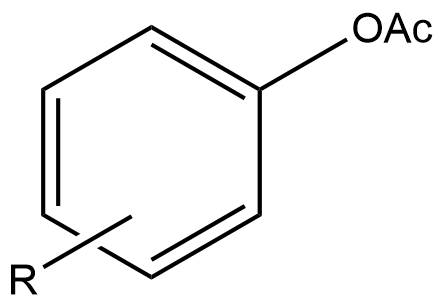
Scaling up a custom acetoxylation can feel like navigating a maze blindfolded—every literature route assumes you have the exact substrate, catalyst, or solvent system already dialed in. Rather than chasing published protocols that fall apart under real-world constraints, start by mapping your substrate's electronic profile and steric bottlenecks. Acetoxylation often hinges on the subtle balance between electrophilic palladium species and acetate nucleophilicity, so tweaking ligand bite angle or switching from Pd(OAc)₂ to a cationic palladium source can unlock reactivity that generic conditions miss. Don't default to acetic acid as solvent; mixed systems like DCE/AcOH or trifluoroethanol with controlled water content frequently outperform, especially for hindered alkenes or electron-poor arenes.
A practical alternative is to decouple oxidation from acetoxy transfer. Instead of the classic Pd(II)/Pd(0) cycle with stoichiometric oxidants, consider hypervalent iodine reagents like PhI(OAc)₂ as both oxidant and acetate donor—this sidesteps catalyst deactivation and lets you run at lower temperatures. For substrates prone to over-oxidation, switch to a copper-mediated system where Cu(OAc)₂ acts as the terminal oxidant and acetate source, using air or oxygen as the final electron sink. Monitoring reaction progress by rapid LC-MS at 5–10 minute intervals will reveal whether the bottleneck is C–H activation or reductive elimination; adjusting the acetate loading or adding a weak carboxylate base often clears the latter.
If you're still hitting a wall, reframe the problem as a selective acetylation rather than a direct acetoxylation. Transesterification of an activated acetyl donor—like isopropenyl acetate or vinyl acetate—under enzymatic or mild acid catalysis can install the same group without metal-mediated C–O bond formation. This route shines on complex molecules with multiple oxidizable positions, enabling late-stage functionalization without protecting-group roulette. Whichever path you take, document failed conditions just as carefully as successes; acetoxylation is notorious for substrate-specific surprises, and a personal knowledge base quickly becomes more valuable than any review article.
Documentation That Clears Audits on the First Pass
Most audit documentation invites a tedious back-and-forth, where vague wording and missing linkages force reviewers to ask for clarifications that could have been answered upfront. The approach here is different: every page is written with the auditor’s mental checklist in mind. Controls are mapped directly to evidence, dates are never left floating without context, and narrative sections avoid the kind of hedging language that triggers follow-up requests. The result is a review package that feels less like a puzzle and more like a resolved case file.
What makes this documentation stand out is its internal consistency. Instead of relying on a generic template, each section is built around the actual workflow it describes. Cross-references are explicit, so an auditor reading about a risk assessment can flip to the exact control test that addresses it without guessing. Evidence is organized by relevance rather than by historical accident, and every attachment carries a clear annotation explaining why it matters. This level of precision removes the friction that typically turns a first-pass review into a three-week email chain.
The practical payoff is straightforward: audits close faster, with fewer outstanding requests and no last-minute scrambles to reconstruct decisions made months earlier. Teams that adopt this style report a noticeable drop in review fatigue — both on their side and on the auditor’s side. Because the documentation anticipates objections before they arise, the entire process shifts from defensive explanation to quiet confirmation. That is the real meaning of clearing on the first pass.
Safety Stock That Absorbs Your Production Swings
Keeping extra inventory on hand isn't about hoarding—it's about giving your production line room to breathe. When a key supplier runs late or a machine goes down for a day, that buffer keeps orders moving instead of forcing you to call customers with bad news.
The trick is sizing the buffer to your actual swings, not some industry average. Look at your last six months of demand and lead times: where did the biggest gaps show up? That’s where safety stock earns its keep. For high-variability items, a little extra can prevent a lot of expensive downtime.
Adjust it as conditions change. A static number from last year won't match this quarter's supplier delays or the new product ramp-up. Review the buffer every month, compare it to real shortages, and tighten or loosen it. That way the stock absorbs the swings instead of just sitting there.
A Chemist on the Phone, Not a Script Reader
When you call with a question about a reagent, a synthesis route, or an unexpected precipitate, the voice on the other end belongs to someone who has spent years in a lab. This isn't a customer service rep reading from a decision tree. It's a chemist who can hear the frustration in your description of a failed recrystallization and immediately ask about solvent polarity, cooling rates, or whether your glassware was truly dry.
That difference shows up in the follow-up questions. Instead of generic troubleshooting steps, you get a conversation about pKa shifts, steric hindrance, or the quirks of a particular catalyst. The person on the phone can suggest an alternative workup because they have actually run that reaction before—or at least know from experience why it goes sideways.
The goal isn't to close a ticket; it's to solve a chemistry problem. You won't hear a scripted apology followed by an unhelpful FAQ link. You'll get a real-time exchange about what went wrong, what to try next, and why it makes chemical sense. That's the whole point of putting a chemist on the phone in the first place.
From Aromatic Precursor to Acetoxy Intermediate: Full Traceability
The route from an aromatic precursor to an acetoxy intermediate rarely proceeds along a single, predictable line. Instead, it follows a branching path where minor changes in temperature, solvent polarity, or catalyst loading can redirect the outcome entirely. Traceability in this context means mapping every step with enough resolution to identify not only the final acetoxy product, but also the transient quinoid, epoxide, or radical species that briefly appear. Without that level of detail, a yield improvement or a sudden impurity can remain unexplained for weeks.
One practical approach is to track the aromatic ring's substitution pattern through each intermediate using a combination of in-situ infrared monitoring and periodic sampling for high-resolution mass spectrometry. The acetoxy group's appearance is not always the first signal of progress; sometimes the loss of a specific aromatic C–H vibration or the emergence of a weak O–O stretch precedes the ester formation by several minutes. Recording these early markers gives chemists the ability to adjust the process before the reactive intermediate collapses into side products.
Full traceability also depends on linking synthetic observations back to the original aromatic feedstock. Impurities carried from the precursor—such as residual bromine from a halogenation step or traces of a coupling catalyst—can act as hidden promoters or inhibitors at the acetoxylation stage. By keeping a small archive of each precursor lot and correlating its profile with downstream intermediate behavior, a lab can turn an apparently random batch variation into a repeatable control point, making the aromatic-to-acetoxy sequence far more robust than a single optimized recipe would suggest.
FAQ
These are aromatic compounds carrying an acetoxy group, often used as protected phenols or acylating agents. You'll see them in pharmaceutical synthesis, agrochemical production, and fine chemical manufacturing where selective acetylation matters.
You can't really overstate it. Even a small drift in purity, moisture, or residual solvent can compromise a downstream step or affect crystallization. A supplier worth keeping will have tight internal specs and will flag any deviation before shipping, not after you discover it in your reactor.
At minimum, a certificate of analysis for each batch, safety data sheets, residual solvent data, and proof of compliance with relevant regulations like REACH. If they stall on providing method of synthesis or impurity profiles, that's a warning sign.
Ask about their in-process testing, analytical instrumentation, and how they track impurities over time. A serious supplier can discuss specific parameters—say, maintaining acetoxy content above a certain level or limiting a troublesome isomer—without vague promises.
Acetoxy groups can be sensitive to moisture and temperature, leading to hydrolysis or degradation. Suppliers who use appropriate inert packaging, desiccants, and cold-chain options when needed show they understand the chemistry beyond the sale.
A reliable supplier acts as an extension of your process team. They should help troubleshoot unexpected results, advise on handling precautions, and offer scale-up data instead of disappearing after the invoice is paid.
Yes. Watch for inconsistent communication, reluctance to share batch records, sudden changes in lead times without explanation, or a pattern of 'it should be fine' when you raise specific technical concerns. Dependable suppliers tend to be straightforward about both capabilities and limitations.
Conclusion
When sourcing aromatic acetoxy intermediates, the difference between a vendor and a true partner becomes apparent in daily lab work. A reliable supplier provides purity profiles detailed enough to replicate in your own analytical setup, not a single vague COA number. Their custom acetoxylation routes are worked out without endless back-and-forth: you send a target scaffold, they return feasible conditions, impurities, and scale-up notes. Documentation arrives audit-ready, structured so QA and regulatory teams don't spend weeks chasing missing raw data or conflicting batch records. And because production schedules shift, they hold safety stock calibrated to your typical swings, not a warehouse of generic material that doesn't match your process.
Beyond logistics, what separates the best suppliers is direct access to bench chemists who have run the chemistry themselves. You don't get a script reader parroting a datasheet; you get someone who can discuss solvent choices, workup quirks, and alternative protecting groups. Traceability extends from the aromatic precursor lot through each synthetic step to the final acetoxy intermediate, with clear links to equipment, reagents, and operators. That full chain of custody isn't just paperwork—it's the foundation for troubleshooting, regulatory defense, and continuous improvement in your own production. Choose a supplier that treats these six traits as baseline expectations, and you'll spend less time firefighting and more time moving your pipeline forward.
Contact Us
Contact Person: Wei Zhang
Email: [email protected]
Tel/WhatsApp: 862163529955
Website: https://www.dslchem.com