
Best Dry Type Transformers: A Practical Guide to Selection and Performance
2026-11-16
Most "best dry type transformer" discussions never get past kVA and price. This practical guide takes a different route, focusing on the selection and performance details that determine whether a unit stays cool, quiet, and reliable under real loads. From insulation ratings to harmonic heating, the following sections lay out what to check before you commit. Deepwill supports that same practical mindset, offering expertise for engineers who prefer long-term performance over marketing shortlists.
When a Standard kVA Rating Is Not Enough
Most kVA charts assume a tidy set of operating conditions: steady load, predictable duty cycle, and enough margin to absorb a startup surge. Reality tends to disagree. When a facility adds variable-speed drives, high-intensity lighting, or equipment that starts under heavy mechanical load, the standard rating on paper can quietly become a bottleneck. The transformer does not fail immediately; it runs hotter, ages insulation faster, and leaves less room for load growth that has not been planned yet.
The real question is not whether a transformer can handle its nameplate load, but what happens during the first few cycles after a motor starts or a welder strikes. Inrush current can reach several times the steady-state draw, and if the selected kVA rating has no headroom for that spike, voltage sags ripple through the panel. Sensitive controls reboot, contactors chatter, and downstream equipment wears out faster than anyone expects.
Rather than treating kVA as a single number to match, it helps to treat it as a boundary that must absorb the worst hour of operation, not the average one. That often means selecting the next frame size up, confirming short-time overload capacity, or splitting a large single transformer into two smaller units placed closer to the loads. The goal is not more copper for its own sake; it is making the standard rating irrelevant to the way the site actually runs.
Temperature Rise Ratings Often Get Misread
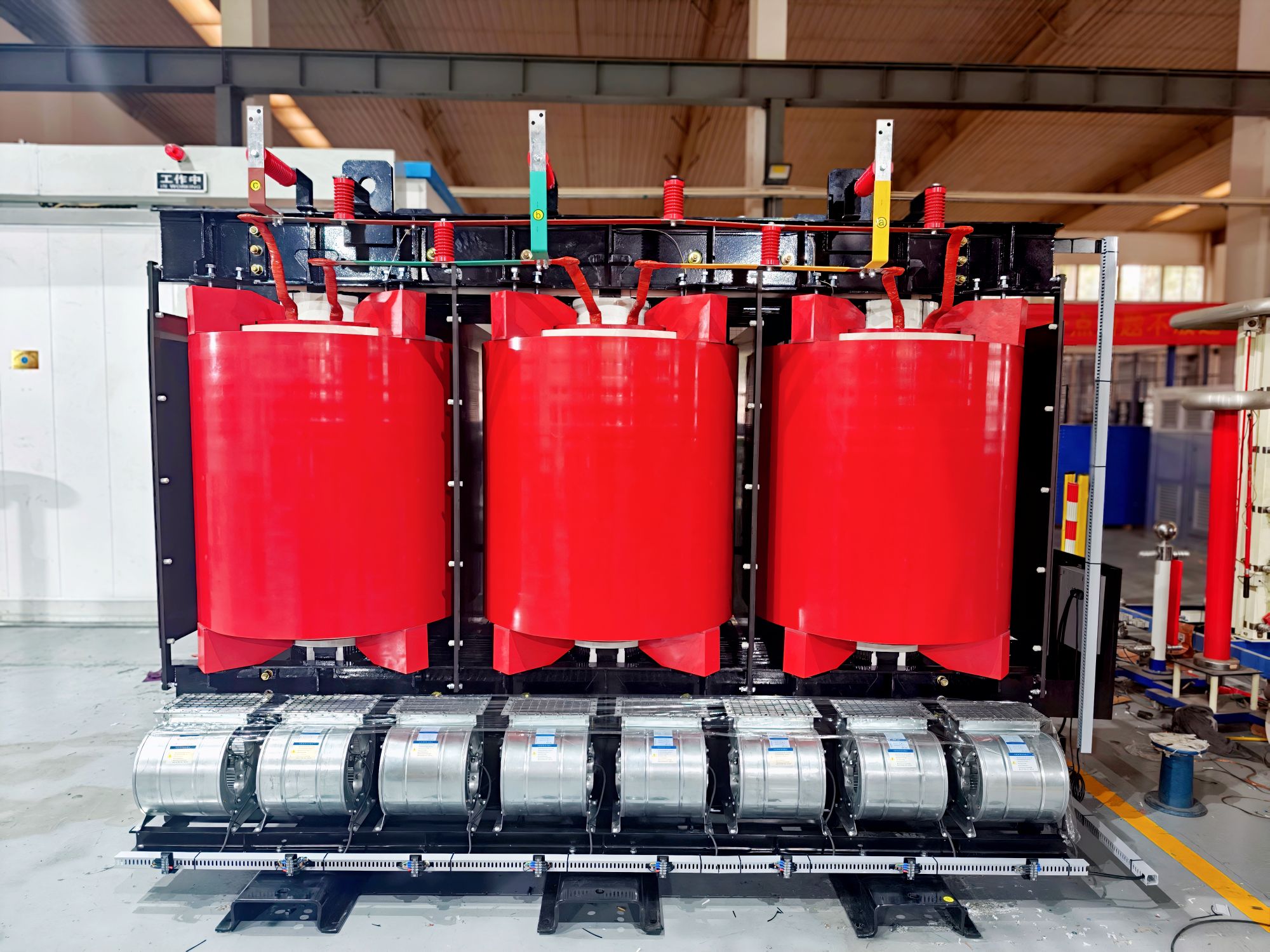
A temperature rise rating is often mistaken for a simple ceiling on ambient temperature. It's actually the expected increase above whatever the surrounding air happens to be, and that distinction changes how the number should be applied in a cramped enclosure or on a hot factory floor.
The rating also depends on a very specific set of operating assumptions. Things like insulation class, airflow, duty cycle, and mounting position are baked into the test. Once those conditions shift, the printed figure can understate how warm the equipment will really get.
The most common reading error is treating the number as a fixed safety margin. If nearby equipment raises the local air temperature or a filter starts to clog, the allowed rise doesn't stay generous—it gets eaten away quietly. Checking the rating without considering those surroundings gives a false confidence that nothing is running too hot.
Insulation Class Alone Does Not Guarantee Performance
A motor's insulation class is often treated like a badge of reliability, but that number only tells part of the story. It refers to the thermal endurance of the winding materials under controlled laboratory conditions, not the real-world stresses a machine will face. Voltage spikes from variable frequency drives, moisture ingress, chemical exposure, and mechanical vibration can all degrade insulation far faster than a simple temperature rating would suggest. Relying on the class letter alone can create a false sense of security.
Field conditions rarely match the clean curves found in test reports. For example, a Class F system may handle 155°C hot spots in theory, yet if the enclosure traps heat unevenly or the cooling airflow is restricted, local temperatures can spike well beyond that limit. Meanwhile, partial discharge activity in inverter-fed motors can erode even premium insulation quickly, regardless of its thermal classification. The real question is how the entire system behaves under your specific load, speed, and environmental profile.
Practical selection means looking past the nameplate and evaluating the full application picture. Consider starting frequency, duty cycle, ambient temperature swings, and the presence of contaminants. Ask whether the motor was designed with inverter-duty materials, how the winding was impregnated, and what kind of surge protection is included. Insulation class is a useful starting reference, but it cannot replace a thorough engineering review of the conditions your motor will actually endure.
Nonlinear Loads Bring Heat You Did Not Plan For
Most facility teams size their cooling around the obvious heat from motors, lighting, and power-hungry equipment. What gets missed is the extra thermal load from nonlinear loads like variable frequency drives, UPS systems, LED drivers, and rectifiers. These devices draw current in short, sharp pulses rather than a smooth sine wave. That pulsed current creates harmonic distortion, which in turn generates additional heat in transformers, neutral conductors, and panelboards — heat that never shows up on a standard load calculation. The result is a cooling budget that looks fine on paper but falls short in the real world.
The practical effect often appears in unexpected places. A transformer running hot despite being loaded below its nameplate rating. Neutral conductors carrying more current than the phase conductors. Breakers tripping for no apparent reason. None of these are mysterious failures; they are the signature of harmonic heating. And because the extra heat is spread across multiple components rather than concentrated in one obvious spot, it rarely triggers a straightforward alarm. Technicians end up chasing intermittent issues while the electrical room slowly cooks itself.
Addressing this requires looking beyond the nameplate watts. Power quality measurements, harmonic spectrum checks, and thermal scans of distribution gear reveal what a simple load summary cannot. When nonlinear loads are a meaningful share of the total demand, derating transformers and increasing ventilation or dedicated cooling become part of the design conversation. It is not about buying more cooling than you need — it is about planning for the heat that was always going to be there, just hiding in the current waveform.
Clearances and Airflow Matter More Than Enclosure Looks
Most people pick an enclosure based on how it looks on a shelf, but that often leads to thermal throttling and shorter hardware life. A case with tight motherboard tray clearance, barely any gap behind the PSU shroud, or a front panel that blocks nearly all intake air will quietly undermine even a mid-range build. You need enough room behind the motherboard tray for cable bulk, at least a finger-width of space between the GPU end and the nearest obstruction, and a front intake area that is more mesh than metal or glass. These practical measurements affect daily noise and performance far more than tempered glass or RGB accents ever will.
Airflow is not about adding more fans; it is about giving the air a clean path from intake to exhaust. A cramped case with three intake fans can still choke if the front vents are decorative slits or if a solid top panel traps heat above the CPU cooler. Look for cases where the motherboard standoffs are slightly offset from the top edge, leaving room for thick radiators or at least a rear exhaust fan that does not collide with VRM heatsinks. Also check the distance between the side panel and a tower air cooler—many 155mm coolers simply do not fit in narrow mid-towers, and forcing the panel closed bends the motherboard or leaves a permanent bulge.
In practice, a well-ventilated budget case with generous cable cutouts and a perforated front will keep components cooler and quieter than a premium-looking glass box with poor clearance. Before buying, measure your GPU length, CPU cooler height, and PSU depth against the manufacturer’s clearance charts, then subtract at least 10mm for real-world cable routing. If the numbers do not leave comfortable breathing room, skip the enclosure no matter how good it looks in product photos. Long-term stability always beats short-term aesthetics.
The Real Cost of Ownership Is Not on the Nameplate
The figure printed on the window sticker rarely matches what a vehicle actually costs to run. Depreciation alone can erase thousands of dollars in value before the first tire rotation, and it often hits harder than fuel, insurance, or parking. Two cars with nearly identical window stickers can drift apart by a wide margin once resale values and repair histories enter the picture.
Running costs have a way of compounding quietly. Insurance premiums shift with the model's claim record, tires wear at different rates, and some engines are simply thirstier or more expensive to service than their specifications suggest. Even registration fees and local incentives can tilt the monthly budget enough to make a supposedly budget-friendly choice feel like a burden.
The better comparison starts with a five-to-seven-year estimate that includes depreciation, insurance, energy, maintenance, and typical finance charges. When those numbers are placed side by side, the cheaper car on the lot frequently ends up as the more costly one at the curb.
FAQ
In most cases yes, mainly because there is no liquid to leak or catch fire. That removes the need for containment pits, fire barriers, or special drainage, which often makes the overall installation simpler and cheaper even when the unit itself costs more. The trade-off is that dry type units tend to run warmer and need more space around them for ventilation.
Cast resin construction gives the windings a solid epoxy coating, so it handles moisture, dust, and chemical vapors much better. It is the stronger choice for harsh or outdoor-like conditions. VPI designs are more economical and perfectly adequate for clean, climate-controlled indoor spaces, but they do not tolerate contamination or high humidity as well.
Enough to avoid running the transformer above about 80 to 85 percent of its rating for long periods, but not so much that it spends most of its life lightly loaded. A lightly loaded dry type unit wastes energy in core losses and may be louder than expected relative to the actual load. The real question is whether the extra capacity can ever be used without forcing you into larger switchgear or feeders.
It tells you the insulation system's heat tolerance, not how hot the outside of the enclosure should feel. A 220 class unit can safely run with a higher internal hotspot than a 155 class unit, but that does not mean you should plan to run it there continuously. Higher temperature class often adds a margin for overloads and can reduce the ventilation burden, but it also affects cost.
Partially. Core noise is created by magnetostriction and cannot be completely removed, but there are practical steps: mount the unit on vibration isolators, keep it away from hard wall corners that reflect sound, and avoid rigid conduit connections that transmit vibration into the building. Specifying a lower flux density core from the start usually has the biggest effect.
The worst enemies are sustained high ambient temperature, recirculated hot air, conductive dust, moisture, and frequent thermal cycling. A unit installed in a small room with no ventilation can fail years earlier than the same unit in a clean, cool switchgear room. Filters, enclosure heaters, and proper airflow clearances usually matter more than the nameplate rating.
The most useful tasks are regular infrared scans under load, checking for blocked ventilation openings or dust accumulation, and re-torquing electrical connections. Cracks, discoloration, or a sharp smell during inspection often indicate a problem before a fault occurs. Also test fan controls and temperature sensors periodically; a failed cooling fan can quietly reduce capacity.
When the surrounding air contains dust, lint, splashing water, or conductive particles, or when the transformer is accessible to untrained people. In those situations a NEMA 12, 4, or 4X enclosure may be justified. Keep in mind that a sealed enclosure traps heat, so you will often need to derate the transformer or add forced ventilation unless the design already accounts for it.
Conclusion
Choosing a dry type transformer on kVA alone remains one of the most persistent mistakes in equipment selection. When a standard rating falls short, buyers often push a unit beyond its intended thermal envelope without realizing that temperature rise figures are frequently misread. The stated rise can reflect a narrow set of reference conditions, not the mixed harmonic load that a modern facility actually imposes. Insulation class adds another layer of confusion: a higher class may suggest better endurance, but unless the winding hot-spot temperature and airflow around the enclosure are properly managed, the insulation rating itself does not prevent premature aging. Clearances and ventilation paths usually affect real-world performance more than the cabinet's visual appeal, especially when harmonics from drives or LED lighting add heat that was never part of the original design assumptions.
The practical choice therefore goes beyond nameplate data. Low first cost can hide a lifetime of extra losses, reduced efficiency, and unexpected maintenance, while a slightly larger or better-ventilated unit may run cooler and hold voltage more steadily under nonlinear loads. In many installations, the true cost of ownership is shaped by operating temperature, harmonic tolerance, and the quality of airflow around the unit rather than the printed kVA or insulation class. Buyers who treat temperature rise as a design target rather than a marketing number, and who verify clearances, loading patterns, and actual losses, tend to end up with transformers that perform well long after installation.
Contact Us
Contact Person: Julion
Email: [email protected]
Tel/WhatsApp: 8617351370631
Website: https://www.deyunelectric.com