
Best Fire-Resistant Silicone Sealant for High-Temperature Sealing Projects
2026-11-16
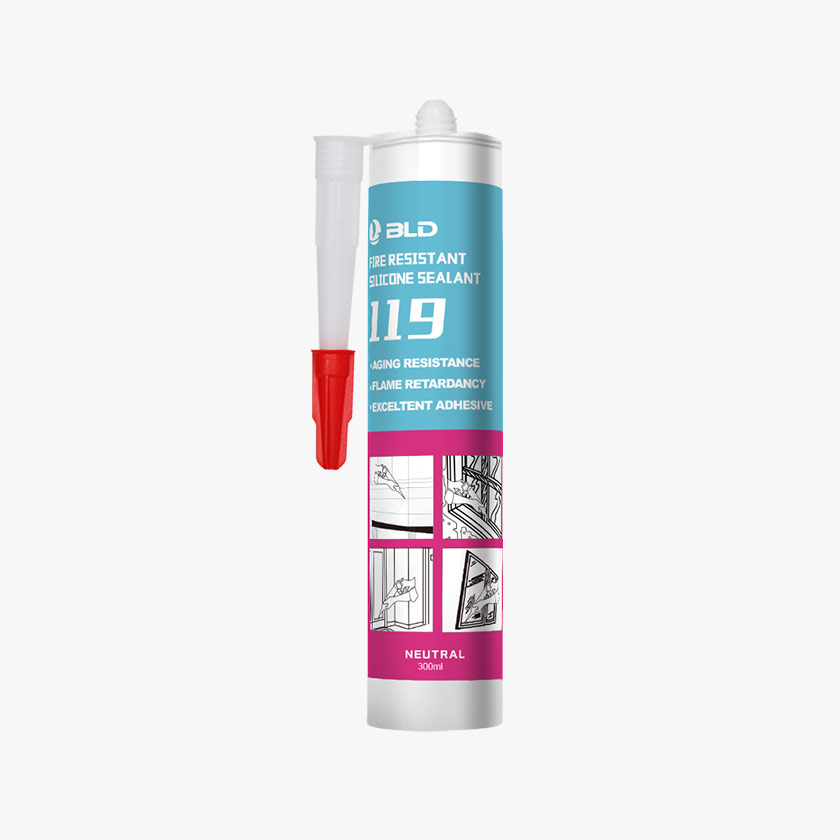
When high-temperature sealing projects fail, the culprit is rarely the equipment—it's the sealant. Standard silicone breaks down, loses adhesion, or emits fumes long before the job is done. That's why choosing a fire-resistant silicone sealant rated for extreme heat isn't just a nice upgrade; it's the difference between a repair that lasts and one that fails under pressure. At Baolongda Group, we've engineered sealants that hold up when temperatures soar, giving you confidence in every bead. Here's what to look for before your next project.
What Separates a True Fire-Rated Silicone From a Heat-Resistant Pretender
The easiest way to spot the difference is to look past the temperature rating. A heat-resistant silicone might hold up at 300°C or even 500°C, but it stays a passive sealant. A true fire-rated silicone is an active firestop. When exposed to flame, it expands—often several times its original volume—and forms a dense char that blocks the passage of fire, smoke, and toxic gases. That expansion is not a bonus; it’s the entire point.
Certification tells the real story. Products that meet UL 1479, ASTM E814, or EN 1366-3 have been tested in full-scale assemblies, not just in a lab oven. They’re rated for specific joint widths, backing materials, and movement capabilities. A heat-resistant pretender may survive high heat in isolation but fail the moment a wall or floor assembly shifts under fire load. Check the listing, not the marketing claims.
Why Joint Movement—Not Temperature—Causes Most High-Heat Seal Failures
Most high-heat seal failures have little to do with the seal material hitting its thermal limit. Walk through any plant after a shutdown and you'll see the telltale signs: gaskets that look fine on the bench but leaked in service, crushed or extruded sealing faces, and joints that only weep when the system cycles. The common thread is movement. Flanges shift as metal expands, pipes bow under thermal stress, and pumps or compressors transmit vibration through the bolted connection. Even a few thousandths of an inch of relative motion can grind away at a gasket or break the micro-seal that forms between mating surfaces.
In a static high-temperature test, many seal materials perform admirably. But put that same seal into a joint that flexes with every start-up and shutdown, and the story changes. Differential expansion between flanges, bolts, and the pipe itself creates shear forces that the seal must accommodate. If the material has lost resilience at operating temperature, it cannot recover from this movement. The result is often a slow leak that gets blamed on temperature degradation when the real culprit is mechanical fatigue. Over time, repeated sliding and compression cycles cause permanent deformation, cracking, or loss of bolt load—none of which show up on a simple heat-resistance datasheet.
This is why upgrading to a higher-temperature-rated gasket so often fails to solve the problem. The old seal wasn't melting; it was being worked to death. Effective fixes address joint movement directly: adding expansion joints, using flexible graphite or other conformable materials, improving flange rigidity, or rethinking the bolting arrangement. Only after motion is controlled does the temperature rating of the seal become a meaningful spec.
The Stove Pipe Test Your Current Sealant Probably Can't Pass
Most off-the-shelf sealants start to fail within the first few heating cycles on a stove pipe. As the metal expands and contracts, a typical high-temperature silicone pulls away from the joints, leaving hairline gaps that let smoke leak into the room. The stove pipe test exposes this by cycling the pipe from cold to over 600°F, then checking for visible cracks or lost adhesion before the sealant ever gets a chance to cure fully.
A proper stove pipe sealant needs more than just heat resistance—it has to stay pliable under repeated thermal shock. The test simulates a roaring fire followed by a full cool-down, sometimes twenty times in a row. Cheap products turn brittle and flake off by the third cycle, while a quality sealant keeps its grip and actually fills slight misalignments in the pipe joints.
If your current sealant hasn't been put through this kind of stress, it's probably letting you down in ways you can't see. The test isn't about extreme lab conditions; it's about what happens every winter evening when the stove gets hot and the house cools overnight. Passing it means you won't be redoing the joints next season.
Cure Time Mistakes That Turn Fire-Rated Silicone Into Charcoal
One of the most common missteps is exposing fire-rated silicone to heat or flame before the full cure window has closed. Surface dryness is often mistaken for completion, but the material can remain soft and under-crosslinked deeper in the joint. When heat hits that partially cured bead, the silicone polymers haven’t had enough time to build the stable, heat-absorbing structure they need. Instead of forming a protective char that stays bonded to the substrate, the sealant thermally decomposes too quickly and leaves behind brittle, crumbly carbon with almost no adhesion left.
Low temperatures and high humidity can stretch the cure time far beyond what the product data sheet suggests, yet many job sites treat the stated hours as absolute. Workers may remove masking, close service penetrations, or run fire tests well before the sealant has reached its designed hardness. The result is a bead that looks fine on the outside but still holds unreacted plasticizers and crosslinking agents inside. During a fire, those trapped components flash off violently, and the silicone collapses into a weak black char that falls out of the joint, leaving a wide-open path for smoke and heat.
Another hidden error is trying to rush the process with heat guns, portable heaters, or direct sunlight. Accelerated surface drying can create a skin while the inside remains wet, producing a layered structure that behaves unpredictably under fire conditions. The outer char forms first and blocks the inner material from expanding evenly, so pressure builds and the sealant pops away from one or both faces of the joint. Instead of a continuous, resilient char, you get fractured chunks and dust that offer no real fire resistance. The only safe shortcut is no shortcut: let the silicone cure at ambient temperature for the full recommended time, then check the center of the bead for firmness before any heat exposure.
Choosing Between Neutral and Acetoxy Cure for Hot Metal Surfaces
Hot metal surfaces quickly expose the weaknesses in the wrong cure chemistry. Acetoxy sealants are widely available and cost less, but the acetic acid released during cure can linger against warm steel or aluminum and leave behind etching, discoloration, or a dull film. Parts that stay hot for long stretches often need rework simply because the acid residue keeps eating at the surface after the sealant skins over.
Neutral cure products avoid that problem by releasing alcohol or other mild compounds instead of acid. They may take slightly longer to set, but on heated metal they form a cleaner, longer-lasting bond without attacking the substrate. When the part will face continuous heat, thermal cycling, or direct contact with hot metal, neutral cure is usually the safer long-term option. Acetoxy works acceptably on cool or non-critical surfaces, but using it on hot metal tends to shorten service life and create avoidable maintenance issues.
How to Read a Fire Resistance Certificate Without Getting Fooled
Most people glance at the headline number—say, 60 minutes or 120 minutes—and assume the whole wall or door assembly will hold up that long in a real fire. That's the first trap. The rating only applies to the exact configuration tested: the same board thickness, the same stud spacing, the same joint treatment, and the same insulation. Swap any component and the certificate becomes meaningless. So before you trust the big number, flip to the test report references and check whether the product you're actually buying matches the specimen described there. It's tedious, but it's the difference between a certified system and a pile of materials with a misleading label.
Another common trick is the 'laboratory letter' that looks official but lacks third-party accreditation. A piece of paper from a manufacturer's internal test—or from a lab that isn't accredited by a recognized body—should raise a red flag. Look for specific marks like UL, Intertek, Warringtonfire, or equivalent national standards, and verify the accreditation number against the issuing body's online directory. If the certificate is over five years old, check whether the product formulation has changed since the test date. Even minor changes to core density or coating chemistry can void the original rating.
Finally, pay attention to the field of application section. Many certificates restrict use to loadbearing or non-loadbearing walls, floor-ceiling assemblies, or specific fire exposure directions. A door certificate might only cover one side of the door. If the document doesn't state these limits clearly, don't assume it's all-purpose. Ask for the full classification report, not just the summary sheet, and compare the installation details point by point with your project's specifications. That's how you read a fire resistance certificate without getting fooled—by treating it as a technical contract, not a marketing brochure.
FAQ
A true high-temp formulation with iron oxide filler usually holds up to 300°C (572°F) continuously and can survive brief spikes around 350°C. Standard acetoxy silicones start degrading around 200°C, so don't assume every 'heat resistant' tube is equal. Direct flame contact will destroy any silicone, though.
No, that joint sees temperatures far beyond what silicone can handle. Wood stove doors need fiberglass rope gasket and a stiff stove cement. For flue collar seams or pipe joints where the metal stays under 300°C, a high-temp silicone works, but not on the firebox door itself.
Yes, most fire-resistant silicones are also UV-stable and weatherproof. Keep the joint movement below ±25% and avoid applying in freezing temperatures. Over time, repeated thermal cycling from hot flue pipe to cold outside air can crack it faster than indoor use.
Tack-free in about 20 minutes for a typical 6mm bead, but full adhesion and temperature resistance take 24 hours at room temperature. Thicker beads or cold weather can extend that to 48 hours. Heating it too early traps uncured material and creates bubbles that weaken the seal.
The red color comes from iron oxide, which helps stabilize the polymer at high heat. Black versions use carbon black for similar reasons. Clear silicone lacks these heat-stable fillers, so it degrades much faster above 180°C. If you need a neutral color, look for a gray or white high-temp formula that uses ceramic fillers.
Most aren't. The same additives that boost heat resistance also give the cured skin a slick, non-porous surface that latex paint won't grip. If you need to paint the joint, check the label for 'paintable' high-temp silicone, or switch to a high-temperature acrylic caulk rated for 200°C.
Bare metal, glass, ceramic tile, brick, and concrete are all good substrates. It won't bond reliably to polyethylene, polypropylene, Teflon, or oily surfaces. Roughing up smooth metal with sandpaper and wiping with isopropyl alcohol improves adhesion more than most people expect.
Only if the product explicitly says food-safe or NSF/ANSI 51 certified. Standard fire-resistant silicones release acetic acid while curing and can contain fungicides or other additives you don't want near food. For oven interiors and smoker seams, choose a food-grade RTV silicone rated for at least 260°C.
Conclusion
When selecting a fire-resistant silicone sealant, the first thing to understand is that a product labeled simply as "heat-resistant" is not the same as one that carries a genuine fire rating. A true fire-rated silicone undergoes testing that includes exposure to direct flame and is formulated to maintain integrity under conditions that would cause ordinary high-temperature silicones to break down. In many high-heat sealing projects, the actual cause of failure is not the temperature itself but the continuous expansion and contraction of the joint. As metal surfaces heat and cool, the sealant must stretch and compress without losing adhesion. A sealant that is rigid or only moderately flexible will eventually pull away from the substrate. This is why a simple stove pipe test—where the sealant is applied to a metal joint, heated repeatedly, and then checked for cracking or debonding—is a more realistic predictor of performance than a datasheet that only lists a maximum temperature rating. Many common sealants cannot pass this cyclical movement test, even if they claim to withstand 300°C or higher.
Another overlooked factor is cure time. Fire-rated silicones need moisture from the air to crosslink, and rushing the process by exposing the seal to high heat too soon can turn the uncured silicone into a charred, brittle mess. Wait the full recommended time—often 24 to 72 hours depending on bead thickness—before firing up the stove or boiler. For hot metal surfaces, the choice between neutral and acetoxy cure matters more than many realize. Acetoxy silicones release acetic acid during cure, which can corrode certain metals, especially copper, brass, or galvanized steel, and the acid smell can linger. Neutral cure formulations are generally safer for metal flues and stove components. Finally, when you examine a fire resistance certificate, don't just look for a logo or a vague "fire rated" claim. Verify the test standard (such as EN 1366-4 or UL 1479), the specific joint configuration, and whether the certificate applies to the exact product you are buying. A certificate for a different sealant or a different application means nothing in a high-temperature sealing project.
Contact Us
Contact Person: Charles
Email: [email protected]
Tel/WhatsApp: +86-0536-3350888
Website: https://www.baolongda.com/