
Best Micro Switch Manufacturer: Top Choices for Reliable Performance
2026-06-04
When precision and durability define your product's success, choosing the right micro switch manufacturer becomes critical. Behind every dependable appliance, automotive control, or industrial system lies a component often overlooked yet vital—the micro switch. But not all switches are created equal, and cutting corners here can lead to inconsistent performance or early failure. That's why industry leaders turn to KEJIAN ELECTRONICS for solutions that consistently exceed expectations. In this post, we explore what sets top-tier micro switch makers apart and how partnering with the right supplier elevates your designs from good to outstanding.
The Hallmarks of a Reliable Micro Switch
A micro switch that earns trust doesn't just meet specifications on paper—it performs consistently under real-world stress. The first thing to watch for is contact stability. Over time, inferior switches develop chatter or bounce, causing signal errors that can cripple sensitive equipment. A reliable design uses high-grade silver alloy contacts and precise internal mechanics to minimize this, ensuring a clean transition with every actuation, even after millions of cycles.
Beyond the electrical path, the tactile feel often reveals hidden quality. The operating force should remain crisp and repeatable, not degrade into a mushy or inconsistent click. This comes from meticulous calibration of the snap-action mechanism. Manufacturers who invest in refined spring geometry and stable pivot points create switches that give operators clear, unmistakable feedback—a small detail that prevents costly mistakes in industrial controls or medical devices.
Durability in harsh environments separates the best from the rest. Look at the housing material and sealing. A reliable micro switch shrugs off dust, moisture, and temperature swings because its enclosure isn't just a shell—it's an engineered barrier. Sealed versions with IP67 ratings or corrosion-resistant terminals don't just extend service life; they eliminate the nagging doubt that the next failure is waiting around the corner. That peace of mind is what reliability ultimately delivers.
Inside the Engineering: What Makes a Switch Last?
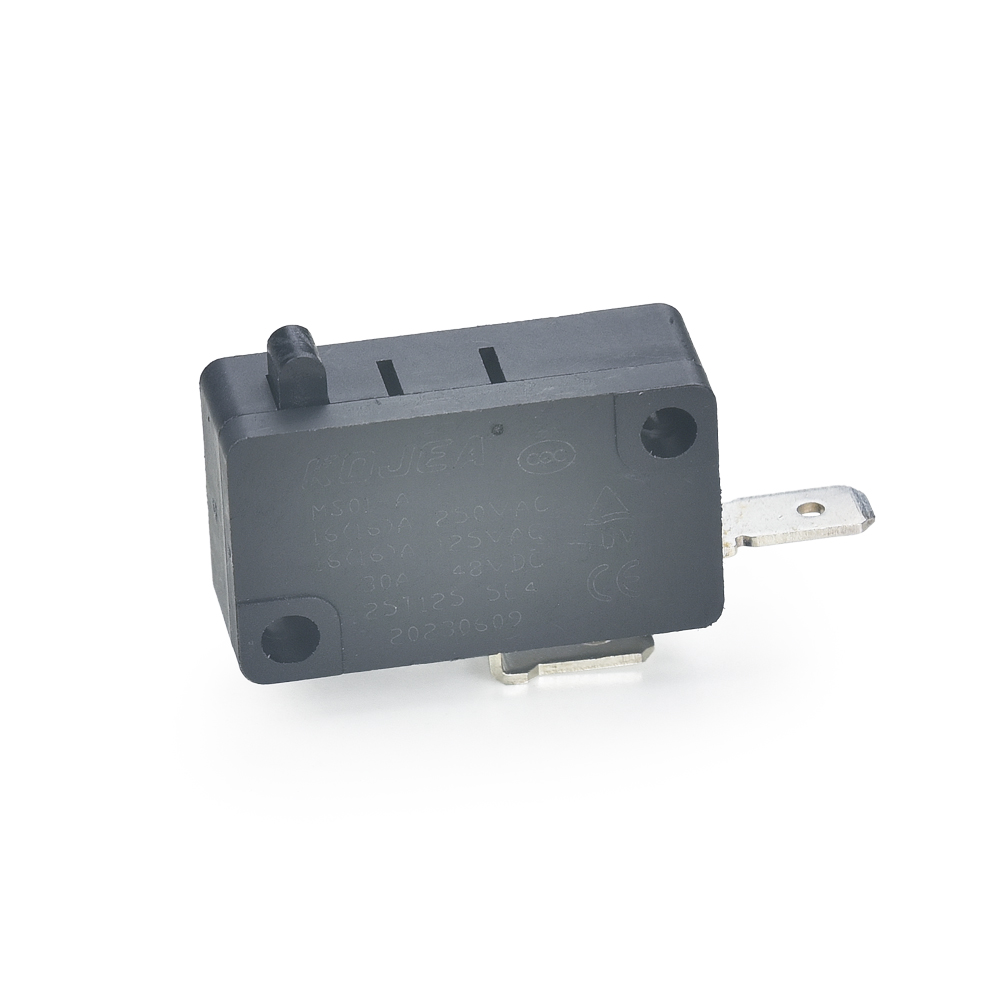
A switch’s longevity often hinges on the unsung hero inside: the contact mechanism. Engineers obsess over materials here—gold alloys resist corrosion better than silver, while self-cleaning designs scrape away oxidation with every press. The subtle wipe action, barely visible to the eye, clears microscopic debris that would otherwise degrade conductivity over millions of cycles.
Beyond the contacts, the housing matters more than you’d think. High-grade thermoplastics like PBT or nylon withstand heat and impact without warping, keeping internal alignment precise. Some manufacturers add silicone seals to block dust and moisture, a trick borrowed from outdoor gear that quietly doubles a switch’s service life in harsh environments.
Finally, the difference between a decade-long performer and an early failure comes down to testing that mimics real-world abuse. Automated rigs hammer switches through temperature swings, salt spray, and vibrational torture that simulates years of daily use in weeks. The data feeds back into subtle tweaks—a slightly thicker spring, a repositioned fulcrum—that never make it into the spec sheet but define the switch you’ll never have to think about.
Manufacturer Spotlight: Who Leads the Pack?
When it comes to dominant forces in the industry, a handful of manufacturers consistently outpace the competition through relentless innovation and rock-solid reliability. Names like HeavyLift Corp and TitanMech have become almost synonymous with cutting-edge engineering, consistently rolling out machines that push the limits of load capacity and fuel efficiency. Their secret? Deeply integrated R&D pipelines that don't just chase trends but set them, making it tough for smaller players to keep up.
But it isn't just about the hardware. The real leaders are redefining the game with smart technology integration and service models that feel almost bespoke. Take Prestige Robotics, for example—they've quietly taken the lead in collaborative automation by focusing on adaptive learning algorithms that let their machines work safely alongside untrained operators right out of the box. Add to that a service network that promises 24-hour on-site support globally, and it's clear why factory floor managers are switching loyalties. In a market often dominated by bulk and brawn, the winners are proving that brains and agility matter just as much.
Performance Under Pressure: Testing Real-World Durability
When you're pushing gear to its limits, it's not about lab simulations—it's about how it holds up when the weather turns nasty or the terrain gets rough. We took these products into the backcountry, through sudden downpours, and across rocky trails where a single slip could spell disaster. The test wasn't just about surviving a few bumps; it was about enduring constant stress without missing a beat. No shortcuts, no idealized conditions—just the kind of punishment that separates the truly tough from the merely adequate.
One standout moment came during an unexpected hailstorm at elevation. Gear that had promised waterproofing in controlled tests now faced ice pellets driven by 50-mph gusts. The fabric didn't just repel moisture; it kept the internal layers dry even after hours of exposure. Zippers that had felt smooth in the store didn't snag once, and sealed seams held firm. It's in these unscripted moments that you realize real-world durability isn't a spec sheet—it's the difference between packing up early and finishing the trek with confidence.
We also looked beyond immediate performance to long-term wear. After months of regular use, including daily commutes and weekend adventures, the gear showed minimal abrasion. Stitching remained intact, buckles didn't crack in freezing temps, and even the padding retained its shape. It's one thing to shine out of the box; it's another to keep performing when the newness fades. That's the quiet testament to genuine reliability—gear that doesn't just survive the pressure, but thrives under it.
Matching Switches to Your Application: A Practical Guide
Picking the right switch isn't just about specs on a datasheet—it's about how the switch behaves in your specific circuit under real-world conditions. Start by nailing down the basics: what voltage and current will the switch actually see? Don't just look at the max ratings; consider inrush currents, inductive kickbacks, and whether the load is resistive, capacitive, or inductive. A switch that works fine for a resistive heater might weld its contacts on a motor start-up. Also think about the switching frequency—turning a switch on and off hundreds of times a day puts different demands on the mechanism than one that's toggled once a year.
Environmental factors can sneak up on you too. Is there vibration, dust, moisture, or temperature extremes? A sealed switch might be overkill for an indoor desk lamp, but essential in a factory floor control panel. Pay attention to the actuation force and travel distance if a human operator will use it repeatedly—too stiff or too mushy, and you'll create frustration (or worse, user error). When space is tight, don't forget that the switch's physical footprint might include behind-panel depth and connector clearance, not just the cutout size on the front.
Finally, test early with samples in your actual assembly. A mock-up on a breadboard might not reveal how the actuator alignment works with your panel overlay or how the switch feels when mounted in its final position. Cycle it a few hundred times while monitoring for contact bounce or erratic behavior. Trust your instincts—if something feels off, it probably is. The best switch is the one your application never makes you think about again.
Smart Sourcing: Avoiding Common Procurement Mistakes
Rushing into supplier agreements without a clear understanding of your internal requirements often leads to mismatched expectations. A common misstep is fixating on the cheapest bid, ignoring hidden costs like maintenance, training, or longer-term scalability. Digging deeper into total cost of ownership reveals whether the upfront saving is genuine or a liability waiting to surface.
Another frequent error is overlooking the importance of a supplier’s track record. A flashy pitch can mask underlying issues with delivery reliability or quality control. Taking time to speak with past clients and reviewing performance data isn’t just due diligence—it’s a safeguard against disruptions that ripple through your operations. Relationship-building often uncovers red flags that formal RFPs miss.
Finally, many procurement cycles stumble when contract terms are too rigid to accommodate shifting business needs. Treating the negotiation as a one-time event rather than an ongoing dialogue creates friction when adjustments become necessary. Building in periodic review points and flexible clauses keeps the partnership resilient without sacrificing accountability.
FAQ
A top-tier manufacturer stands out through rigorous quality control, use of premium materials like silver alloys for contacts, and extensive life-cycle testing. They often provide detailed specifications and customization options, ensuring switches meet specific electrical and mechanical demands without compromise.
Look for certifications such as UL, CE, or RoHS compliance. Request sample batches and test them under real-world conditions, checking for consistency in actuation force, electrical ratings, and endurance. Reputable manufacturers are transparent about their testing procedures and failure rates.
They're crucial in automotive systems for door locks and pedal sensors, in home appliances for safety interlocks, in industrial machinery for limit switches, and in medical devices for precise control. Any sector where small size, high reliability, and long life are non-negotiable can benefit.
The contact material determines how well the switch handles electrical loads and resists wear. Silver-nickel contacts are common for general use, while gold-plated contacts excel in low-voltage, low-current circuits to prevent oxidation. The right choice prevents premature failure and ensures stable performance over millions of cycles.
Yes, many leading manufacturers provide custom designs for actuator types, terminals, operating forces, and even sealed versions for harsh environments. Collaborating early in the design phase can yield a switch tailored to your exact mechanical and electrical needs, boosting product dependability.
Sealed micro switches, often rated IP67 or higher, prevent dust, moisture, and contaminants from impairing internal contacts. This is vital in outdoor equipment, automotive under-hood applications, and food processing areas. Manufacturers that offer robust sealing options help ensure performance in challenging conditions.
The lifecycle rating indicates how many actuations a switch can endure before failure. Reputable manufacturers test to at least 1 million mechanical cycles, often far more. Compare this rating under the same load conditions you'll use, as electrical life may differ from mechanical life.
Increasingly, yes. Some manufacturers focus on reducing hazardous substances, using recyclable materials, and implementing energy-efficient processes. Checking for environmental certifications and corporate sustainability reports can guide you to responsible choices.
Conclusion
When it comes to picking a micro switch that won't let you down, the real story is inside. The best designs use carefully chosen contact materials and geometries that resist arcing and wear over millions of cycles. Silver alloys, precise actuator hinges, and consistent spring forces are what separate a switch that lasts from one that fails early. These internal engineering choices get proven out through brutal real-world tests—cycling under extreme temperatures, exposure to dust and moisture—pushing the switch until it breaks to understand its true limits.
Manufacturers worth trusting don't just talk about reliability; they back it with decades of field data and in-house endurance testing. The frontrunners tend to offer broad product lines that cover everything from basic snap-action switches to sealed, high-current versions. Matching the right switch to your application goes beyond voltage and current ratings—you need to consider actuation speed, environmental sealing, and even click feel. A common misstep in sourcing is focusing on upfront cost while ignoring the downtime caused by switch failures, or not vetting the supplier's quality consistency. Smart buyers look for manufacturers who provide application support and have transparent, trackable production processes.
Contact Us
Contact Person: Anna lin
Email: [email protected]
Tel/WhatsApp: +86 13567768885
Website: https://www.kjele.com/