
Catamaran Ferry Supplier Reveals Key Trends in Maritime Transport
2026-07-14
The waves of maritime transport are changing fast, and catamaran ferries are leading the charge. A top supplier just lifted the curtain on the trends reshaping how we move across water—think smarter designs, greener tech, and game-changing efficiency. And at the heart of this evolution? Companies like Allheart are pushing boundaries to deliver the next generation of high-speed ferries. Curious about what’s next on the horizon? Dive in to see where the currents are taking us.
Electric Dreams: Are Battery-Powered Ferries the Future?
The gentle hum of an electric ferry is almost startling at first. There are no vibrations, no diesel fumes stinging your nose—just the soft sound of water parting beneath the hull. From Norway to New Zealand, these battery-powered vessels are quietly transforming coastal transit, offering a rare glimmer of hope in an industry that's notoriously hard to decarbonize.
But the real question isn't whether they can work—it's whether they can scale beyond short, predictable routes. Battery ferries thrive on consistent charging schedules and relatively calm waters, yet open-sea crossings or heavy cargo demands still push current technology to its limits. The future likely involves a mix: batteries for harbor rhythms, maybe hydrogen or hybrid systems for the long haul.
What often gets overlooked is how these ferries change the passenger experience. Cities are noticing that cleaner air and quieter terminals reshape waterfront life in unexpected ways. As more ports install charging infrastructure, the “floating battery” concept might just redefine how we think about urban transport—not as a nostalgic nod to old-world charm, but as something decisively modern and unapologetically quiet.
Lighter and Leaner: The Material Science Behind Faster Catamarans
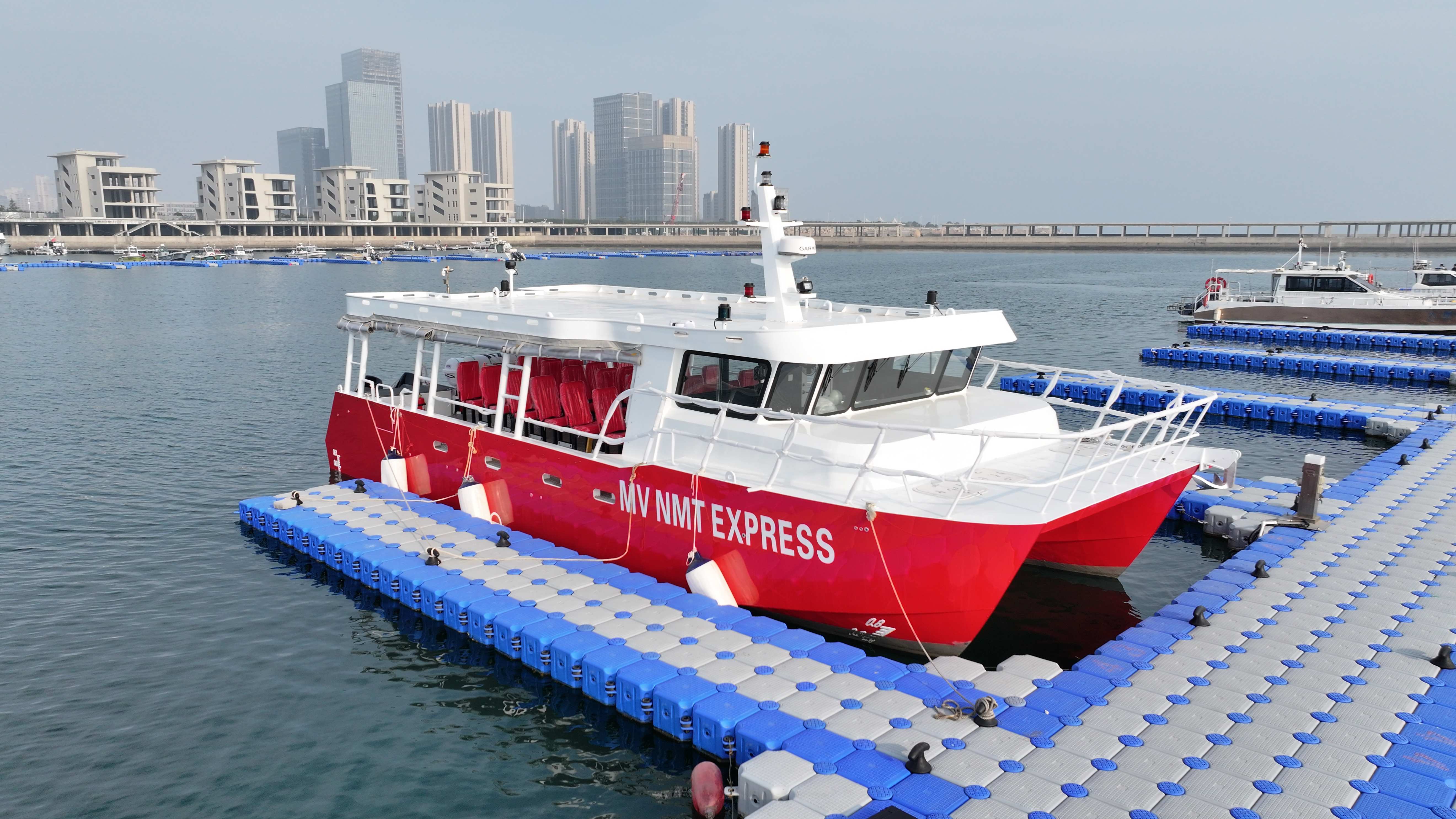
Modern catamarans slice through waves with a grace that wasn't possible a few decades ago, and the secret lies in the materials hidden beneath their sleek hulls. Early designs leaned heavily on solid fiberglass, which, while durable, carried a weight penalty that blunted performance. The shift to cored composite construction changed everything—by sandwiching lightweight materials like end-grain balsa or PVC foam between layers of fiberglass or carbon fiber, builders found they could dramatically reduce weight without sacrificing stiffness. This approach not only made the boats faster in light air but also reduced the pitching and hobbyhorsing that sapped momentum, letting the twin hulls maintain a more efficient trim through the water.
Carbon fiber has been the real game-changer for high-performance catamarans, especially in the beams, mast, and critical structural elements. Its incredible strength-to-weight ratio allows for slender, aerodynamic shapes that shave off crucial kilograms aloft, where it matters most for stability and righting moment. In racing trimarans and performance cruising cats, entire hulls and decks are now often laid up with carbon prepreg cured under heat and vacuum, yielding parts that are not only lighter but also stiffer than their glass counterparts by a factor of nearly three. This rigidity means less energy is lost to hull flex, translating directly into sharper acceleration and higher top-end speeds.
Beyond the hull skins, material science has also reinvented the fittings and hardware aboard catamarans. Titanium and high-grade aluminum alloys have replaced heavy stainless steel in everything from chainplates to blocks, while synthetic rigging like Dyneema and carbon fiber stays have largely supplanted wire, trimming weight from the standing rigging by over half. Even the sails themselves have benefited from laminate and molded membrane technologies that better transfer wind energy into forward thrust without stretching. All these incremental gains add up to a broader philosophy: every kilogram saved above the waterline directly improves the power-to-weight ratio, making today's catamarans not just lighter and leaner, but genuinely faster across every point of sail.
Beyond the Crossing: What Today's Passengers Really Value
The old bargain was simple: a seat, a schedule, and a destination. But that no longer holds. Passengers today are making choices based on a far more nuanced set of expectations, ones that blend physical comfort with emotional ease. They want the quiet assurance of a clean, safe environment, but equally, they crave the digital fluency that lets them glide through gates and onto platforms without friction. A delayed train is annoying; a clunky app that fails to explain why or offer alternatives is infuriating. The journey now starts long before they step aboard, and every pixel they tap shapes their loyalty just as much as the hardware that carries them.
Look closer, and you’ll see how the personal and the practical have merged. The passenger with a laptop open on a tray table isn't just killing time—they’re buying back an hour of their workday. The family choosing a bus over a flight might be doing it for the scenery, or for a carbon footprint they can feel better about. Even the commuter who buries themselves in a podcast is curating a bubble of focus in a crowded carriage. This shift goes deeper than adding USB ports or offering free Wi‑Fi. It’s about granting people control over how they spend their mental energy while in transit. When operators get that right, they earn something rare and durable: a sense of partnership, not just patronage.
What truly sets a service apart now isn’t a single dazzling feature—it’s the quiet absence of stress. Being able to trust that a late‑night arrival will feel just as safe as a midday one. Knowing that if a connection is missed, a real human or a deft algorithm will smooth the way without a bureaucratic maze. The airlines and railways that shine are those that treat the passenger as a guest whose time and tranquility matter. Ultimately, what’s valued isn’t the crossing itself, but how whole and human the journey lets them feel at the other end.
The Numbers Game: How Data Is Steering Ferry Operations
Behind the calm glide of a ferry across a harbor lies a frantic stream of digits. Every crossing now generates a trail of data points—engine temperatures, passenger counts, tide heights, and fuel burn rates—all streaming in from sensors embedded deep within the vessel. This isn’t just record-keeping; it’s the raw material for a quieter revolution in maritime logistics. Ferry operators, long reliant on intuition and weathered experience, are learning to let the numbers take the helm, reshaping everything from departure schedules to maintenance routines.
Consider the morning rush. Instead of sticking to a rigid timetable, algorithms now digest real-time ticket sales, weather forecasts, and road traffic at ferry terminals to predict demand spikes before they happen. A sudden downpour in the city? The system nudges an extra vessel into service, smoothing out the surge before a queue forms. At night, that same data feeds back into planning: one route might trim a crossing by two minutes, saving thousands in fuel over a year, while another adjusts ramp allocations to prevent the domino effect of boarding delays. These aren’t hypotheticals—they’re routine tweaks made possible by breaking down silos between operational data and decision-making.
Maintenance has taken on a similar transformation. Vibration sensors on propellers and thermal cameras on engines now send alerts when patterns deviate from the norm, flagging a worn bearing months before it might fail. For crews, this means swapping frantic midnight repairs for scheduled, targeted interventions. It also extends the life of aging fleets, as operators can run components closer to their true limits rather than replacing them on arbitrary timelines. The result is a quieter, more reliable service, where the numbers work silently in the background, turning the old art of running a ferry into something closer to a science.
Green and Profitable: The Business Case for Hybrid Propulsion
The shift toward hybrid propulsion is no longer just an environmental gesture—it's a sound financial move. Vessel operators are discovering that combining traditional engines with electric power can slash fuel bills by up to 30%, depending on the route and load profile. Maintenance costs also dip because electric motors have fewer moving parts and engines run at optimal loads more often, reducing wear. These savings accumulate quickly, often offsetting the higher initial investment within a few years, while future-proofing assets against rising fuel prices and stricter emissions levies.
Beyond direct operational savings, hybrid systems open new revenue avenues. Ports and waterways are introducing preferential fees and priority berthing for low-emission vessels, directly improving turnaround times and profitability. Charterers and cargo owners are increasingly willing to pay a premium for cleaner logistics, making hybrid ships more competitive in tight markets. Additionally, the quiet, emission-free electric mode unlocks access to sensitive areas like city centers or protected marine zones, expanding service possibilities without the cost of separate auxiliary engines.
Regulatory tailwinds are accelerating the business case. The International Maritime Organization's decarbonization targets and regional emission control areas are making hybrid configurations an attractive path to compliance without a full fleet overhaul. Hybrid technology also offers flexibility: owners can adapt the balance between diesel and electric power as battery prices fall and regulations evolve, delaying costly decisions while still capturing green credentials. This adaptability not only reduces risk but positions operators as forward-thinking partners in a supply chain that increasingly values sustainability alongside the bottom line.
Safety at Sea: The Quiet Tech Advancements No One Talks About
Sailing across oceans has always held an element of risk, but today’s mariners benefit from subtle innovations that rarely make headlines. Instead of flashy gadgets, it's the unnoticed upgrades in navigation software, hull monitoring sensors, and automated distress signaling that are quietly preventing disasters.
One prime example is the integration of AI-driven weather routing, which doesn't just predict storms but continuously adjusts courses to avoid them, saving both fuel and lives. Similarly, advances in man-overboard detection systems now use thermal imaging and smart buoys that automatically transmit the casualty's location, shaving off crucial minutes in rescue operations.
There's also a quiet revolution in fire suppression, with water mist systems that extinguish engine room fires without damaging sensitive electronics. These technologies don't scream for attention, yet they form an invisible shield around every voyage, ensuring that more sailors return to port safely.
FAQ
We're seeing a strong push toward greener operations, with many operators switching to hybrid or fully electric systems. There's also a focus on lightweight materials like carbon fiber to improve fuel efficiency without sacrificing durability. Passenger experience has become a priority, too, with quieter cabins and better onboard amenities.
Stricter emission standards are driving design changes from the ground up. Builders are optimizing hull shapes for lower resistance, integrating battery banks, and even exploring hydrogen fuel cells. The goal is to meet IMO 2030 and 2050 targets without compromising speed or reliability.
Advanced stabilization systems are making rides smoother in rough seas. Smart HVAC and noise-cancellation materials reduce cabin fatigue. Plus, high-speed Wi-Fi and ergonomic seating are no longer extras—they're expected. Real-time route information displays keep travelers informed.
They're becoming central. Batteries handle port maneuvers and short all-electric hops, while generators or fuel cells cover longer routes. This setup cuts fuel use by up to 30% and drastically lowers maintenance. Full-electric ferries are already operating in cities like Copenhagen and Guangzhou, and that number will only grow.
Lead times for engines and specialized aluminum alloys stretched significantly. To cope, we've diversified our supplier base and increased inventory of critical components. Some clients have opted for retrofits instead of new builds, which has actually spurred innovation in modular upgrades.
We're using computational fluid dynamics to create wave-piercing bows that cut through water more efficiently, reducing spray and drag. Semi-swath designs are gaining traction for their stability at higher speeds. Also, air lubrication systems are being tested to reduce friction.
Urban congestion and coastal tourism are major drivers. People want faster commutes to city centers and island destinations. High-speed cats can cover routes in half the time of conventional ferries, which makes them attractive for daily commuters and tourists alike. Governments are also promoting them as part of low-carbon transit networks.
With real-time data analytics, operators adjust frequencies during peak hours and trim idle time at docks. Modern cats offer faster turnaround thanks to quick mooring systems and automated ramps. Digital twin technology allows operators to simulate fuel-optimal routing based on weather and tides.
Conclusion
Catamaran ferry suppliers are navigating a sea change in maritime transport, driven by a convergence of technological and environmental imperatives. The push towards battery-powered vessels is gaining serious momentum, with shipyards exploring electric propulsion not just as a green gimmick but as a viable path to zero-emission operations. At the same time, breakthroughs in material science are enabling lighter, leaner catamarans that cut through water more efficiently, boosting speed and fuel economy. Hybrid propulsion systems are also emerging as a compelling business case, allowing operators to reduce costs and carbon footprints simultaneously—proving that sustainability can be profitable. Behind the scenes, quiet tech advancements in safety, from advanced collision avoidance to real-time monitoring, are flying under the radar but fundamentally enhancing reliability at sea.
Yet the future of ferry travel isn't just about hardware; it's equally about the human experience and intelligent operations. Today's passengers value far more than a simple crossing—they expect seamless connectivity, comfort, and personalized services. Ferry operators are turning to data analytics to optimize everything from route planning to maintenance schedules, using the numbers game to steer their fleets smarter. By integrating these insights, they can anticipate demand, tweak schedules dynamically, and elevate onboard amenities, creating a journey that feels less like transit and more like part of the destination. In this landscape, the suppliers that blend cutting-edge engineering with a genuine focus on passenger needs are the ones charting the course ahead.
Contact Us
Contact Person: Benny Hu
Email: [email protected]
Tel/WhatsApp: +8618354225697
Website: https://www.allheartmarine.com/