
China High Voltage Steel Pipe Tower Dealers You Can Trust for Sturdy Infrastructure
2026-08-17
Power grids don’t fail gracefully. When a high voltage steel pipe tower collapses, the blackout can ripple across entire regions, costing utilities millions per hour. That’s why the dealer you choose is as critical as the steel itself. China has emerged as a global hub for these structures, but not all dealers are equal. Anbang stands out by pairing heavy-duty fabrication with transparent quality control—no hidden shortcuts, no vague test reports. In this article, we’ll walk through the hallmarks of a dealer you can actually trust, and the questions to ask before signing a contract.
Why China's Steel Pipe Tower Fabricators Lead in High-Voltage Projects
China's dominance in steel pipe tower fabrication for high-voltage transmission stems from a rare convergence of scaled production capacity and field-proven engineering discipline. Unlike competitors who rely on imported plate or segmented outsourcing, leading Chinese fabricators operate integrated facilities where steel coil, plate rolling, longitudinal welding, and hot-dip galvanizing happen under one roof. This vertical integration cuts lead times by up to 40% and allows real-time adjustments for custom tower geometries—critical when a single 500 kV line may need over 300 distinct tower types across mountainous terrain.
The edge is not simply volume; it is the accumulated know-how from building over half of the world's ultra-high-voltage corridors. Fabricators in Shandong and Jiangsu have refined automated submerged arc welding on Q420 and Q460 high-strength steel, achieving consistent penetration on 12-meter longitudinal seams without the micro-cracking that plagues less experienced shops. Their in-house testing regimes routinely exceed IEC 60652 loading protocols, simulating galloping ice and typhoon-grade wind shear on full-scale prototype towers before mass production begins.
Equally decisive is the logistics choreography behind delivering 80-ton bundled tower sections to remote substations. Chinese fabricators deploy modular jigs and pre-assembled cross-arm cradles that allow flatbed transport without deformation, while their port-side bundling yards can load a full 300 kV double-circuit line's tower steel onto a single Handymax vessel in under 72 hours. This blend of metallurgical control, rapid prototyping, and export-ready packing explains why grid developers from Southeast Asia to East Africa increasingly treat Chinese steel pipe tower fabrication as the default choice for projects where schedule slip is not an option.
Material and Welding Checks That Separate Durable Towers from the Rest
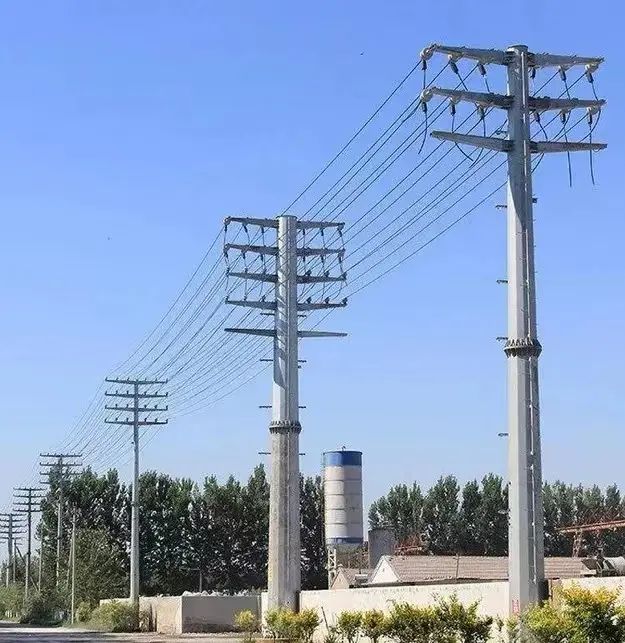
The real difference between a tower that lasts twenty years and one that fails in five often comes down to what you can't see from the ground. Steel grade matters more than most buyers realize—lower-grade mild steel might save a few dollars upfront, but it develops hairline fractures near bolt holes under cyclic wind loads. Durable towers typically use high-strength low-alloy (HSLA) steel with a yield strength above 345 MPa, which resists fatigue without adding excessive weight. The zinc coating thickness is another tell-tale sign. A hot-dip galvanized layer of at least 85 microns on every flange, brace, and leg will shrug off decades of rain and salt spray, whereas thin electroplated coatings start rusting at the edges within the first two years.
Welding quality is where many manufacturers cut corners, and it's also where failures begin. Look for full-penetration butt welds on main chord splices rather than intermittent fillet welds that leave gaps for moisture. The heat-affected zone around each weld should show a smooth, uniform profile—no undercut, no porosity, no cold lap. Reputable fabricators perform ultrasonic or magnetic particle inspection on at least 10% of all welds, and they grind stop/starts to remove stress risers. If a tower's weld seams look like a stack of coins or show spatter balls, that's a red flag for inconsistent amperage and poor operator control. Durable towers also avoid field welding altogether; all connections should be bolted with pre-tensioned high-strength fasteners, because shop-controlled welding beats site welding every time for consistency.
Finally, ask about post-weld treatment and dimensional checks. After fabrication, towers should be inspected on a jig to verify straightness within 1/1000 of the total height—any bowing or twist gets amplified under load. Stress-relieving heat treatment for critical welds, even if it adds cost, prevents delayed cracking in thick plates. And don't overlook the small stuff: weld access holes should be ground smooth, bolt holes should be drilled (not punched) to avoid micro-cracks, and all sharp edges should be radiused before galvanizing. These are the invisible details that separate a tower built for a brochure photo from one built to outlive its warranty twice over.
Questions to Ask Before You Commit to a High Voltage Tower Dealer
Before signing anything, ask how the dealer handles site-specific wind and ice loading calculations. A credible supplier won’t just hand you a generic catalog drawing; they’ll want your local meteorological data and soil reports before recommending a tower class.
Dig into their past installations within your region. Ask for references from projects with similar voltage levels and terrain, then actually call those owners. You’re looking for signs of delayed deliveries, missing anchor bolts, or vague warranty terms—the kind of issues that don’t show up in a polished brochure.
Finally, pin down what happens after the tower is standing. Clarify whether the dealer offers commissioning support, structural inspections, and a clear path for replacement parts five or ten years down the line. If they hesitate on any of these, you’re probably dealing with a middleman rather than a true long-term partner.
How Custom Design Capabilities Prevent Costly On-Site Failures
Custom design capabilities cut through the guesswork that often leads to expensive mistakes on the job site. Instead of forcing standard parts into unconventional layouts, engineers can tailor each component to the exact stress loads, thermal swings, and wear patterns of the installation. This upfront precision means fewer improvisations during assembly, less emergency rework, and a smoother handoff from blueprint to building.
The real value shows up in the details that generic off-the-shelf designs miss. A custom bracket can be thickened only where stress concentrates, a sealing profile adjusted for an unusual flange alignment, or a material grade selected for local corrosion risk. These small, deliberate choices remove failure points before they ever reach the field. When everything fits as intended, crews spend time installing rather than drilling out misaligned holes or patching leaks.
The long-term payoff is just as direct. Custom designs account for maintenance access, spare part interchangeability, and future load increases, so the system doesn't just survive installation—it keeps performing without unscheduled shutdowns. Avoiding a single on-site failure often covers the cost of the engineering effort many times over, and it protects the project schedule from the ripple effects of rework, inspections, and delayed handover.
What a Strong Logistics Network Means for Your Project Timeline
A solid logistics network does more than move materials—it keeps your schedule from collapsing under the weight of "almost there." When your freight partner has established routes, vetted carriers, and backup depots across key regions, late shipments become the exception rather than the norm. That means your site crews aren't standing around waiting for steel or switchgear, and your critical path stays intact instead of slipping week by week.
Timeline certainty also comes from how quickly the network adapts when something goes sideways. Port congestion, weather hold-ups, or a supplier's last-minute change don't have to derail your handoff dates if there's real-time visibility and a rerouting plan already in place. You end up with fewer rushed installs, less overtime spend, and a handover date you can actually defend to stakeholders.
Certifications and Testing Reports Worth Asking For Before Signing
Before you commit to a purchase, ask for documentation that backs up any safety or performance claims. A reputable supplier should be able to share current certificates from independent labs—not just their own test results. Look for marks that apply to your specific product category, whether it's emissions testing for indoor air quality, durability ratings for furniture, or fire safety compliance for textiles.
Pay attention to the scope and date on each report. A certificate that covers only one component or a version from several years ago may not reflect what you're actually buying. Ask whether the testing was done on the finished product or just a material sample, and request the full report if the summary seems vague.
Also confirm that the lab itself has relevant accreditation. Third-party certification carries more weight when the testing facility follows recognized international standards. If a seller hesitates to provide these documents or offers only a logo on a website, treat that as a red flag before signing any agreement.
FAQ
Ask for references from completed projects in similar voltage ranges, request mill certificates for the steel, and arrange a video walkthrough of their fabrication shop. A dealer that willingly shares past inspection reports and client contacts is usually a safer bet than one that only offers glossy brochures.
Look for Q355 or Q420 grade steel with hot-dip galvanizing at 85 microns or higher, plus an optional epoxy topcoat. These specs help the towers resist salt spray and humidity, and a reputable dealer will document coating thickness across every batch rather than promising a generic anti-rust finish.
Chinese mills combine large-scale capacity with competitive pricing, but the real advantage is the engineering support. Many dealers can adjust bolt patterns, flange dimensions, and leg slopes quickly, which shortens design cycles and keeps fabrication aligned with the project's single-line drawings.
At minimum, they should show ISO 9001 for quality management, ISO 3834 for welding, and type test reports from an accredited lab like KEMA or CESI. If they also hold ISO 14001 and ISO 45001, that indicates they take environmental and worker safety obligations seriously.
For a standard 132 kV line, expect 45 to 75 days after drawing approval, depending on order size. The usual bottlenecks are late design confirmations, steel coil shortages, and port congestion. A trustworthy dealer gives you a weekly production schedule and sends photos from the galvanizing line, so surprises stay minimal.
Yes, most established dealers have in-house design teams that adjust tower weight, cross-arm length, and foundation shoe geometry. If you share topography data and load cases early, they can suggest how to reinforce joints or reduce wind exposure without inflating the steel tonnage too much.
Hire an independent third-party inspector to verify bolt diameters, base plate thickness, and galvanizing adhesion at the port. Compare the actual steel grade on the mill certificates with your approved data sheets, and do a trial assembly of one tower panel before full erection. This catches most non-conformance issues before they reach the field.
Be wary of quotes that are far below market, vague about steel origin, or unwilling to share previous project coordinates. A dealer that pressures you to skip factory acceptance testing or has no clear warranty terms for weld failures is likely cutting corners that will surface later in line outages.
Conclusion
Chinese steel pipe tower fabricators have earned a strong position in high-voltage infrastructure through disciplined production methods and a focus on structural integrity. The most dependable dealers separate themselves by controlling steel grades at the source, performing full-penetration welds under qualified procedures, and verifying every joint with ultrasonic or radiographic testing. Before committing to a supplier, project owners should ask for sample tower drawings, load-case assumptions for wind and ice, and examples of custom adaptations for difficult terrain or compact substation footprints. This level of detail helps filter out sellers who rely on generic designs and catch problems that would otherwise surface as expensive on-site corrections.
Equally important is the dealer's ability to deliver without disrupting the construction schedule. A strong logistics network with nearby port access, pre-shipment trial assembly, and clearly labeled bundle packing reduces the chance of missing components or transit damage. Ask for ISO 9001 records, galvanizing thickness reports, Charpy impact test results, and certificates covering ASTM or EN standards. Dealers that openly share full documentation and can point to completed projects in regions with similar weather and grid requirements are generally safer partners. Trust in this market comes from verified engineering, transparent material traceability, and a demonstrated ability to keep long-lead tower supply on time and intact from factory to site.
Contact Us
Contact Person: antor khan
Email: [email protected]
Tel/WhatsApp: 8613863903569
Website: https://www.qdabtower.com/