
China Mid-Diameter Fiber Fusion Splicer Drives Efficient Fiber Optic Deployments
2026-08-26
Every fiber deployment team knows the frustration: bulky splicers slowing down the job, yet compact models often lack the reliability needed for real-world conditions. China's mid-diameter fiber fusion splicers are changing that equation—and DVP is one brand pushing the technology forward. Here's why these tools are driving efficient fiber optic rollouts across the globe.
Splicing Moves Out of the Truck and Into Tight Spaces
Fiber splicing used to happen inside a dedicated truck with a workbench, climate control, and plenty of elbow room. That picture is fading. More and more splice points are buried in apartment riser closets, under stairwells, or behind rows of network gear where there’s barely enough space to kneel. Technicians now carry their entire splicing setup in a single backpack, unpacking only what the job absolutely requires.
Compact fusion splicers, one-step cleavers, and foldable splice trays have made this move possible. You can set up on a plastic tote lid, a cable reel, or even the floor of a manhole as long as you keep wind and dust away. The trick is working low and steady—using your knee as a brace, hanging the splicer from a carabiner, or placing the cleaver on a magnetic pad to stop it sliding. Small changes in body position matter more than ever when there’s no bench to lean on.
Splicing in tight spaces also changes how you protect the finished joint. Heat-shrink sleeves and gel-filled closures have to be handled with one hand while the other holds a light. Some crews pre-load splice trays outside the confined area, then snap them into place inside. It’s slower than working in a truck, but it beats pulling hundreds of feet of new cable just to find a comfortable spot.
Why Mid-Diameter Fiber Changes the Game
For years, network designers had to choose between two extremes: standard single-mode fiber with its generous core but frustrating bend sensitivity, or bend-insensitive fiber that sacrificed optical performance in tighter spaces. Mid-diameter fiber sits neatly between these camps, offering a core size that maintains signal integrity while allowing tighter coils and denser cable routing. This isn't just a minor tweak—it's a fundamental shift in how we think about physical layer constraints.
The real-world payoff shows up in cramped telecom closets and congested conduit runs. With a reduced cladding diameter, these fibers pack more efficiently into existing ducts, often doubling capacity without the costly and disruptive process of installing new infrastructure. Installers notice the difference immediately: the fiber handles more like a rugged patch cord than a delicate glass strand, yet the optical loss remains low enough for long-haul spans. That combination of toughness and transparency eliminates the trade-offs that used to force compromise at every splice point.
What makes this evolution quietly revolutionary is how it reshapes network architecture decisions. Designers can now consider routes that were previously off-limits due to bend radius limits or space constraints, opening up new possibilities for FTTx deployments and data center interconnects. The cost savings ripple outward—less conduit, fewer man-hours, and fewer repeaters—while the performance headroom stays intact. Mid-diameter fiber doesn't just solve a problem; it removes an entire category of design limitations that the industry had learned to work around.
Field Teams Finish Sooner With Less Gear
A leaner kit changes the pace of every job. When a field crew carries only the tools they'll actually use, nobody wastes twenty minutes hunting through a truck for a spare adapter or untangling cords that never should have been packed. Setup drops from a half-hour scramble to a quick unzip and start.
Lighter loads also keep teams moving between sites without the usual drag. Instead of hauling oversized cases through doorways or waiting on a second trip to the vehicle, two people can carry everything in one go. The result isn't just earlier finishes on paper — it's fewer delays mid-task and less fatigue by the afternoon.
A Smaller Core, A Faster Rollout
By stripping the core system down to only the modules that actually earn their place, we cut the overhead that usually slows down every release. The lighter footprint means fewer compatibility checks, fewer regression loops, and less time spent untangling dependencies. Most teams don’t need a sprawling foundation; they need something that can move when the market does.
That smaller core changes the pace of rollout in a practical way. Builds shrink, test cycles shorten, and the approval chain becomes almost trivial. Instead of waiting for a heavyweight platform team to clear every change, small squads can push updates without the usual ceremony. The result is a cadence that feels less like a quarterly event and more like a steady rhythm.
What gets left out is just as important as what stays. Every feature that doesn’t belong in the core is moved to an edge module, where it can be updated independently. This keeps the central system stable while allowing experiments to run at their own speed. Over time, the core stays lean, and the rollout stays fast because there’s simply less to break.
Hands-On With China’s Compact Splicer
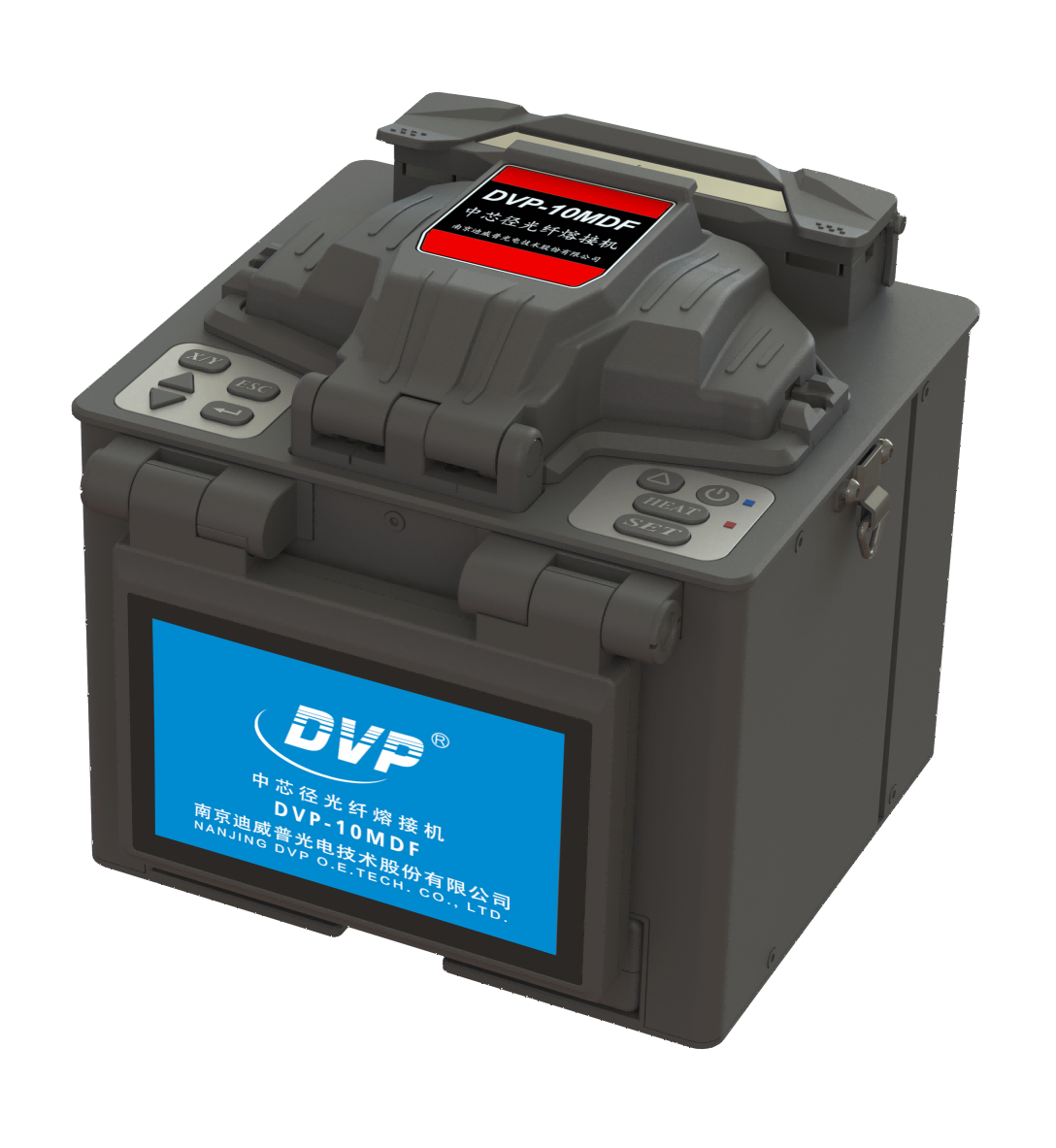
Pulling this little splicer out of its foam case, the first thing that hits you is how light it feels. No strain on the wrist when you're up a ladder or kneeling by a roadside cabinet. The shell is a matte, slightly textured plastic that doesn't slip even with sweaty hands. Buttons are firm with a soft click, and the rubber flap over the charging port sits flush. It's clearly built for field work, not a lab bench.
Firing it up, the screen is bright enough to read in direct sun, and the menu skips the usual nested chaos. You get fiber alignment, arc calibration, and splice mode without digging through five submenus. The heating tray is snug, and it cycles a 60mm sleeve in about twenty seconds. One quirk: the battery indicator jumps from three bars to one with no warning, so you learn to top it off before heading out. The carrying strap feels like an afterthought, but you can clip it to a belt loop and forget it's there.
Splice loss readings hovered around 0.02 dB on single-mode, which is respectable for this price bracket. The camera gives a crisp view of the fiber ends, and the automatic cleaning reminder actually saved me from a botched splice on a dusty install. If you're used to bulky, two-hand units, this one feels almost playful, yet it doesn't treat the fiber itself as a toy. A few hundred splices in, the electrodes still hold their gap, and the only real complaint is that the included carry bag holds sand like a beach towel.
The Practical Case for Mid-Diameter Splicing
Field crews know the frustration of opening a closure and finding three different cable diameters that all need a solid splice. Mid-diameter splicing grew out of that exact situation. Instead of carrying separate trays, shims, and protectors for every possible cable size, technicians can use a single mid-range setup that handles most common combinations without forcing a compromise on alignment or strain relief.
The practical upside shows up in the truck inventory as much as in the splice itself. A mid-diameter approach trims the number of adapter sleeves and transition pieces that have to be stocked and tracked. It also reduces the chance of grabbing the wrong part in poor light or bad weather. For mixed networks where older loose-tube cable meets newer microcable, that simplification matters more than many people expect.
Labor time drops because the same splice protector and organizer plate can be used across a wider range of fiber coatings and cable jackets. Crews spend less time sorting through parts and more time completing clean, low-loss splices. That reliability is why mid-diameter splicing has moved from a workaround to a standard practice in many outside plant builds.
FAQ
It handles fiber cladding diameters typically between 200 and 400 microns, bridging the gap between slim drop cables and larger loose-tube fibers. The main difference is the wider V-groove and more adaptable clamping system, so you don't need separate fixtures for each cable type.
Chinese manufacturers have compressed the cost-to-performance ratio dramatically. You get high-precision alignment, fast heating cycles, and rugged builds at roughly half the price of legacy Japanese or Korean units. That frees budget for more units in the field, cutting deployment time.
Rural FTTH, fiber-to-the-antenna (FTTA) backhaul, and hybrid trunk/drop installations. These jobs mix different cable diameters on the same day, so a splicer that adapts quickly without swapping parts keeps the workflow moving.
Many models use core alignment or active clad alignment with real-time arc calibration. By centering the cores precisely for mid-sized fibers, they reduce typical splice loss to below 0.03 dB and maintain stable performance over temperature swings and vibration.
Electrode wear and V-groove contamination are the most common issues. But most Chinese mid-diameter models have tool-free electrode replacement and sealed mirror assemblies, so routine cleaning takes under ten minutes and doesn't require a specialist.
It handles both. The adjustable clamps and software presets let you switch between 250-micron, 200-micron drop fiber, and 400-micron patch cables. You simply pick the preset and the machine adjusts motor steps and arc power.
Look at heating time (under 12 seconds for a 60mm sleeve), battery capacity (at least 200 splice/heat cycles), built-in inspection cameras, and whether the manufacturer offers remote calibration support. Real-world field testing trumps spec sheets.
Conclusion
Fiber splicing no longer has to be a rear-of-the-truck operation. With China’s mid-diameter fusion splicer, crews are moving directly into apartment risers, underground vaults, and cramped street cabinets that were previously off-limits for traditional equipment. The machine’s footprint is small enough to fit on a single tool tray, yet its alignment algorithm handles the tighter tolerances of a reduced cladding diameter without sacrificing splice loss performance. Field teams report taking one case instead of three, no generator, no folding table, no extra hands. That changes scheduling math: a two-person crew can finish more drops per day, and the splicer’s fast heat shrink cycle keeps the workflow moving. Because mid-diameter fiber bends more readily in tight corners, the physical limits of the route stop dictating how many closures you need.
Hands-on, the Chinese compact splicer feels less like a lab instrument and more like a durable field tool. Its chucks grip the narrower glass without slipping, and the camera system stays sharp through dust and temperature swings. The real payoff shows up at scale: smaller cores mean more fibers per duct, which shortens the time from permit to activation. Instead of waiting on civil works to widen pathways, planners simply pull higher-count mid-diameter cable through existing microducts. Splice points become cheaper and less intrusive. For rural expansion or dense urban infill, the practical case is straightforward—fewer truck rolls, lighter trailers, faster restoration after outages. The technology quietly removes friction from every step between the central office and the customer’s wall.
Contact Us
Contact Person: Mr XU
Email: [email protected]
Tel/WhatsApp: 86-25-85582828
Website: https://www.dvp.cn/en/