
Customized Water Chiller Manufacturing: Tailored Solutions for Industrial Cooling Efficiency
2026-04-23
In the demanding world of industrial operations, maintaining optimal temperatures isn’t just a convenience—it’s a critical factor driving efficiency, productivity, and cost-effectiveness. Standard cooling solutions often fall short when faced with unique production challenges, leading to downtime and wasted resources. That’s where customized water chillers come into play, offering tailored designs that align precisely with specific industrial needs. At Worldbase, we specialize in crafting bespoke chiller systems that not only enhance cooling performance but also integrate seamlessly into your workflow. Imagine a solution that adapts to your environment, reduces energy consumption, and prolongs equipment life—all while keeping your operations running smoothly. In this blog, we’ll explore how personalized chiller manufacturing is revolutionizing industrial cooling, and why a one-size-fits-all approach is a thing of the past. Get ready to discover how Worldbase can transform your cooling strategy with innovation and precision.
Engineered Precision: Crafting Custom Water Chillers for Peak Industrial Performance
Tailoring water chillers to specific industrial applications goes far beyond simply adjusting cooling capacity. At its core, engineering precision involves a meticulous analysis of the operational environment, process thermal loads, and fluid compatibility requirements. This deep dive ensures that every component—from compressor selection and heat exchanger design to control system integration—functions harmoniously under exact conditions. The result is a system that not only meets the stated BTU/hour rating but also anticipates variables like ambient temperature fluctuations or process cycle changes, delivering consistent cooling where standard units might falter.
Crafting for peak performance means building durability and efficiency into the very fabric of the chiller. Custom designs often incorporate specialized materials resistant to corrosion from process chemicals or feature advanced variable-speed drives that modulate cooling output in real time, slashing energy consumption. By optimizing the refrigerant circuit and improving heat transfer surfaces, engineers can achieve a lower approach temperature, meaning the chiller works less to remove the same amount of heat. These nuanced enhancements translate directly into reduced downtime, lower operational costs, and extended equipment lifespan, giving facilities a tangible competitive edge.
Ultimately, the pursuit of engineered precision in custom water chillers is about aligning cooling technology with broader industrial goals. Whether supporting a pharmaceutical clean room's stringent temperature controls or maintaining precise molding temperatures in plastic injection, a bespoke chiller becomes a seamless extension of the production line. This synergy allows industries to push the boundaries of product quality and throughput, secure in the knowledge that their cooling infrastructure is not a generic solution but a precisely calibrated tool engineered for unwavering performance under the most demanding conditions.
Adaptive Cooling Systems: Solutions Tailored to Your Unique Operational Demands
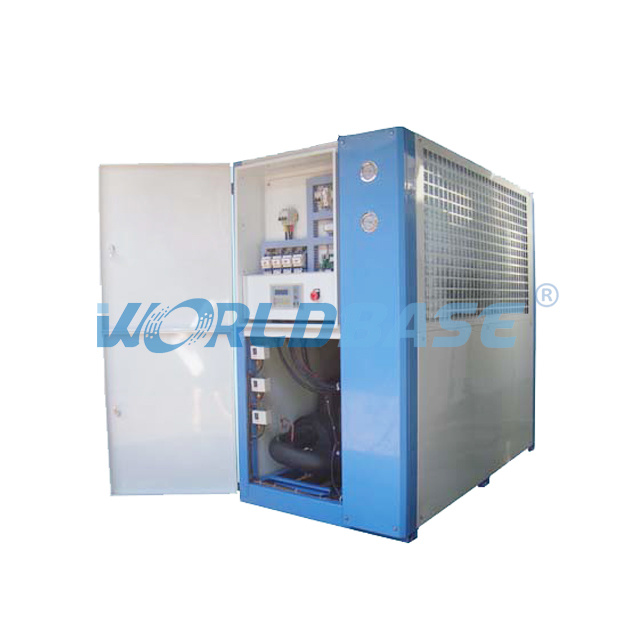
Traditional cooling setups often fall short by applying the same solution across different environments, leading to inefficiencies and increased operational costs. Adaptive cooling systems are designed to break this mold, dynamically adjusting to real-time conditions such as temperature fluctuations, equipment load, and ambient humidity. By leveraging advanced sensors and intelligent algorithms, these systems optimize energy use while ensuring your critical hardware stays within safe operating ranges, effectively preventing overheating without unnecessary power drain. It's like having a climate control expert constantly on duty, fine-tuning the environment to match exactly what your operation needs at any given moment.
What truly sets adaptive cooling apart is its ability to learn and evolve with your specific setup. Instead of relying on static settings, the system continuously analyzes data from your equipment and surroundings, identifying patterns and predicting future demands. For instance, if your server farm experiences a spike in usage during certain hours, the cooling will ramp up proactively to maintain performance. This proactive approach not only enhances reliability but also extends the lifespan of your hardware by reducing thermal stress. It's a smart investment that pays off through lower maintenance costs and fewer unexpected downtimes.
Implementing such a system involves customization at every step, from initial assessment to ongoing adjustments. Engineers work closely with your team to understand unique operational demands, such as space constraints or noise limitations, tailoring the cooling solution accordingly. The result is a seamless integration that feels built-in rather than added on, providing peace of mind that your infrastructure is supported by a responsive, efficient cooling partner. With adaptive technology, you're not just cooling a space—you're empowering your entire operation to run smoother and more sustainably.
Innovative Design Approaches: Enhancing Efficiency Through Bespoke Manufacturing
In the realm of modern manufacturing, bespoke manufacturing has emerged as a powerful tool to boost efficiency by tailoring production processes to specific client needs. By integrating innovative design approaches, companies can streamline operations, reduce waste, and accelerate time-to-market. This shift from mass production to custom solutions allows for greater flexibility and responsiveness, enabling businesses to adapt quickly to changing demands and deliver higher-quality products with fewer resources.
One key aspect of this approach is the use of advanced technologies like 3D printing and digital twins, which facilitate precision in design and prototyping. These tools not only minimize errors but also enhance collaboration across teams, ensuring that every component is optimized for performance. As a result, bespoke manufacturing becomes not just a cost-saving measure but a strategic advantage, fostering innovation and sustainability in competitive industries.
Moreover, by focusing on customer-centric designs, manufacturers can create unique value propositions that set them apart. This helps build strong brand loyalty and opens up new market opportunities, as clients increasingly seek personalized solutions that reflect their specific requirements. In the long run, this approach drives overall efficiency by aligning production with real-world applications and feedback loops.
Industry-Specific Cooling: Addressing Diverse Applications with Custom-Built Units
Every industry has its own quirks when it comes to cooling needs—just think about how different a data center is from a pharmaceutical lab or a food processing plant. That's where industry-specific cooling comes into play. It's not a one-size-fits-all approach but a tailored strategy that crafts custom-built units to address unique environmental requirements, from handling high-precision temperature control to minimizing contamination risks.
Take data centers, for example; they rely on precision cooling to manage intense heat loads without causing downtime. Custom units can be designed with advanced airflow management or liquid cooling systems to keep servers running smoothly. Meanwhile, in the pharmaceutical sector, strict regulatory standards mean cooling solutions must be engineered to maintain sterility and prevent cross-contamination—often requiring specialized filters and materials that you won't find in standard systems.
What sets this apart from generic solutions is the focus on adaptability and long-term efficiency. By designing cooling units around specific operational demands, businesses can reduce energy waste, lower maintenance costs, and ensure reliability in critical applications. It's all about creating systems that not only meet today's needs but are flexible enough to evolve with changing technologies and industry trends.
Sustainable Cooling Solutions: Reducing Energy Consumption with Tailored Chiller Systems
Tailored chiller systems are revolutionizing sustainable cooling by moving beyond one-size-fits-all approaches to optimize energy use. Instead of relying on generic models, these systems are custom-engineered to match specific operational needs, such as varying load demands or unique environmental conditions. By integrating smart controls and variable-speed components, they dynamically adjust performance, cutting down on wasteful energy consumption and reducing the carbon footprint of cooling operations in industrial and commercial settings.
The key advantage of tailored chillers lies in their ability to enhance efficiency through precise calibration. For instance, in data centers where cooling requirements fluctuate, a customized system can modulate cooling output in real-time, preventing over-cooling and saving significant electricity. This not only lowers utility bills but also extends equipment lifespan, making it a cost-effective investment that supports long-term sustainability goals without compromising on performance.
Looking ahead, tailored chiller systems are set to play a pivotal role in achieving energy-efficient cooling solutions globally. Innovations like hybrid designs combining water- and air-cooled elements, or the use of eco-friendly refrigerants, further boost their environmental benefits. By focusing on adaptability and smart features, these systems help businesses meet regulatory standards and contribute to a greener future, proving that customized technology is essential for meaningful energy reduction in today's climate-conscious world.
Future-Ready Technology: Integrating Scalability and Flexibility in Custom Chiller Designs
Modern custom chiller designs are increasingly embracing a future-ready approach, where scalability and flexibility form the core of technological advancements. Companies are moving away from rigid, one-size-fits-all solutions to create systems that can grow and adapt alongside evolving industrial and commercial demands. For instance, modular chiller units allow businesses to add or remove capacity based on seasonal fluctuations or production expansions, ensuring optimal performance without overspending on unnecessary infrastructure.
Integrating smart technologies, such as IoT sensors and AI-driven controls, further enhances this adaptability. These innovations enable real-time monitoring and predictive maintenance, which not only extends the lifespan of chiller components but also reduces downtime and energy consumption. By leveraging data analytics, operators can fine-tune operations to meet specific cooling needs, whether it's for a small laboratory or a large manufacturing plant, making the system truly future-proof against technological shifts.
Additionally, the flexibility in design extends to materials and configurations, allowing for tailored solutions that fit unique environmental or spatial constraints. This holistic integration of scalability and flexibility ensures that custom chillers remain efficient and cost-effective, paving the way for sustainable growth in a rapidly changing world.
FAQ
A customized water chiller is specifically designed to meet the unique cooling requirements of an industrial process, offering tailored features like precise temperature control and enhanced energy efficiency, unlike off-the-shelf models with fixed specifications that may not optimize performance for all applications.
Industries such as pharmaceutical manufacturing, plastic injection molding, and data centers often utilize customized water chillers to maintain strict temperature conditions, reduce operational costs, and improve system reliability in demanding environments.
Important factors include the cooling load capacity, ambient temperature conditions, space constraints, energy consumption goals, and specific process requirements to ensure the chiller integrates seamlessly and delivers optimal efficiency.
By optimizing components like compressors, heat exchangers, and control systems for the exact application, these chillers minimize energy waste, lower electricity bills, and often include features such as variable speed drives that adapt to fluctuating cooling demands.
Challenges can include high upfront costs and complex integration. Manufacturers mitigate these by offering scalable designs, thorough site assessments, and ongoing support to ensure smooth installation and long-term performance.
Regular maintenance, including cleaning heat exchangers, checking refrigerant levels, and monitoring system controls, is crucial. Many tailored solutions come with predictive maintenance features and service agreements to prevent downtime and extend equipment life.
It typically involves an initial consultation to assess needs, followed by engineering design, prototype testing if needed, and final manufacturing. Close collaboration with the client ensures the chiller meets all specifications before delivery and installation.
Conclusion
Customized water chiller manufacturing provides tailored solutions that address industrial cooling efficiency with precision and adaptability. By focusing on engineered precision, manufacturers craft chillers optimized for peak industrial performance, ensuring reliability and effectiveness in demanding environments. Adaptive cooling systems are designed to meet unique operational demands, offering flexibility that standard units cannot match. This bespoke approach not only enhances efficiency through innovative design but also ensures that each chiller aligns perfectly with specific industry requirements, from heavy machinery to sensitive processes.
Industry-specific cooling solutions tackle diverse applications with custom-built units, delivering targeted performance where it matters most. Sustainable cooling practices are integrated to reduce energy consumption, leveraging tailored systems that minimize environmental impact while maintaining operational excellence. Future-ready technology incorporates scalability and flexibility, allowing chillers to evolve with changing industrial needs. This forward-thinking design ensures long-term value and adaptability, making customized water chillers a smart investment for businesses seeking efficient, reliable, and eco-friendly cooling solutions in a competitive landscape.
Contact Us
Contact Person: Mr Yang
Email: [email protected]
Tel/WhatsApp: +8613809083091
Website: https://en.worldbase.cn