
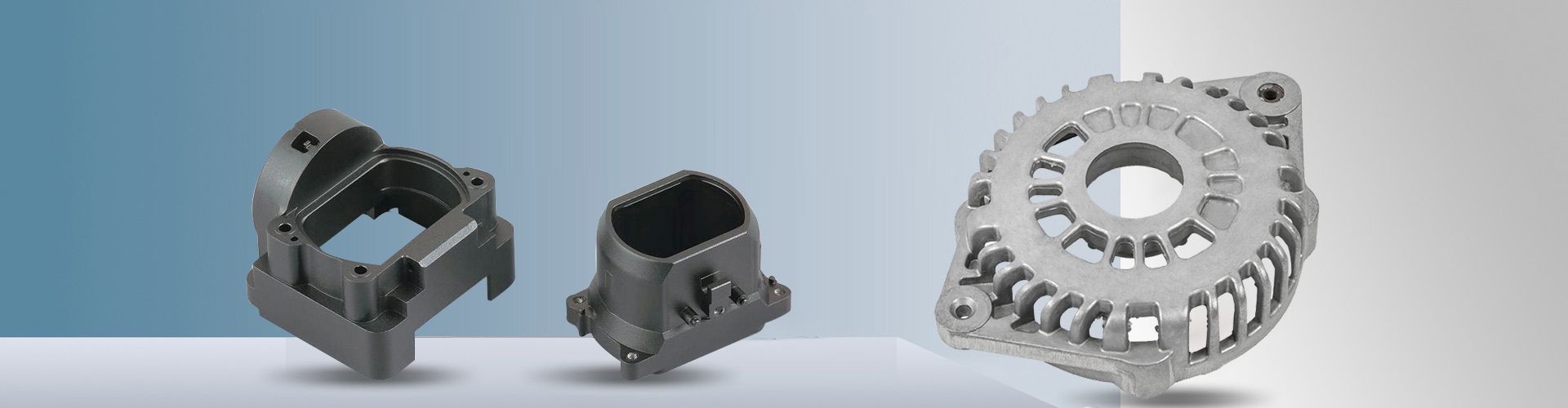
Die-Casting Parts Exporter Guide to Reliable Global Sourcing
2026-11-16
Sourcing die-casting parts globally often feels like navigating a maze of unverified suppliers and inconsistent quality. In this guide, we cut through the noise with practical strategies for finding exporters you can actually trust. Whether you're scaling production or switching vendors, BOYIKUN shares insider insights to help you secure reliable partners without the usual guesswork.
What ‘Reliable’ Actually Means When Sourcing Die-Casting Parts
Reliability in die-casting sourcing goes well beyond a supplier’s ability to quote a low price. It shows up in the repeatability of their process: shot after shot, cavity after cavity, the dimensions, surface finish, and mechanical properties need to stay within tolerance. A reliable partner doesn’t just send you a perfect first article and then drift; they monitor variables like die temperature, metal velocity, and holding pressure, adjusting before defects appear. Their scrap rates stay low not because they hide rejects, but because they understand how the process interacts with the specific alloy and part geometry.
Another side of reliability is how a supplier handles information and timing. You should be able to get honest updates on tooling progress, raw material availability, and any deviations without chasing them. A reliable source shares inspection data in a format you can actually use, flags potential issues before they become line-down emergencies, and meets delivery dates with realistic lead times. If a problem does occur, they own it, communicate quickly, and present a corrective action plan rather than excuses.
Finally, reliability includes the supplier’s ability to scale and support you after the first order. Tool maintenance, spare parts, and process documentation should be in place so that reorders match the original quality. Ask about their capacity, their backup plans for machine breakdowns, and how they handle material traceability. A truly reliable die-casting source is not just a vendor for a single batch; it’s a partner who keeps your production line moving without constant oversight.
Reading Between the Lines of Supplier Quality Claims
Supplier quality claims often sound flawless—"ISO certified," "zero defect rate," "premium materials." But an audit-ready phrase doesn't equal verified performance. The first step is to ignore the adjectives and ask what's missing. Does the supplier mention sampling frequency, rejection thresholds, or corrective action timelines? Without those numbers, the claim is just a slogan.
Look for asymmetry in language. A supplier that boasts about "state-of-the-art inspection equipment" but never mentions operator training or calibration records may be hiding a weak spot. Ask for the last three nonconformance reports. If they're reluctant, treat that hesitation as a data point. Real quality systems document failures; they don't airbrush them.
Finally, compare the claim against the contract. "Meets or exceeds ASTM standards" means little if the supplier won't attach the specific test method and pass/fail criteria. Push for raw data, not summaries. Certifications get you in the door, but only verifiable process control keeps you there.
The Hidden Costs That Inflate Global Die-Casting Orders
Most buyers fixate on the quoted price per kilogram and assume that number covers the finished part. The reality rarely works that way. Secondary operations like trimming, deburring, machining, surface treatment, and even packaging often arrive as separate line items or get buried in vague “miscellaneous” fees. Tooling maintenance is another quiet inflation point: a die that starts off sharp may need repairs or replacement sooner than expected, and those costs get passed back into the per-piece rate without any obvious signal.
Energy and alloy surcharges also move faster than most purchasing teams realize. A fixed quote can become obsolete within weeks when electricity prices spike or zinc and aluminum prices shift on global markets. Environmental compliance adds another layer—waste handling, emissions control, and reporting requirements differ by region and can turn a cheap supplier into an expensive one once the real cost of staying legal shows up. Tariffs, currency swings, and last-mile logistics costs only widen the gap between initial estimate and final invoice.
To avoid these surprises, request a full cost breakdown before placing an order. Ask specifically how scrap is handled—whether it is credited back or quietly kept by the foundry—and clarify who owns the tooling after production ends. Push for transparent Incoterms and payment terms that do not leave you covering hidden freight or insurance charges. The more granular the quote, the harder it is for hidden costs to hide.
Why Low-Cost Tooling Often Leads to Higher Long-Term Spending
The appeal of low-cost tooling is immediate: a quote comes in well under budget and the purchase feels like a smart move. But that initial saving rarely survives contact with a production floor. Cheap dies, molds, and fixtures tend to cut corners on material hardness, surface finish, and dimensional consistency. They start failing earlier, often after a few thousand cycles instead of hundreds of thousands. The result is a quiet drain: more frequent replacements, more emergency orders, and a growing pile of parts that no longer meet spec.
Downtime is where the real expense hides. When a bargain tool breaks or drifts out of tolerance, the line stops. Every hour of lost production costs more than the discount ever saved. Operators learn to compensate—adjusting feeds, shimming setups, hand-finishing parts—which adds labor hours and introduces variability. Scrap rates climb, and so does the time spent sorting good parts from bad. Over a year, these small deviations compound into a much larger bill than the premium tool would have carried.
A tool’s price tag only tells the first chapter of the story. Maintenance intervals shorten, spare parts become a recurring line item, and rework erodes margins. Smart buyers compare total cost per part over the tool’s expected life, not just the upfront invoice. They ask about heat treatment, precision grinding, and service life before signing off. That shift in thinking turns a low-cost purchase into an expensive lesson—or avoids it altogether.
Building an Overseas Supply Chain That Survives Disruptions
Most overseas supply chains fail not because of one catastrophic event but because they were optimized for a single, predictable flow. To build a network that holds up under stress, start by scattering critical sourcing across at least two geographically separated regions with different risk profiles. That doesn't mean abandoning cost discipline; it means treating freight, tariffs, and lead time variability as first-class variables, not afterthoughts. A second node within the same country often does less for you than a smaller, qualified supplier in a neighboring trade bloc.
The next layer is a deliberate inventory strategy tied to supplier behavior. Instead of blanket safety stock, map which components have the longest restart time after a disruption and hold those in bonded warehouses near your largest customer markets. Then negotiate with those suppliers for reserved production slots and shared buffer capacity. Many firms discover that paying slightly more per unit for this kind of priority access is cheaper than the revenue lost during a two-month shutdown.
Finally, build visibility that reaches past your direct contract manufacturers. Most surprises come from second- and third-tier suppliers, where a single plating plant or specialty chemical provider can halt an entire line. Require your key partners to disclose critical sub-suppliers and run joint simulations for port closures, customs holds, and regional power outages. This sounds heavy, but in practice it means monthly calls, shared dashboards, and a short list of pre-approved alternate logistics routes. The companies that survive disruptions are rarely the ones with the most plans; they're the ones whose teams have practiced acting on incomplete information.
When to Walk Away from a Die-Casting Export Negotiation
In a die-casting export deal, one clear signal to step back is when the buyer insists on an unrealistically low piece price while simultaneously refusing to share tooling costs. Die-casting molds are expensive, often tens of thousands of dollars, and if the customer expects you to absorb that upfront investment with no commitment on volume, you are essentially subsidizing their production line. A serious buyer understands the tooling is a shared asset; if they dismiss this outright, walk away before the negotiation drains your engineering time and cash flow.
Another red flag is a persistent vagueness about technical specifications, quality standards, or certification requirements. A legitimate die-casting project will have detailed drawings, material grades, surface finish expectations, and often third-party inspection norms. If the other side keeps saying "we'll figure it out later" or avoids answering direct questions about tolerances, porosity limits, or post-machining needs, you are being strung along. This behavior often masks a fishing expedition for free quotes or a plan to later reject parts on undefined grounds, so exiting early protects your team from endless revisions and false starts.
Finally, walk away when the payment terms shift from a workable balance to outright exploitation. A request for 100% open account with no deposit, combined with long payment delays or a refusal to use any escrow or letter of credit, is a deal-breaker in export die-casting. Add to that a volatile currency pair or a buyer in a country with weak contract enforcement, and your margin can vanish before the container leaves the port. Trust your numbers: if the risk-adjusted profit no longer covers your overhead and potential rework, a polite "no" is often the strongest negotiating position you have.
FAQ
Look beyond brochures. Request a plant audit or at least a video walkthrough showing real-time production, die storage, and quality lab. Check if they own their tooling maintenance team and have in-house X-ray or CT inspection. Ask for three recent clients in your industry and contact them directly.
A380 and ADC12 dominate for general-purpose parts because they balance castability, strength, and cost. A383 offers better resistance to hot cracking, while A360 provides higher corrosion resistance for marine or outdoor use. If you need pressure tightness, specify A356 or a similar heat-treatable alloy, but expect longer lead times and higher cost.
Set up a layered inspection protocol. Require first article inspection reports with dimensional data for each cavity, not just one sample. Ask for SPC data on critical dimensions from every batch, and specify a zero-defect sampling plan for surface finishes. Many buyers also use third-party inspection agents for random pre-shipment checks.
Price differences often come from tooling steel quality, cavity count, and secondary operations included. A quote that looks cheap may exclude trimming, deburring, machining, or surface treatment. Ask for a breakdown covering alloy cost, tonnage rate, cycle time, scrap rate, and post-processing. Also confirm whether they use recycled or primary ingot.
Clearly state in the contract that you own the tooling and any modifications. Mark each die with your company name and part number. Require the exporter to store dies in a dedicated area with environmental control. Before production, agree on a maintenance log and a maximum number of shots between major servicing. If you ever need to move the tool, the exporter must release it within 30 days after final payment.
Internal porosity, cold shuts, and non-fill are the usual culprits. Exporters should run X-ray or CT on initial samples and then use a reduced sampling plan for production. For structural parts, require tensile or pressure testing. Surface defects like drag marks or soldering can often be caught with a visual standard board, but make sure the standard is agreed upon before production.
That depends on your total landed cost and risk tolerance. Low-cost countries can save 20-40% on piece price, but you may face longer lead times, higher logistics costs, and more difficulty resolving quality disputes. Nearby suppliers offer faster iteration and easier returns. Many buyers now use a hybrid model: low-cost sourcing for high-volume stable parts, and local suppliers for new product launches or low-volume complex parts.
Work with exporters who keep a buffer of common alloys and maintain a die tryout schedule. Reserve machine time in advance and pay for a dedicated production slot. Standardize part designs to reduce tooling complexity. Also agree on a digital approval process for samples, so you don't lose days waiting for physical shipments.
Conclusion
When sourcing die-casting components internationally, reliable rarely shows up in a supplier’s glossy brochure. It lives in how honestly they discuss rejection rates, process controls, and metallurgical traceability. A quote that claims ISO compliance or world-class quality means little until you push for batch-level inspection data, tooling maintenance logs, and the name of the foundry actually pouring your parts. Hidden costs often hide in logistics, secondary finishing, packaging that survives ocean freight, and the inevitable rework when tolerances drift. Low-cost tooling is the classic trap: a cheap mold made from soft steel may survive initial samples, then degrade mid-production, forcing you to pay for repairs, missed shipments, and a replacement tool you should have bought from the start. The real unit price is never just the piece price on the invoice.
Building an overseas supply chain that survives disruptions requires more than two approved vendors in one industrial park. You need geographic diversification, shared tooling drawings that another factory can pick up quickly, and contractual clarity on raw material origins. Watch for suppliers who promise everything during negotiation but go silent when you ask about their subcontractors, their in-house heat treatment, or how they handle a sudden port closure. A clear signal to walk away is when an exporter refuses to commit to dimensional inspection reports per shipment, or when their price drop comes with vague material substitutions. Another red flag: they cannot explain how they would reallocate capacity if a machine goes down for two weeks. Reliable means they have already weathered a disruption and learned from it, not that they claim they never have problems. The best partners treat your tolerance stack-up as seriously as you do.
Contact Us
Contact Person: Xianchen Hu
Email: [email protected]
Tel/WhatsApp: 86-13248645200
Website: https://www.hexnb.com/