

Export Non-Oriented Electrical Steel: Key Trends and Global Market Insights
2026-06-18
The global market for non-oriented electrical steel is transforming rapidly, driven by surging demand in energy-efficient motors and electric vehicles. Behind these shifting trade flows and emerging trends, one name is gaining attention: Jiangsu Baowu New Materials. So, what's fueling the export momentum, and where are the real opportunities hiding?
Where Non-Oriented Electrical Steel Demand Is Surging
The electric vehicle revolution is doing more than just changing how we drive—it's reshaping the metals market. Inside every EV motor, stacks of thin non-oriented electrical steel laminations work tirelessly to convert battery power into motion. As automakers scramble to meet emissions targets and consumer demand, their appetite for these specialized grades has spiked dramatically. A single electric vehicle can use up to 100 kilograms of the material, which means the sector is already pulling sharply on global supply chains.
Beyond the automotive world, the clean energy transition is opening up entirely new pockets of demand. Wind turbines, heat pumps, and industrial motors are all growing markets that rely on highly efficient electrical steel to minimize energy loss. Governments in Europe and Asia are funneling billions into grid modernization and renewable projects, creating a ripple effect that trickles down to the steel mills. It's not just about volume either—the push for class-leading efficiency is forcing producers to develop thinner, lower-loss grades that command premium prices.
Look closely at the geographic map, and you'll see the surge isn't distributed evenly. China remains the heavy hitter, consuming over half the world's supply as it races ahead with EV production and infrastructure spending. India is emerging as a dark horse, with ambitious plans for manufacturing and a rapidly expanding power grid. Meanwhile, U.S. and European mills are investing in capacity after years of relying on imports, driven by local content rules and a desire for supply chain resilience. This shifting landscape means that where the steel gets made—and where it gets used—is a story in constant motion.
How Trade Policies Reshape Export Flows
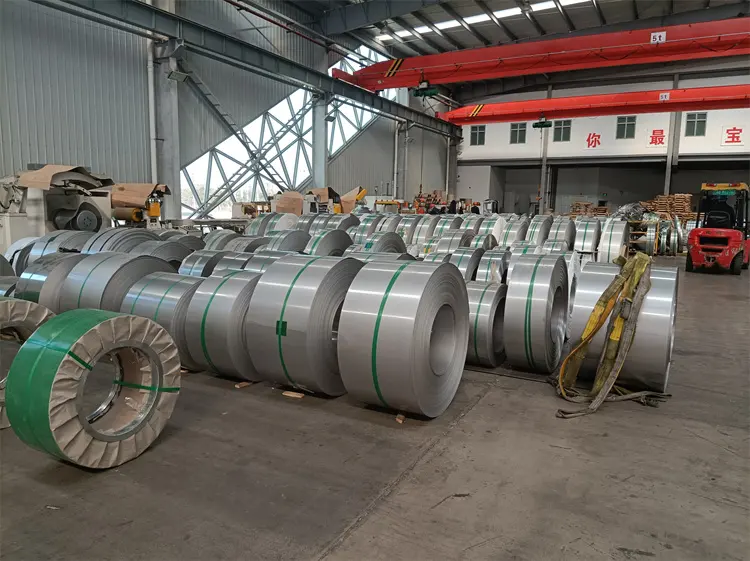
When governments adjust tariffs or introduce new trade barriers, the immediate effect often ripples through long-established supply chains. Exporters who once relied on predictable demand from a neighboring market suddenly find their goods priced out, forcing a rapid pivot toward alternative buyers. This isn’t just about losing a few percentage points of market share—whole industries can see their geographic focus shift within months. A machinery manufacturer in Germany, for instance, might watch its shipments to China drop sharply after retaliatory duties, only to ramp up deliveries to Southeast Asian countries where trade agreements have lowered entry costs.
Beyond the blunt instrument of tariffs, subtle policy shifts like stricter rules of origin or environmental standards quietly reshape export flows. A shipment of textiles might need to demonstrate that its cotton was sourced from a specific region to qualify for preferential treatment, redirecting raw material imports and altering which ports handle the finished goods. These technical requirements often fly under the radar, yet they force logistical recalibrations that accumulate into significant trade pattern changes. Companies end up reorganizing not just where they sell, but how they source components and where they position warehouses.
The unpredictability of modern trade policy creates an environment where export strategies require constant fine-tuning. A bilateral deal announced on a Friday can make Monday’s container shipments suddenly more expensive or open a previously unattractive market. This volatility rewards firms that invest in flexible distribution networks and maintain relationships across multiple regions. The result isn’t just a one-time shift—it’s an ongoing reshuffling where trade routes thicken and thin based on the latest policy signals, with exporters learning to read the political winds as closely as exchange rates.
The Efficiency Race Driving Product Innovation
Speed has quietly become the most ruthless differentiator in product design. It’s no longer just about who gets to market first—internal velocity reshapes how teams think, prototype, and kill bad ideas before they calcify. When cycle times shrink, the entire innovation logic shifts: you stop polishing guesses and start validating hunches in weeks, not quarters. This pressure cooker environment doesn’t just accelerate output; it forces a raw, iterative honesty that stage-gate processes never could.
What’s interesting is how this race rewires risk. In a slow-moving org, failure is radioactive—something to bury in post-mortems. But when efficiency dictates the rhythm, small, fast failures become the fuel. Teams learn to spot early signals that a feature will tank, pivoting without sunk-cost tantrums. The product itself becomes a living document, constantly rewritten by real usage data rather than conference room assumptions. That constant churn isn’t chaos; it’s a filtering mechanism that lets genuinely useful ideas surface faster.
The real magic happens when this efficiency mindset bleeds into unexpected corners. Supply chain nerds start co-designing with engineers because faster iteration exposes dependencies no one mapped. Customer support logs become a real-time feedback loop instead of a quarterly report. Even marketing learns to launch alongside product tweaks rather than waiting for a “final” version that never really exists. The race doesn’t just speed things up—it blurs the lines between disciplines, creating a messy, productive overlap where the most unexpected innovations hide.
Supply Chain Shifts Few Saw Coming
The sudden pivot in global trade routes caught many by surprise. As geopolitical tensions simmered, companies swiftly moved production from established hubs to emerging markets in Southeast Asia and Latin America. This wasn't a gradual transition—it happened almost overnight, driven by tariff wars and the urgent need for resilience over efficiency. Manufacturers who had long relied on just-in-time models now scrambled to build buffer stocks and dual-source critical components.
Another unexpected twist came from the logistics sector itself, where autonomous trucks and drones quietly reshaped last-mile delivery far faster than analysts predicted. While the public focused on passenger vehicles, supply chain operators were already using these technologies to bypass driver shortages and port congestion. At the same time, blockchain solutions achieved practical scale, providing end-to-end transparency that suddenly made real-time inventory tracking a reality rather than a buzzword.
Perhaps the most under-the-radar development was the rise of circular supply chains. Companies began recovering and reusing materials on a scale that few thought profitable, driven not just by regulation but by raw material scarcity and consumer pressure. This closed-loop approach disrupted traditional linear models and created entirely new value streams from what was once considered waste.
Regional Hotspots for Future Export Growth
The landscape of global trade is quietly reshuffling. While established markets still command significant volumes, the real pulse of future export expansion beats in regions that blend demographic shifts, policy reforms, and infrastructure leaps. These aren't just blips on a chart—they're sustained reconfigurations of supply chains and consumer markets that savvy businesses are already monitoring.
Southeast Asia, for instance, has moved far beyond its reputation as a low-cost manufacturing alternative. Countries like Vietnam and Indonesia are constructing entire ecosystems—from component suppliers to logistics networks—that feed directly into high-growth industries like electronics and renewable energy. The pull isn't simply about chasing cheaper labor; it's about accessing clusters of specialized capability that didn't exist a decade ago.
Meanwhile, pockets of Africa are rewriting their own trade narratives. The African Continental Free Trade Area is gradually knitting together fragmented markets, while investments in port expansion and digital payment rails lower the friction that once stifled cross-border commerce. A youthful, urbanizing population is creating demand patterns that homegrown and foreign brands alike are starting to serve with tailored products, not just hand-me-downs from other continents.
Overlooked Hurdles in Global Distribution
When expanding into new territories, many companies fixate on logistics and tariffs, yet the quiet destroyers of global distribution often lie in the nuances of local partnerships. A distributor who seems ideal on paper may lack the cultural fluency to position your product in a way that resonates, or they might overpromise shelf space that never materializes. Without boots on the ground to verify their claims, you’re essentially navigating a market blindfolded, hoping your brand lands gracefully while competitors who’ve done the legwork sail past.
Then there’s the labyrinth of after-sales service, a factor that gets deprioritized until returns and complaints start rolling in from halfway across the world. Setting up a repair network, training local technicians, and managing spare parts inventory across borders isn’t just costly—it’s fraught with hidden delays. One misstep in documentation can hold a critical shipment at customs for weeks, turning a minor hiccup into a reputational scar that local customers will remember long after you’ve fixed the issue.
Finally, the regulatory undercurrents shift more often than most anticipate. A labeling requirement that seemed trivial in one quarter can become a full-blown compliance crisis the next, especially in markets where rules are interpreted differently by regional inspectors. Too many brands learn this lesson through costly product recalls or, worse, a forced pause in sales that erodes the momentum they spent years building. Global distribution isn’t just about moving goods—it’s about reading the invisible rules that govern each doorstep your product crosses.
FAQ
Non-oriented electrical steel is a specialized alloy with uniform magnetic properties in all directions, making it essential for energy-efficient motors, generators, and transformers. Without it, the push toward electrification and renewable energy would face major efficiency losses, as it directly reduces energy dissipation in electrical equipment.
China, Japan, and South Korea lead exports, with China alone accounting for over half of global shipments due to massive production capacity. However, Germany and the United States also play significant roles, particularly in high-grade steels that cater to specialized industrial applications.
The electric vehicle boom has dramatically boosted demand, as each motor requires significant amounts of non-oriented electrical steel. This surge has prompted automakers to secure long-term supply deals, reshaping trade routes and pushing mills to expand capacity specifically for automotive-grade material.
Exporters must navigate volatile raw material costs, especially for iron ore and silicon, while contending with increasingly protectionist trade measures. Logistics bottlenecks and the need to meet varying international standards also add layers of complexity that weren’t as pronounced a decade ago.
Southeast Asia, particularly Vietnam and Thailand, is becoming a hotbed due to rapid industrialization and electronics manufacturing. Eastern Europe, led by Poland, is also drawing attention as a production hub for automotive components destined for Western European markets.
Antidumping duties and safeguard measures have forced rerouting of shipments, with importers seeking alternative sources to avoid penalties. For instance, U.S. tariffs on Chinese steel prompted a shift toward South Korean and Taiwanese suppliers, fundamentally altering established trading patterns.
Thinner-gauge rolling and advanced coating techniques are enabling cores with lower heat loss, while artificial intelligence is optimizing alloy compositions. These improvements not only boost motor efficiency but also allow manufacturers to meet stricter energy regulations without sacrificing performance.
Expect continued growth driven by green energy mandates and grid modernization, though the landscape will likely see more regionalization as countries prioritize domestic supply security. Innovations in recycling and low-carbon production methods will also redefine competitive advantages among exporting nations.
Conclusion
Non-oriented electrical steel is witnessing a surge in demand from industries striving for greater energy efficiency. This uptick is particularly pronounced in regions like Southeast Asia and India, where rapid industrialization and expanding power grids are fueling consumption. Simultaneously, trade policies—ranging from punitive tariffs to strategic incentives—are rerouting export flows, forcing suppliers to constantly reassess market access. The relentless push for higher-efficiency motors and transformers has ignited an innovation race, with manufacturers developing thinner gauges and lower-loss alloys to stay competitive.
Less visible but equally disruptive are the supply chain reconfigurations that few predicted. Raw material bottlenecks and logistic redirections have prompted a rethinking of sourcing strategies, with some producers nearshoring or diversifying their supply bases. Looking ahead, hotspots like the Middle East and Africa will offer fresh export opportunities as infrastructure investments deepen. Yet, persistent hurdles in global distribution—from inconsistent technical standards to opaque customs practices—remain underappreciated friction points that can derail even the best-planned exports.
Contact Us
Contact Person: Zoe Liang
Email: [email protected]
Tel/WhatsApp: 86 189 2128 6299
Website: https://www.baowuchina.com