Geotextile Fabric Supplier Insights for Choosing the Right Materials on Your Next Build
2026-10-28
Geotextile fabric may not be the first thing you spec on a build, but it's often the layer that decides whether the rest of your work holds up. From separation under roadways to filtration behind retaining walls, the right material—and the supplier behind it—changes everything. In this guide, we distill practical geotextile fabric supplier insights you can use on your next build: what to check in polymer type, weight, puncture resistance, and roll size before you commit. And if you're tired of guesswork, JInseed Geosynthetics Solution offers the technical support to match fabric to site conditions with confidence.
What a Seasoned Geotextile Fabric Supplier Checks Before You Discuss Price
Before a single figure is quoted, a seasoned geotextile fabric supplier will dig into the raw polymer specs. Not all polypropylene or polyester is equal—variations in melt flow index, UV stabilization packages, and even recycled content directly alter long-term strength and filtration performance. They will ask about your project's soil type, expected hydraulic loads, and whether the fabric sits in permanent sunlight or gets buried. If a supplier jumps straight to cost per square meter without checking these details, you're likely getting a generic quote that may fail in the field.
Another non-negotiable checkpoint is manufacturing consistency and roll integrity. Experienced suppliers inspect the production lot for uniform thickness, puncture resistance, and proper roll winding tension. Poor tension leads to telescoping or edge damage during transport, which means wasted material on site. They also verify that each roll's label matches its test certificate—batch numbers, tensile strength, and apparent opening size. This step separates vendors who simply move inventory from those who understand that a geotextile's value is proven under a compactor, not on a price sheet.
Finally, a supplier worth negotiating with will confirm site access and delivery constraints before talking numbers. Can trucks reach the laydown area? Are there offloading equipment or time restrictions? These factors influence freight cost and scheduling far more than the fabric's unit price. By addressing logistics, storage, and even installation sequencing up front, a seasoned supplier prevents change orders later—and that's where the real cost savings hide, well beyond any discount on the roll itself.
Matching Fabric Choice to Subgrade Reality on Your Next Build
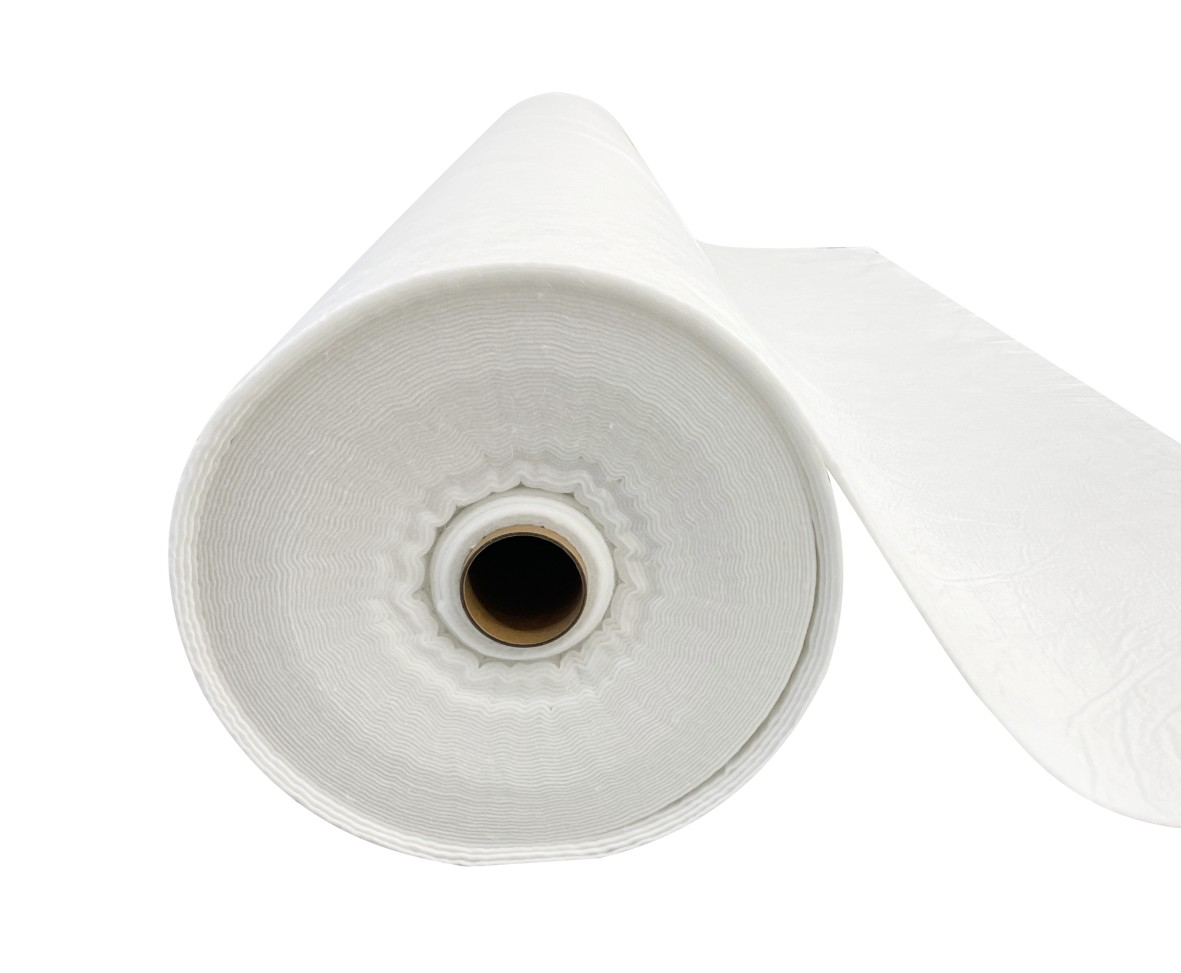
Picking the right geotextile isn't about following a generic chart—it's about reading what the ground under your feet is actually telling you. On a recent project, we hit a pocket of silty clay that looked dry on the surface but turned to soup after two days of rain. The woven fabric spec'd on the original drawings would have clogged within a week, trapping water and turning the base into a sponge. Instead, we switched to a heavyweight nonwoven with high permittivity, and the difference was night and day. The subgrade stayed firm, and the aggregate stayed clean. That kind of call comes from watching how water moves across the site before the first roll ever gets unloaded.
Too many builders treat fabric choice as a box to check—one layer, whatever's in the yard, done. But subgrades vary wildly even within a hundred feet. A stretch of compacted gravel next to a swale behaves completely differently from a low spot that holds moisture after every storm. If you're dealing with a weak, saturated zone, a high-strength woven might bridge the soft spot but fail to drain, creating a bathtub effect under your stone. Conversely, a lightweight nonwoven over a stable, well-drained base is just wasted money. The trick is to match the fabric's primary job—separation, filtration, reinforcement, or drainage—to the actual failure mode you're trying to prevent, not the one the spec writer imagined back in the office.
Field testing beats any datasheet. Before you commit to hundreds of square yards, take a sample and lay it over the worst patch of subgrade you can find. Drive a loaded pickup across it, then dig a test pit the next morning. Look for pumping, rutting, or fabric that's stretched tight like a drum—those are signs of insufficient strength or poor pore structure. Watch what happens after a heavy rain: does water bead on top, or does it seep through and leave the soil beneath stable? The right fabric should let water escape without letting fines migrate. When the subgrade reality shifts—and it always does—having a backup roll with different flow characteristics can save a whole day of downtime and a whole lot of rework.
Why Two Rolls with Identical Specs Behave Differently on Site
Even when two rollers leave the factory with the same drawings, the same material certifications, and the same test reports, the real world has a way of introducing variables that no spec sheet can capture. One drum might have been machined on a Tuesday morning after a fresh tool change, while the other came off the line late on a Friday with a slightly worn cutting edge. That difference of a few microns in surface finish or a barely perceptible variation in weld penetration can shift how the roll interacts with the material on site—whether it grips, slips, or wears unevenly.
Installation conditions often play a bigger role than the roll itself. A perfectly balanced roll mounted on a slightly misaligned shaft will vibrate, run hot, and chew through bearings, while an identical sibling on a properly aligned frame hums along for years. Foundation stiffness, ambient temperature swings, and even the operator’s habit of nudging the feed speed can mask or exaggerate differences that look trivial on paper but show up as real downtime in the field.
Material variability is the quiet culprit in many of these head-scratchers. Two rolls with identical hardness and crown can perform differently because the stock running over them isn’t truly uniform—moisture content, surface scale, or tension fluctuations from the upstream process all feed back into how the roll behaves. The roll that works beautifully on a clean, dry web may struggle on a humid day, while its twin on another line sees a completely different set of conditions and earns a reputation that has little to do with its actual specifications.
The Hidden Cost of Picking Fabric Weight Before Understanding Soil
Most growers rush to compare fabric weights—3.2 oz versus 5 oz—as if the number alone predicts how well a ground cover will perform. But fabric weight is only half the story. What actually matters is how that fabric interacts with the soil beneath it. A heavier fabric on compacted clay traps moisture and suffocates root zones, while a lighter fabric on sandy loam may blow loose or tear during cultivation. The hidden cost shows up weeks later: stunted growth, uneven irrigation, or a mid-season replacement that doubles your labor bill.
Ignoring soil type before choosing fabric weight leads to a cascade of small failures. Heavy non-woven fabrics retain heat and block gas exchange, which is disastrous in high-clay soils that already struggle with drainage. Conversely, choosing a featherweight woven fabric for loose, wind-prone soil invites billowing and edge lift, forcing you to buy extra staples or sandbags. These fixes feel cheap at first, but they accumulate—extra pins, more frequent checks, and patches over torn corners. Before long, the so-called savings from a “budget” fabric vanish into maintenance hours.
The smarter path is to read the soil first. Grab a handful, squeeze it, and watch how water moves through. Then match the fabric weight to the soil’s drainage, wind exposure, and crop root depth. A 3.4 oz woven polypropylene might beat a 5 oz non-woven in sandy soil, simply because it lets air and water pass without lifting. By reversing the decision order—soil first, fabric second—you avoid the hidden tax of rework, stressed plants, and wasted afternoons re-pinning edges.
When a Good Supplier Pushes Back on Your Initial Material Choice
Good suppliers don't just say yes. When they push back on your initial material pick, it's usually because they've seen that material fail in your application or because they know a better option that costs less without cutting corners. Instead of treating this as resistance, ask what they would use if it were their own project. That one question often reveals the gap between a spec sheet and real-world performance.
The pushback can feel like an obstacle, but it's often a shortcut. A supplier who questions your choice before tooling begins saves you from discovering the problem after parts arrive. Listen for the specific reason: Is it lead time, moisture sensitivity, regulatory trouble, or something about how the part will actually be molded or machined? The reason tells you whether to hold your ground or adjust.
Sometimes the right response is to revise the material, but not always. If the supplier can't support their concern with data or comparable field examples, you may need to insist. A good supplier will respect a clear, evidence-based decision. The goal isn't to win the argument—it's to end up with a part that works every time, not just on paper.
Reading Spec Sheets Like a Foreman Not a Data Entry Clerk
A foreman reads a spec sheet looking for conflicts before they reach the pour or the weld booth. You circle the note that calls for a 3/8-inch fillet, then flip to the general notes and see a requirement for 5/16. That mismatch is the real information. You don't just log the numbers; you test them against the plans, the cut sheets, and what the crew can physically execute on a Tuesday afternoon.
The habit that separates foremen from data entry is interrogation. You ask why a tolerance is plus or minus an eighth when the adjacent trade is working with steel studs that move under a sneeze. You check whether the specified anchor pattern matches the substrate that's actually on the truck. Every spec line gets a practical question: Can this be installed as written, or is this another office-versus-field correction waiting to happen?
Eventually you build a mental map of suppliers, material lead times, and the sequence of trades. A spec sheet isn't a checklist to be typed into a log; it's a set of instructions that will either hold up or fall apart under the weight of an actual building. You read it like a person accountable for the outcome, not like someone whose job stops at the keyboard.
FAQ
Look for a supplier who asks about your subgrade conditions, drainage needs, and load expectations rather than just quoting a roll. Check their track record with similar builds, whether they offer testing data for tensile strength and puncture resistance, and how quickly they can deliver replacements if a spec changes on site. A supplier with engineers on staff can save you from choosing the wrong fabric for soft soils.
Woven fabrics are stronger and work well for stabilization and reinforcement under roads or parking lots. Non-wovens are better for drainage, filtration, and separation because they allow water through while blocking soil particles. If you need both strength and flow, some suppliers offer hybrid or composite options. Think about the main job the fabric has to do: hold a load or move water.
One common mistake is grabbing the cheapest non-woven for every job, then seeing it tear during aggregate placement. Another is ignoring the soil's moisture content—clogging happens when fabric is matched poorly to fine silts. Some builders also skip checking AASHTO or ASTM standards, which leads to under-spec fabric on high-traffic areas. Ask your supplier for the specific test results, not just a generic "heavy duty" label.
Puncture resistance matters a lot because sharp aggregate gets dropped from height during installation. If the fabric punctures, it can't separate subgrade from stone, and you lose long-term stability. Tear resistance helps when fabric is pulled tight over rough ground or when equipment turns on it. Compare suppliers' CBR puncture values and trapezoid tear numbers—don't settle for a fabric that only lists tensile strength.
Yes, the right supplier will help you plan roll widths and overlaps to match your site dimensions. Some can provide custom slitting or pre-cut lengths, which cuts down on field cutting and scrap. They may also suggest using a lighter fabric for separation and a heavier one only in load-bearing zones, so you don't overbuy. Ask about return policies for unopened rolls if your project scope shifts.
Ask for permittivity and apparent opening size (AOS) data—these tell you how fast water passes and what soil particle sizes are retained. Also ask if the fabric is compatible with the surrounding aggregate; a fabric that's too tight can clog with fine silts, while one too open lets soil wash through. A good supplier will want to know your soil's gradation and the type of drain (trench, blanket, or edge drain) before recommending anything.
Request third-party test reports from an accredited lab for the specific lot you're buying, not just a brochure. Look for consistency in weight, thickness, and tensile strength across multiple rolls. If possible, visit their warehouse or ask for reference jobs where the same fabric was used after heavy rain. Also check if the supplier labels rolls with manufacturing dates and lot numbers for traceability.
More builders are asking for recycled or bio-based polymers without sacrificing long-term performance. There's also a push toward fabrics with integrated UV stabilizers for longer exposure during construction delays. Some suppliers now offer digital tools that let you input subgrade CBR and load calculations to get a fabric spec in minutes. These tools can reduce guesswork, but still pair them with an engineer's review on tricky sites.
Conclusion
A supplier who has been at this long enough will walk your site before ever quoting a number. They look at how water moves, what the subgrade actually feels like underfoot, and whether the soil is going to fight you during compaction. That field read matters more than the spec sheet because two rolls with the same tensile numbers can install completely differently once they hit clay, sand, or organics. You are not buying a generic separator or reinforcement layer—you are buying a solution that has to survive your exact ground conditions, not a lab sample.
Picking a heavier fabric because it sounds safer often backfires when the real problem is fines pumping through an open weave or a soft spot that needed a stiffer biaxial grid. A good supplier will push back on your first call and ask why you settled on that weight, because the hidden cost is a failed lift or a re-excavated pad. Read the data like someone who has been on a dozer, not someone ticking boxes in an office. The numbers mean nothing until you know how the roll will behave at the edges, under truck traffic, and after a rain.
Contact Us
Contact Person: Jerry Qiu
Email: [email protected]
Tel/WhatsApp: +65 84265294
Website: https://jinseed-geo.com