
High Quality Concrete Laser Screed: Expert Recommendations for Flawless Leveling
2026-06-22
Achieving a perfectly level concrete floor is a challenge that demands precision and the right equipment. When every millimeter matters, a high quality concrete laser screed becomes the cornerstone of a flawless finish. At Dynamic, we’ve seen how the right tool transforms projects—saving time, reducing labor, and eliminating guesswork. But with so many options on the market, how do you choose the best one? This guide cuts through the noise, offering expert recommendations to help you invest in a screed that delivers consistent, high-performance results every time.
Mastering the Setup: Pre-Screed Checks for a Perfect Foundation
Before the screed even touches the ground, a handful of critical checks can make or break the entire foundation. It’s easy to overlook the subtle details—like verifying that all formwork is locked in place or that the subgrade has the right moisture content—but these small oversights often spiral into uneven slabs or costly rework. A disciplined walkthrough, clipboard in hand, transforms the pre-screed phase from a rushed formality into a deliberate practice that sets the tone for everything that follows.
One often-underestimated step is confirming that the vapor barrier lies completely flat, without a single wrinkle or tear. Even a minor breach can invite moisture migration later, silently compromising the slab’s integrity. Pair that with a laser-level sweep to double-check the final elevation pins—adjusting any that have shifted from foot traffic or equipment vibration—and you’ve already eliminated two of the most common culprits behind wavy finishes. It’s not about perfectionism; it’s about building a habit of catching problems while they’re still cheap to fix.
Communication during these checks is just as vital as the technical measurements. A quick huddle with the pump operator about the pour sequence, a nod to the finishers that the edge forms are dead-on, and a clear signal to the batch plant that you’re ready—these human touchpoints turn a disjointed crew into a synchronized team. When everyone shares the same mental picture of a flawless start, the screed work itself feels less like a battle and more like a well-rehearsed rhythm.
Calibrating Your Laser Screed: Small Adjustments That Make a Big Difference
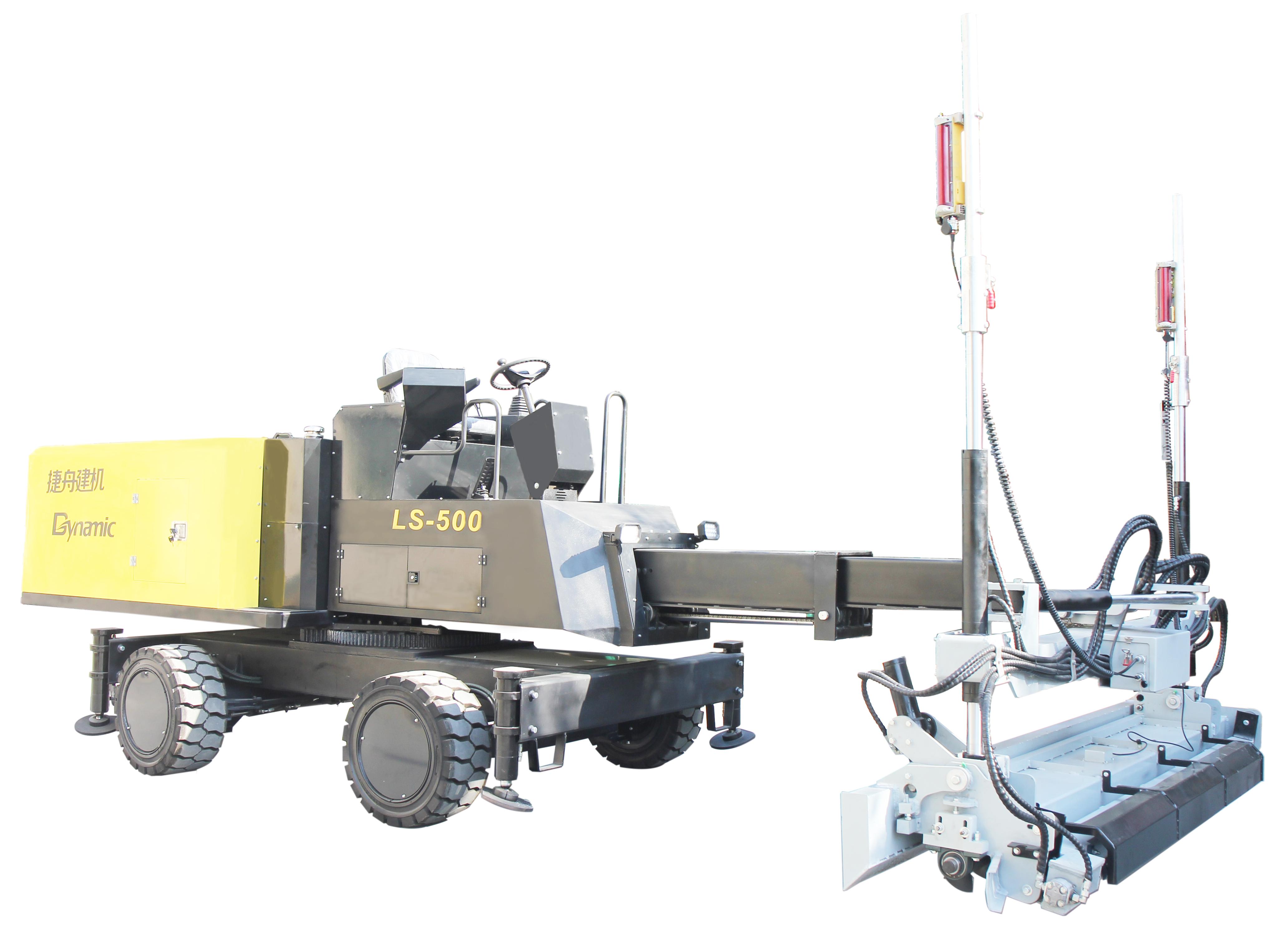
Often, operators assume the laser screed is perfectly calibrated out of the box, but minute discrepancies can throw off an entire pour. Spending a few extra minutes verifying the level sensor's alignment and checking the mast's verticality can prevent hours of rework later. It’s these tiny, methodical checks that separate a flawless slab from one riddled with undulations.
One underrated adjustment is fine-tuning the receiver’s dead band—the range where the screed doesn’t react. Narrowing it forces the machine to respond to the slightest elevation shifts, yielding a tighter tolerance. Similarly, recalibrating the short-range sensors for near-zero tracking ensures that when you transition from a thicker to thinner section, the screed doesn’t lag or overcorrect.
Don’t overlook environmental factors. A thermal shift between morning and afternoon can alter laser accuracy; taking a moment to re-zero the system after a break pays off in consistency. In the end, these small, deliberate tweaks accumulate into a floor that’s not just level, but mirror-flat—saving material, labor, and reputation.
Reading the Slump: How Mix Consistency Affects Screed Performance
Screed operators know the slump of a concrete mix isn’t just a number on a test sheet—it’s a direct predictor of how the material will behave under the screed. When the mix is too wet, it flows easily but lacks the body needed to hold a uniform profile; the screed may glide through it without proper compaction, leading to bleed water rising to the surface and a weakened top layer. Conversely, a dry mix resists flow, forcing the screed to work harder, which can drag aggregate, tear the surface, or leave behind low spots that require excessive handwork to correct. The ideal consistency allows the screed to carry paste and stone together in a smooth, continuous motion, striking off a surface that needs minimal bullfloating.
The relationship between slump and screed interaction goes deeper than initial leveling. As the screed moves across a low-slump mix, the friction increases, transferring vibration into the concrete in a way that can overcompact the surface if not managed properly. This often results in a crust-like layer that traps air or moisture beneath, creating hidden flaws that only appear after curing. On the flip side, a higher slump reduces friction to a fault—the screed tends to sink or hydroplane, pushing paste away and leaving behind a coarse, open texture that lacks durability. Matching the slump to the screed’s weight, vibration frequency, and the pour’s specific demands is an art developed through observation rather than rigid specs.
Adjusting mix consistency on the fly is a common reality on job sites where weather, aggregate moisture, or delivery timing shifts the conditions. A seasoned finisher reads these changes by watching the screed’s wake: a smooth ribbon of paste indicates a balanced mix, while tearing or slumping edges signal trouble. Rather than relying solely on a slump cone, they feel the response through the machine—the engine’s strain, the amplitude of vibration, and the effort required to maintain forward speed all tell a story. This hands-on judgment refines the placement, ensuring the screed performs not as a theoretical tool but as an extension of the crew’s intent, producing a slab that meets both flatness and longevity expectations without costly corrections.
Strategic Screeding Patterns to Eliminate Low Spots and Overworking
Screeding isn't just about dragging a straightedge across the slab—it's about creating a deliberate pattern that prevents material from piling up in the wrong places. Starting from the highest corner and working outward in a fan shape keeps the surface level without overcompensating in areas that are already close to grade. This approach means you're not constantly pushing excess back and forth, which only leads to fatigue and inconsistent compaction.
Many finishers fall into the trap of screeding in long, straight passes from one end to the other, but that can leave subtle waves unless you overlap each stroke by at least a third. A better technique is to use shorter, staggered pulls that break the surface tension of the concrete and let it settle uniformly. If you're working with a laser or preset screed rails, you can map out low spots beforehand and plan your passes to hit those areas from multiple angles, gradually building up rather than trying to fill them in one heavy lift.
Pay attention to how the bleed water appears—it tells you where you're overworking the surface. If the same section keeps sheening before the rest, you're likely pressing too hard or going over it too many times. By varying the direction of your screed strokes and letting gravity do more of the work, you'll cut down on unnecessary troweling later and end up with a flatter, denser slab that doesn't hold water in unexpected dips.
Handling Edges, Joints, and Transitions Without Losing Flatness
Maintaining flatness across edges, joints, and transitions demands careful attention to material behavior and assembly techniques. When two surfaces meet, even minor misalignments can disrupt the overall plane, so it's essential to control tolerances from the start. Using precision-machined edges that mate cleanly reduces the need for excessive clamping or filling, which often introduces subtle warping. In woodworking, for example, joining boards with sprung joints or spring joints can absorb seasonal movement while keeping the surface flush. The key is to anticipate how materials will react over time and design connections that allow for micro-adjustments without compromising the flat reference plane.
Joints represent natural weak points where flatness can easily be lost if not reinforced correctly. Instead of relying solely on adhesives that may shrink or expand, consider using mechanical fasteners in slotted holes to permit fine-tuning during assembly. For larger panels, a floating tenon or biscuit joint can align surfaces while leaving room for slight adjustments before the glue sets. Another effective method is to stagger joints across a structure, preventing any single line from becoming a pivot point for distortion. The goal is to distribute forces evenly so that no single joint bears the responsibility of keeping everything flat—this minimizes the risk of gradual warping.
Transitions between different materials or sections often introduce unevenness due to varying expansion rates or fabrication inconsistencies. To manage this, create a deliberate intermediate zone—like a flexible gasket or a scarf joint—that acts as a buffer, absorbing differences without telegraphing them through the surface. In metalworking, stress-relief grooves machined along transition lines can prevent heat distortion during welding. When laminating composites, a stepped or tapered edge ensures that the layers merge without a sudden thickness change. Ultimately, treating edges and joints not as mere boundaries but as integral parts of the flat system allows for a seamless, level result that holds up under real-world conditions.
Post-Pour Monitoring: Protecting Your Level Until Final Set
Post-pour monitoring isn't just a box to tick—it’s the window where your careful placement work either holds or unravels. Fresh concrete is vulnerable to settlement, temperature shifts, and even subtle vibrations that can mar the surface before it truly locks into shape. Keeping a close eye on the slab right after finishing means catching those small drifts in elevation before they harden into expensive regrets.
Practical monitoring starts with simple tools: a straightedge and a spirit level used every 20 to 30 minutes can reveal early sagging or heave, especially near edge forms where restraint is minimal. If you spot a dip, there’s still time to gently float it back into plane. And while it’s tempting to walk away, resist—foot traffic, even from curious bystanders, can create shallow indentations that only show later under raking light.
The final set window is merciless with neglect. Rapid surface drying might trigger plastic shrinkage cracks, so misting or covering with a vapor barrier becomes as crucial as the level itself. As the concrete transitions from plastic to hardened, that narrow margin of workability shrinks fast. Diligent patrols during this period aren’t overkill—they’re the difference between a floor that’s dead flat and one that holds a permanent wave.
FAQ
A concrete laser screed is a machine that uses a laser transmitter and receiver to control the screed head, automatically leveling and compacting fresh concrete to a precise elevation. Unlike manual screeding with a straightedge or a roller screed, it eliminates guesswork and drastically reduces labor, delivering consistent flatness across large pours.
Top-tier models offer advanced features like automatic grade control, all-wheel drive for maneuverability, and robust build quality that holds up to daily site abuse. They produce tighter floor tolerances, slash rework costs, and boost productivity—often allowing a small crew to pour and finish thousands of square feet per day without sacrificing flatness.
Prioritize machines with dual-axis slope control, a responsive hydraulic system, and a wide screed head. Also check for onboard diagnostics, easy-to-calibrate laser receivers, and compatibility with stringless grade systems. Ergonomic operator station and reliable engine power matter just as much for all-day comfort and uptime.
They start with a well-prepared, uniformly compacted subgrade and use a steady concrete slump. During the pour, they overlap passes slightly and avoid sudden moves. Regular checks with a spot laser or a profileograph help catch deviations immediately, and they fine-tune the machine’s elevation settings for each section rather than relying on a single automated run.
Clean the laser receivers and screed head after every pour to prevent buildup. Check hydraulic fluid and filters on schedule, and calibrate the laser system frequently—temperature swings and machine vibration can nudge it out of alignment. Daily walk-arounds for loose bolts, worn blades, and hose leaks prevent small issues from turning into costly flatness errors.
Absolutely, when equipped correctly. High-quality screeds with powerful drive motors and adjustable head angles can manage low-slump, fiber-reinforced mixes without tearing. For slopes, machines with four-wheel drive and automatic cross-slope control maintain the correct grade even on ramps or drainage falls, as long as the operator adjusts the laser setpoint progressively.
Skipping subgrade validation leads to uneven settlement. Pouring concrete that’s too dry or too wet makes consolidation erratic. Failing to maintain a continuous supply of material interrupts the screeding rhythm and causes cold joints. Also, don’t ignore the manufacturer’s speed recommendations—rushing the pass can trap air and ruin the surface profile.
Conclusion
Achieving a flawless concrete floor with a laser screed begins long before the first load of concrete arrives. Expert finishers know that a perfect foundation starts with rigorous pre-screed checks: verifying formwork stability, ensuring subgrade moisture is controlled, and re-checking all laser receivers and transmitters for any shifts. Even the smallest calibration drift can telegraph across the entire slab, so fine-tuning the screed head’s elevation and tilt is a non-negotiable step. Equally critical is reading the concrete mix. A slump that’s off by an inch can cause the screed to gouge or ride over the surface, leading to undulations that only show up after troweling. Experienced crews adjust their technique based on how the mix responds—stiffer mixes demand a more aggressive strike-off, while wetter ones require careful vibration control to avoid segregation.
When the actual screeding begins, the pattern matters as much as the machine’s precision. Instead of arbitrary back-and-forth passes, strategic lanes that overlap by a consistent margin eliminate low spots and minimize overworking, which can bring excess paste to the surface and weaken the floor. Edges, joints, and transitions are notorious for losing flatness; skilled operators slow down at these zones, using manual floats or hand screeds to feather the concrete to the exact laser plane before the screed passes. The work doesn’t end with the screed—post-pour monitoring is still part of the leveling equation. Protecting the slab from early drying, foot traffic, and thermal shock during the critical hours before final set preserves the flatness achieved. By treating every stage as interconnected, from pre-pour checks to final cure, contractors consistently deliver floors that meet the tightest FF/FL tolerances without rework.
Contact Us
Contact Person: Annie
Email: [email protected]
Tel/WhatsApp: 8613391442963
Website: https://www.dynamic-eq.com