
ODM Ozone Machine: Your Complete Guide to Custom Manufacturing Solutions
2026-09-30
Most ozone machine suppliers hand you a catalog and a list of specs. But if you're sourcing for a specific market—whether it's commercial disinfection, water treatment, or air purification—off-the-shelf units rarely fit. That's where ODM manufacturing changes the game. In this guide, we break down how custom ozone machine development actually works, from enclosure design and ozone output calibration to certification and packaging. And if you're looking for a partner who treats your product as more than just another SKU, LUFUTATECH brings engineering depth and factory-direct transparency to every project. Let's get into the details that most guides skip.
What Exactly Is an ODM Ozone Machine?
An ODM ozone machine is basically a device built by a manufacturer who designs and produces it on behalf of another brand. The “ODM” part means the factory handles everything from engineering the ozone generation core to assembling the final unit, then slaps your logo on it. These machines aren’t just air fresheners—they actively pump out ozone gas, a reactive form of oxygen that breaks down odors, mold, and bacteria at the molecular level. It’s the same stuff that gives the air that sharp, almost metallic smell after a thunderstorm, only here it’s cranked up and controlled.
The clever bit is how the ozone gets made. Inside the machine, either a corona discharge or UV light splits regular oxygen molecules (O₂) apart, letting them recombine as ozone (O₃). That extra oxygen atom is unstable and eager to react with anything organic—think smoke residue, pet smells, or mildew. When it hits those contaminants, it tears them apart, leaving behind plain oxygen and whatever harmless byproducts remain. Because the process happens on-site, you don’t need to keep buying filters or chemicals; the machine just needs air and electricity.
In practice, these units show up in odd corners of the world—rental car fleets, hotel rooms after a smoking guest checks out, even commercial kitchens fighting grease odors. The ODM angle matters because it lets smaller brands offer a proven ozone generator without sinking years into R&D. You get a machine that looks like your own, but under the hood it’s a tried-and-tested design tweaked to fit your packaging and maybe a few extra features. Just remember: ozone is a lung irritant, so these machines are meant for unoccupied spaces or careful, timed use.
Customization Levers That Actually Matter
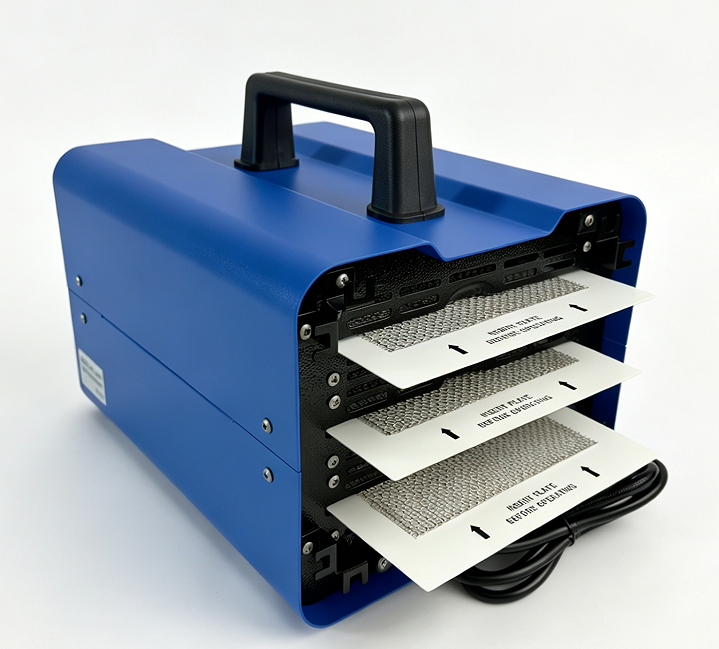
Most product teams treat customization as a feature checklist—dark mode, font size, notification toggles—but the levers that actually matter are the ones that change how the system behaves under repeated use. A useful lever isn't exposed equally to everyone; it appears as a shortcut after the third time you manually reorder a queue, or as a suggested preset when your activity patterns shift. The real test is whether a user can make the tool feel like their own without opening a settings panel.
Another underused lever is reducing the cost of reversal. If a user can drag a dashboard widget into a new position and undo it with a single keystroke, they'll experiment. If every change requires a confirmation dialog and a buried "reset to default" link, customization becomes a risk to avoid. The levers worth building are the ones that invite tinkering while preserving a safe fallback, so users discover personal workflows instead of being handed a static preferences page.
The Core Components Behind Performance
When you strip away the marketing gloss, sustained performance hinges on a few unglamorous pieces working in lockstep. The first is a tightly coupled memory hierarchy—low-latency cache, sufficient RAM bandwidth, and storage that doesn’t choke under load. Without that, even the most powerful processor spends most of its cycles waiting.
Equally important is thermal and power delivery. A chip can be rated for impressive speeds, but if the voltage rails droop or heat builds up unevenly, clock rates collapse in real workloads. That’s why high-performance systems pair aggressive boost algorithms with robust cooling and staged power stages: they keep the silicon inside its optimal envelope.
Software scheduling ties it together. The kernel or runtime has to place threads near the data they touch, preempt the right tasks, and avoid lock contention. When that layer is tuned correctly, the raw hardware stops fighting itself and starts producing consistent results.
From Sketch to Shipment: The ODM Workflow
The journey from a rough sketch to a finished product leaving the warehouse is rarely a straight line. In ODM work, the initial drawing is just a conversation starter. Engineers, designers, and sourcing teams huddle around that sketch, questioning every curve and seam. They don't ask "can we make this?" but "why should we make it this way?" That early friction turns a vague idea into a buildable spec—materials picked, tolerances argued, and a prototype roughed out on a CNC or 3D printer within days, not months.
Once the first physical sample lands on the table, the real work begins. It gets dropped, flexed, overheated, and scratched. Each failure is logged, not as a setback but as a shortcut to a better version. The second prototype rarely looks like the first. The third one starts to feel right. By the time tooling is cut and production lines are set, the product has already survived a few lifetimes in the lab. What ships out isn't just a refined version of the sketch—it's the result of hundreds of small, deliberate choices made under pressure.
Shipment is not the finish line; it's a checkpoint. The ODM team keeps a quiet eye on the first batch—how it's received, how it's returned, how it fails in the wild. Those notes loop back into the next sketch. That's the hidden rhythm of ODM: every shipment seeds the next drawing. No fanfare, just a continuous loop of sketching, breaking, fixing, and shipping.
Testing, Certifications, and Compliance Essentials
Real-world product launches often stall not at the design phase but at the test bench. Certifications like UL, CE, FCC, and UKCA each carry their own voltage, emissions, and safety thresholds, and assuming one report covers all markets is a costly mistake. A practical testing strategy starts with a compliance matrix that maps target regions to the exact standards, voltage ranges, and marking rules your device must meet.
Beyond the headline marks, the unglamorous parts matter just as much. RoHS, REACH, and Prop 65 pull material content into the spotlight, while battery and wireless modules bring their own IEC and radio directives. Scheduling pre-compliance scans early can reveal emission hot spots or insulation gaps before formal lab runs, which saves both time and redesign loops.
Documentation is the quiet backbone here. Test reports, declarations of conformity, and technical files need version control and a clear owner, especially when suppliers change components mid-production. Building a review checkpoint for every engineering change keeps the paperwork aligned with the product actually shipping, not the one tested six months ago.
Cost Factors and Partner Selection Criteria
Breaking down the real cost of a partnership goes far beyond the initial invoice. While upfront fees and per-unit pricing often dominate early negotiations, the hidden expenses tied to integration, training, and ongoing technical support frequently reshape the total cost of ownership. A vendor offering a lower base rate may still prove more expensive if their platform demands heavy customization or if their support team charges per interaction. Smart buyers map out these less obvious cost drivers before narrowing down candidates.
Beyond hard numbers, partner selection criteria also hinge on operational compatibility and long-term adaptability. A prospective partner's data security posture, supply chain resilience, and geographic footprint can either multiply or offset costs down the line. For instance, a partner located in a region with unstable logistics might offer attractive pricing but force you to carry larger buffer inventory—a cost that never appears on their quote. Evaluating these secondary financial impacts requires cross-functional input from procurement, IT, and operations teams.
Finally, the most overlooked cost factor is the switching cost built into the relationship itself. Partners who rely on proprietary formats, closed APIs, or exclusive service contracts can lock you into a cost trajectory that balloons after the first renewal. A thorough selection process therefore weighs not just what you pay today, but what leaving or renegotiating would cost in three or five years. The best partnerships are those where both parties share a clear, itemized understanding of value delivered against every dollar spent.
FAQ
ODM stands for Original Design Manufacturer. For ozone machines, it means the supplier designs and builds the product to your specifications, often with your branding, while you don't need to invest in R&D or production facilities. The manufacturer handles everything from circuit design to safety certifications.
Typically, you share your target application, desired ozone output, power requirements, and any special features. The ODM team will propose a design, provide prototypes for testing, and then move to mass production once approved. Communication via video calls and sample iterations is common.
You get tailored performance—whether it's higher ozone concentration for water treatment or a compact size for air purifiers. You also get your own branding, control over component quality, and often better long-term pricing because the design is optimized for your volume.
Yes, most ODM manufacturers can design the machine to meet CE, RoHS, FCC, or even stricter standards like UL or ETL. You'll need to discuss the target market early so the design incorporates the right safety interlocks, materials, and labeling.
Beyond ozone output, you can customize the housing material (ABS, stainless steel, etc.), control interface (touchscreen, simple knob, remote), input voltage, mounting style, and even add smart features like Wi-Fi connectivity or automatic ozone level sensing.
Depending on complexity, a standard custom design takes 6-12 weeks for prototyping and testing. If you need a fully novel design with new mold tooling, it might extend to 4-6 months. Rush options are sometimes available for simpler modifications.
Look for in-house testing of ozone output, insulation resistance, high-voltage stability, and lifespan simulation. A good partner will provide a detailed QC report with each batch, and many offer a 1-2 year warranty on the ozone plate and power supply.
Yes, many manufacturers offer a pilot run of 50-100 units to validate the design in real-world conditions. You can then refine before committing to larger volumes, which reduces risk and ensures the final product meets your expectations.
Conclusion
An ODM ozone machine isn't just a generic appliance with your logo stamped on it—it's a device built around the specific application you're targeting, whether that's water purification, air treatment, or industrial odor control. The meaningful customization levers go far beyond the outer shell: you can adjust ozone output range, choose between air-fed or oxygen-fed generation, select control interfaces from simple dials to touch panels, and even specify electrode materials like ceramic or quartz that directly affect lifespan. The core components—ozone generation cell, high-voltage power supply, and cooling system—must be matched precisely, otherwise the unit either underproduces or fails early. A capable ODM partner will walk you through these trade-offs before any tooling begins, so you're not stuck with an expensive mismatch.
From the first sketch to final shipment, the workflow usually includes concept validation, rapid prototyping, stress testing under realistic load, and pre-compliance checks for CE, UL, or regional EMC standards. This isn't bureaucratic busywork; it's what separates a product that clears customs from one that gets rejected at the border. When evaluating manufacturers, don't fixate on the lowest unit price. Look instead for in-house testing facilities, a track record with ozone-specific certifications, and transparent handling of component sourcing when supply chains tighten. A reliable partner will flag real cost drivers early—like custom enclosures, higher-output power supplies, or special coatings—and give you lead times that reflect reality rather than optimism. The end result should be a machine that fits your brand, meets local requirements, and doesn't demand constant service calls.
Contact Us
Contact Person: Paul Luo
Email: [email protected]
Tel/WhatsApp: 0086-19966314501
Website: https://www.lufutatech.com