
OEM Power Tool Switch Factory: Your Guide to Sourcing High-Quality Switches
2026-06-27
Sourcing reliable power tool switches can make or break your product's performance and safety. As an OEM buyer, you need a partner who delivers precision, durability, and swift customization. At KEJIAN ELECTRONICS, we combine decades of engineering expertise with rigorous testing to ensure every switch meets your exact specs. Ready to upgrade your supply chain? Let’s dive into what truly matters when choosing a switch manufacturer.
Inside Look: Testing Switches for Real-World Power Tool Abuse
Power tool switches endure far more than casual clicks. They face clouds of abrasive dust on a construction site, sudden voltage spikes from worn-out extension cords, and the bone-rattling vibration of a hammer drill boring through concrete. To see if a switch truly survives, we don’t just flick it a few thousand times in a clean lab—we embed it in a grinder caked with metal shavings, dunk assemblies in muddy water, and bake them under heat lamps until the housing softens. The goal isn’t to pass a tidy checklist, but to push until something crackles, sticks, or arcs, revealing weak points that a datasheet would never show.
One torture run puts a common rocker switch through 100,000 on-off cycles while the tool is clamped in a shaker table, mimicking the relentless buzz of a jobsite radio left on a scaffold. Contacts erode, springs fatigue, and plastic housings develop hairline fractures. In another, we wire the switch in series with a locked-rotor motor, forcing it to interrupt a stalled current five times its normal rating. The arc that leaps between separating contacts can melt copper in milliseconds—if the mechanism binds even slightly, the whole unit turns into a miniature welder. These aren't standardized tests from a manual; they’re the kind of abuse we’ve seen electricians and framers dish out daily, captured and concentrated into repeatable mayhem.
What separates a robust switch from a fragile one often comes down to tiny details: a dab of damping grease to quiet the toggle, a silver-alloy contact pad that resists pitting, or a coil spring that doesn’t lose temper after a week in the sun. After each round of destruction, we tear down every sample under a microscope, photographing scorch marks and measuring wear on pivot points. The data feeds back into both design tweaks and a running log of field failures, helping us anticipate the creative ways someone will misuse a tool next. Because out there, a switch isn’t just an electrical component—it’s the one thing standing between a user and a sudden, silent tool failure on a ladder.
Certifications That Separate Reliable Switches from the Rest
There’s a quiet confidence that comes with seeing a UL or ETL mark on a switch. These aren't just stamps—they're proof the device has been pushed to its limits in ways most environments never will. A switch that earns these certifications has survived voltage spikes, thermal cycling, and load tests that mimic years of hard use. Without them, you're guessing whether the internal components can hold up when the unexpected happens.
Beyond basic safety, certifications like CE and FCC tell you the switch plays nice with everything else in your setup. Emitting excessive noise or interfering with other equipment isn't just annoying—it can destabilize an entire network. Switches that pass these standards tend to have better shielding and cleaner PCB layouts, which translates into fewer mysterious packet drops and more consistent throughput.
Don’t overlook environmental credentials either. A switch that carries RoHS compliance or an Energy Star rating signals more than eco-friendliness. It often points to a manufacturer that pays attention to detail—using higher-grade solders, avoiding brittle plastics, and designing power supplies that run cooler. Those choices directly affect how long the switch will last and how consistently it performs over time.
Tailoring Switch Designs to Your Tool’s Unique Demands
Every tool brings its own set of challenges, and switches are no exception. You can’t just drop in an off-the-shelf component and expect harmony. Instead, start by examining how the tool will be held, the angle of activation, and the force a user naturally applies. A switch that feels perfect on a benchtop device might cause fatigue on a handheld tool if its actuation force is too stiff. Consider the environment too: dust, moisture, or temperature shifts can degrade standard contacts quickly. Tailoring means selecting materials and mechanisms that match these demands—not the other way around.
The physical footprint matters just as much. In compact tools, every millimeter counts, so a low-profile dome or a custom-shaped rocker can mean the difference between an intuitive design and a cramped layout. But size shouldn’t sacrifice feedback. A clicky, tactile response isn’t just satisfying; it confirms action without requiring a glance. For tools used in noisy settings, an audible snap might be lost, so a purely haptic bump is smarter. Fine-tuning these details ensures the switch feels like an extension of the tool’s purpose rather than an afterthought.
Don’t overlook the electrical side either. The switch’s rating for current and voltage must align with the load, but also think about inrush currents or inductive spikes that can weld contacts over time. Custom plating, like gold over silver, can prevent oxidation in humid conditions without breaking the bank. And if the tool is battery-powered, minimizing contact resistance preserves every volt. By weaving these considerations together—mechanical feel, durability, and electrical fit—you end up with a switch that’s not just a component, but a deliberate part of the tool’s identity.
Why Precision Tooling Makes or Breaks Switch Performance
The feel of a switch under your fingers isn't just a happy accident—it's the direct result of how meticulously its components were formed. When tolerances slip, even by microns, you get that infuriating rattle, inconsistent actuation, or the hollow clack that cheapens every keystroke. Precision tooling ensures that the stem glides without wobble, the spring compresses uniformly, and the contacts meet with unwavering reliability. Miss that mark, and no amount of factory lube or fancy housing material can rescue the experience.
Beyond pure feel, longevity is baked into the tooling. Molds with insufficient polish or slight misalignments create micro-abrasions that accelerate wear, turning a once-crisp switch into a mushy ghost of itself within months. It's the difference between a switch that stays consistent through years of heavy use and one that forces you to swap out a board far sooner than you'd planned.
And then there's acoustics—an obsession in today's mechanical keyboard scene. The subtle pitch and resonance depend on how precisely the top and bottom housings marry, how perfectly the stem poles align, and how cleanly the leaf springs are formed. A tooling error that leaves a parting line barely visible to the eye can introduce a tinny or scratchy undertone that no amount of foam or tape can fully mask. In the end, precision tooling isn't just a spec sheet bullet point; it's the invisible foundation that separates a satisfying switch from one that constantly reminds you of its shortcomings.
Vetting Suppliers: Questions to Uncover Hidden Quality Risks
Digging deep during supplier evaluation isn't just about checking boxes—it's about avoiding headaches that surface months later. The real danger often hides in corners you wouldn't think to look: a second-tier material source they forgot to mention, or a packaging shortcut that works fine in the lab but fails after a few weeks on a shelf. If you stick to scripted questions, you'll only hear the polished version of their operation.
Instead, push for stories. Ask about the last time a batch didn't meet spec and how they caught it—or didn't. Dig into their corrective action system: is it a living process or a dusty binder? Inquire about who handles sub-supplier audits and whether they've ever had to pull the plug on a source. These conversations reveal more than any certificate can.
Finally, get your boots on the ground or send someone you trust. You'd be amazed what a walk through the factory floor turns up—things like maintenance logs that suddenly disappear, or a testing station that's been "temporarily" bypassed. Quality risks thrive in the gap between paperwork and practice, and a few well-timed, unscripted questions can pull them out of the shadows.
Future-Proofing Your Tools with Adaptive Switch Technologies
Industries evolve at a breakneck pace, and the switches you rely on today can quickly become obsolete if they lack flexibility. Adaptive switch technologies tackle this head-on by allowing hardware to reconfigure itself on the fly—responding to new protocols, varying voltages, or changing user demands without a full redesign. This isn’t just about adding a few programmable options; it’s about embedding intelligence directly into the switch mechanism, so your tools can learn, adjust, and even predict requirements as your workflows shift.
One overlooked advantage of adaptive switches is their role in extending product lifecycles without bloating initial costs. Instead of scrambling to replace controllers when standards update, a field-configurable switch can morph its behavior through firmware or physical modular swaps. This design philosophy shifts the burden from reactive purchasing to proactive resilience—machines stay in service longer, waste drops, and downtime becomes a rarity rather than a recurring headache.
We’re already seeing adaptive switch elements appear in unexpected places: portable diagnostic tools that toggle between analog and digital sensing, or manufacturing equipment that recalibrates overnight to handle varying material thicknesses. What makes these implementations stand out is their emphasis on seamless integration. The switch doesn’t exist in a vacuum; it communicates with the system, logging performance trends and nudging maintenance alerts before a failure can happen. That closed-loop awareness is what transforms a simple component into a true asset for future-ready tool design.
FAQ
Start by checking if the factory specializes in switches for your specific tool type—like drills, saws, or grinders. Look for in-house engineering teams that can handle custom designs, not just off-the-shelf parts. Ask about their quality testing procedures, such as lifecycle testing for endurance and environmental stress testing for dust or moisture resistance. A factory that invests in automated production and rigorous inspection is more likely to deliver consistent quality.
Request detailed spec sheets and samples early on. Key parameters include current rating, voltage, actuation force, and mechanical life. For safety, verify certifications like UL, CE, or TUV. Ask the factory about their compliance with IEC standards for switches. You can also request a factory audit or third-party inspection to confirm their processes align with your requirements.
Most established OEM factories offer full customization—from modifying the actuator shape, color, and travel distance to integrating additional features like dust-proof boots or LED indicators. Share your CAD files and functionality needs. A good factory will provide engineering support to optimize the switch for manufacturability without sacrificing your design intent. Expect to discuss tooling costs if a completely new mold is needed.
MOQs vary widely but often start around 1,000 to 5,000 units per design. Lead times for new tooling can range from 4 to 8 weeks, followed by 2 to 4 weeks for production once samples are approved. If you use an existing switch platform and only need minor changes, lead times can be shorter. Always clarify upfront whether the factory holds safety stock for common components to speed up reorders.
This comes down to the factory’s material sourcing and assembly control. Probe what grade of contacts, springs, and plastics they use—cheap materials lead to early wear. Inconsistent actuation force often results from poor tolerance control in molding or contact alignment. Ask to see their in-line testing data and defect rate reports. A transparent factory will walk you through their quality management system, often based on ISO 9001.
Beyond the unit price, factor in tooling amortization, shipping, and potential import duties. If your design requires frequent modifications, engineering change fees can add up. Also, consider the cost of poor quality—returns, rework, or brand damage if switches fail in the field. Some factories offer value engineering to reduce the total cost while maintaining performance. Get a comprehensive quote that breaks down all charges before committing.
Conclusion
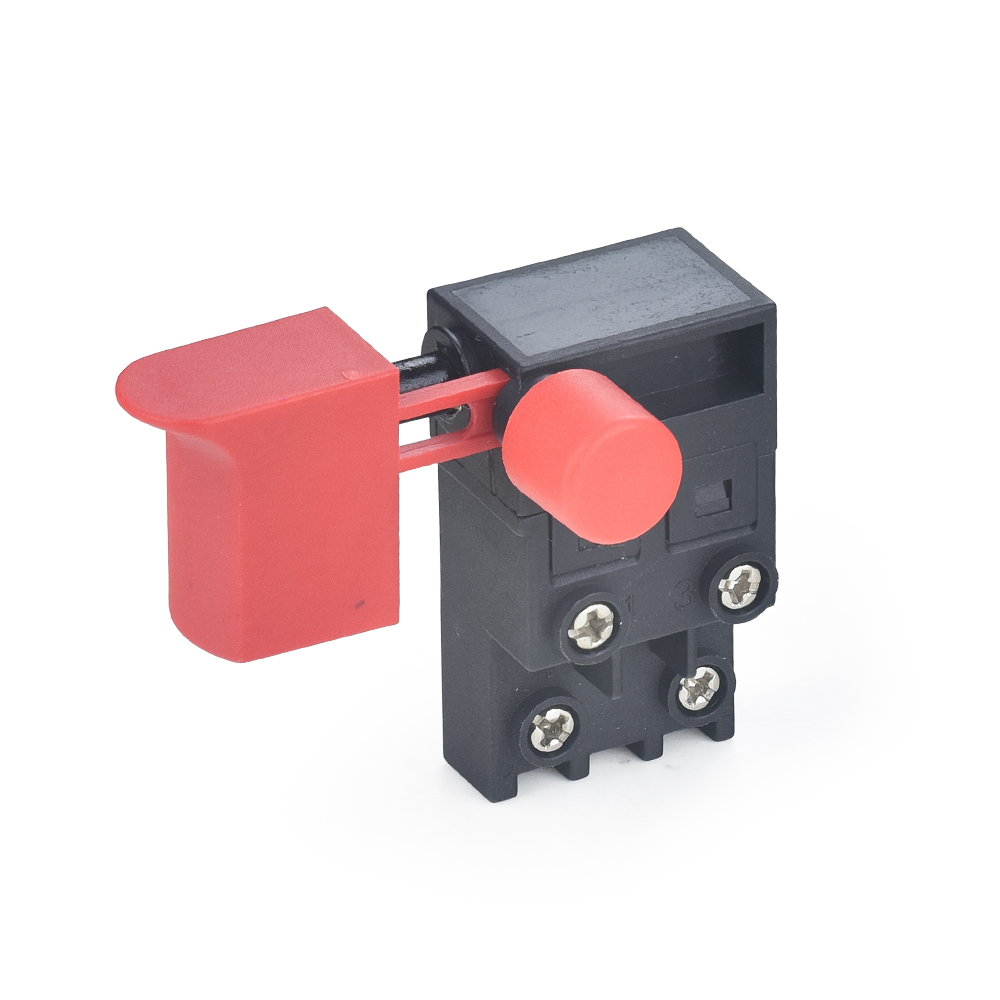
Sourcing power tool switches from an OEM factory isn’t just about ticking boxes on a spec sheet—it’s about finding a partner who understands the brutal reality your tools will face. Inside a quality-focused facility, every switch is subjected to tests that mimic years of job site abuse: repetitive cycling under load, exposure to dust and moisture, and vibration testing that would shake apart lesser components. This real-world validation separates switches that merely function from those that endure. The right certifications—UL, VDE, or TUV—offer a baseline, but true reliability comes from a factory’s in-house testing culture and its refusal to cut corners. Customization is where things get interesting: a switch isn’t a universal component. Whether you need a progressive trigger for a variable-speed grinder or a dust-resistant plunger for a circular saw, the factory’s ability to tailor designs to your tool’s ergonomics, electrical load, and environmental exposure is critical.
Precision tooling is the unsung hero here—a switch mold that’s off by a fraction of a millimeter can lead to inconsistent contacts, early failures, and frustrated users on a jobsite. When vetting suppliers, dig past glossy brochures and ask pointed questions: What’s the tolerance on their injection molds? How do they handle batch-to-batch consistency? A factory that invests in high-grade tooling and automated assembly is far more likely to deliver switches that perform identically from unit to unit. And while you’re future-proofing your tools, look for adaptive technologies—switches with integrated electronics that offer soft-start, overload protection, or even communication with the tool’s motor controller. These aren’t gimmicks; they extend tool life and set your brand apart in a crowded market. Ultimately, the factory you choose becomes a hidden extension of your engineering team, and their commitment to quality echoes in every click your customer trusts on site.
Contact Us
Contact Person: Anna lin
Email: [email protected]
Tel/WhatsApp: +86 13567768885
Website: https://www.kjele.com/