
Roller Shutter Window Factory: Crafting Durable and Stylish Security Solutions
2026-07-14
When it comes to safeguarding your property without compromising on aesthetics, few solutions match the reliability of roller shutter windows. At NORTON, we understand that modern security demands more than just rugged barriers—it requires a seamless blend of durability and design. Our factory has dedicated years to perfecting these window systems, ensuring every product not only withstands the elements but also elevates the look of any building. In this post, we pull back the curtain on what makes our approach different and why a well-crafted roller shutter window is an investment worth making.
Built to Last: The Engineering Behind Our Shutters
Every shutter we produce begins with a curiosity about how materials behave under stress, temperature shifts, and years of use. Rather than relying on off-the-shelf components, we formulate our own polymer blends and select alloys that maintain their shape even when other shutters would warp. Our engineers subject prototypes to accelerated aging cycles—replicating decades of UV exposure, salt spray, and thermal expansion in a matter of weeks. The result is a assembly that opens and closes with the same fluid motion on day one as it does after years on a sun-drenched coastline.
The louver mechanism might look simple from the outside, but its internals reveal a stack of interlocking gears and dampeners that distribute force evenly across the span. By eliminating single points of friction, we’ve managed to reduce wear to near zero, even in high-traffic commercial settings. A proprietary lubricant, developed in collaboration with a niche aerospace supplier, stays viscous from sub-zero mornings to blistering afternoons without ever leaching into finishes. It’s the kind of detail that nobody sees, but everybody feels when they adjust the slats.
Finally, we test for the unexpected—hurricane-force winds, hail strikes, and the relentless probing of salt-laden air. Our mounting systems incorporate shear pins that sacrifice themselves during extreme impacts, protecting the frame and glass behind them. Meanwhile, the powder-coat finish isn’t just baked on; it’s fused through a controlled chemical conversion that turns the surface into a barrier against corrosion. This isn’t over-engineering for its own sake. It’s the quiet confidence that your shutters will look and function exactly the same, decade after decade.
Where Security Meets Sleek Design
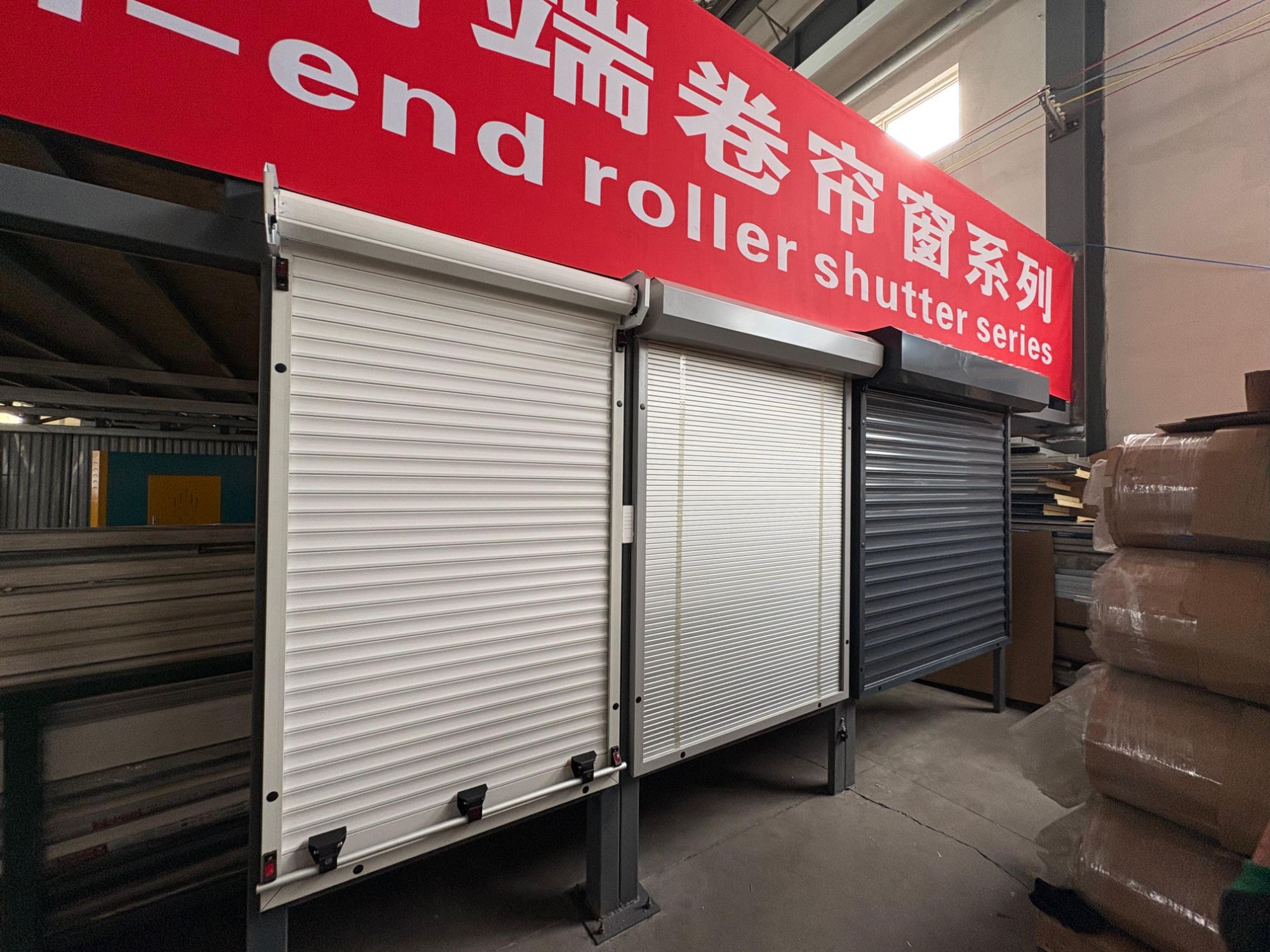
Gone are the days when safeguarding your home meant sacrificing style for clunky deadbolts or eyesore alarm panels. We believe protection should blend in so seamlessly, it becomes part of the décor—not an afterthought. Every curve, finish, and subtle detail is crafted to elevate your space while quietly standing guard.
From a distance, it’s a refined touchpoint, perhaps in brushed nickel or matte black. Up close, you notice the hidden hinges, the tamper-proof core, the fluid motion of biometric recognition. The tech disappears under a layer of deliberate design thinking, proving that strength doesn’t have to shout—it can whisper with elegance.
This isn’t just about locking a door; it’s about curating an environment where peace of mind coexists with personal aesthetic. Your entryway becomes a statement, not a security checkpoint. And when guests compliment the hardware, they rarely guess it’s the most hardened piece in the house.
Custom Finishes That Blend with Any Architecture
The right finish doesn't just complement a building—it becomes part of its language. Our approach works from the details outward: we study the proportions, material palette, and historical cues of your project to develop coatings that feel inevitable rather than applied. A brushed metallic might echo the patina of nearby copper downspouts, while a soft matte can settle brickwork into a quiet, unassuming presence. Every texture and sheen is tuned to the specific light conditions of the site, ensuring the finish shifts naturally throughout the day without shouting for attention.
We move beyond standard color charts by crafting custom blends that respond to context. For a modernist glass structure, a micro-textured surface can introduce just enough depth to anchor the facade against the sky. On a restoration, we formulate finishes that bridge eras—matching the warmth of aged stucco while adding a breathable barrier that wasn’t possible decades ago. The result is a seamless fit that lets the architecture breathe, never forcing a contrast where continuity is what’s truly needed.
What makes these finishes truly disappear is the discipline of suppression. Rather than piling on effects, we often remove—toning down reflectivity until walls feel more like landscape than construction, or dialing back saturation so the exterior settles into its streetscape without ego. This kind of restraint takes as much precision as any bold statement, but the payoff is a building that looks at home from every angle, in any era, under any sky.
Quiet Operation, Powerful Protection
The hum of a well-built machine shouldn’t drown out your thoughts. Our system operates at whisper-quiet levels, blending into the background so you can focus on what matters. Yet beneath that calm exterior, it’s working tirelessly—filtering out the unseen, absorbing shocks, and maintaining an invisible shield against everyday hazards.
We’ve engineered the noise away without sacrificing an ounce of defense. Every component is tuned for minimal vibration and maximum resilience, creating a barrier that’s as silent as it is strong. You won’t hear it, but you’ll feel the difference when the air stays cleaner, the surfaces stay cooler, and the machinery simply keeps going without complaint.
Thermal Efficiency Without Compromising Style
Achieving a warm, inviting home during colder months often means confronting a familiar trade-off: either pile on bulky layers or accept steep energy bills. But modern design solutions have upended this dilemma, proving that high thermal efficiency and a sleek aesthetic can coexist effortlessly. Advanced insulating materials now rival the slim profiles of traditional decor, trapping heat without adding visual bulk. From cellular shades that create pockets of air to honeycomb fabrics that mimic soft linen, the technology works quietly behind the scenes, preserving your carefully curated interiors while slashing heat loss. It’s the kind of quiet innovation that lets you enjoy a cozy evening by the window without feeling a draft—or spotting an eyesore.
Style no longer needs to be sacrificed at the altar of energy savings. Gone are the days when functional fixtures came in uninspired beige or clumsy mounts. Today’s thermally efficient options embrace clean lines, rich textures, and a spectrum of hues that complement any palette—from urban minimalist to rustic chic. Imagine sleek, floor-to-ceiling drapery with hidden thermal backing, or streamlined window panels that frame a city view while muting the chill. Even radiators have undergone a renaissance, with sculptural designs that double as wall art. The real beauty lies in how these elements integrate into the room: they don’t shout for attention, yet they subtly transform the living experience, keeping rooms comfortable and bills lower.
What makes this balance possible is a focus on intelligent design rather than sheer thickness. Instead of relying on heavy, old-fashioned insulation, engineers and designers have turned to smart layering, reflective films, and precision-fit frames that seal out the cold without demanding a visual compromise. A panel that looks like pure decoration might actually be reflecting radiant heat back into the space. A sheer curtain moving gently in the airflow could be woven with microscopic thermal threads. These quiet advancements mean your home feels light, open, and utterly personal, while energy conservation runs on autopilot. The result is an environment that feels genuinely effortless—where comfort and beauty aren’t in conflict but in conversation.
From Raw Material to Precision Fit
Turning raw material into a component that fits with exacting precision isn’t just a manufacturing step—it’s a deliberate, almost obsessive process that begins long before the first cut is made. The selection of the stock itself is a critical decision, influenced by the final application’s demands: tensile strength, thermal stability, corrosion resistance, and even grain structure are weighed. From solid billets or extruded profiles, the initial shaping may involve forging, casting, or high-speed machining, each chosen to minimize stress and waste while setting the stage for what comes next. It’s a dance between material properties and process capabilities, where the goal is to preserve potential rather than force it into a temporary shape.
From there, the journey toward precision fit enters a more nuanced phase, relying on a series of subtractive and finishing operations that shave micron by micron. Computer numerical control systems interpret digital models into toolpaths that guide cutting edges through contours and bores with repeatability measured in single-digit microns. But the real art lies in compensating for the unpredictable—tool deflection, thermal expansion, even the slight spring-back of the material itself. Skilled machinists and engineers fine-tune speeds, feeds, and coolants, often iterating through batches to identify that sweet spot where every surface meets tolerance without sacrificing surface integrity. Honing, lapping, or grinding may follow, transforming a machined part into a near-perfect mate for its counterpart, where clearances are intentional and seals perform flawlessly.
Finally, the component undergoes verification that goes beyond simple dimensional checks. Coordinate measuring machines probe critical features, comparing point clouds against the original CAD model to ensure every contour, angle, and concentricity callout falls within specification. Functional testing might simulate real-world loading or fluid pressures, proving that the fit isn’t just theoretical but will perform under stress. This stage reinforces that precision fitting is an accumulation of careful choices—from the raw material’s innate qualities to the final touches that allow parts to snap, slide, or seal together exactly as designed. It’s a blend of experience, discipline, and an uncompromising eye for detail, where the material’s journey ends in a part that feels as though it could never have been any other way.
FAQ
We produce a wide range, including manual and motorized roller shutters, built-in and surface-mounted options, and custom designs. Our shutters can be made from aluminum, steel, or polycarbonate, with various profiles and perforation patterns to suit different security and aesthetic needs.
We use high-strength materials like extruded aluminum with reinforced guides and locking systems for enhanced security, while offering a sleek, minimalist look. Customers can choose from numerous colors, finishes, and slat shapes to complement their building’s architecture without compromising on protection.
Absolutely. Our motorized shutters are compatible with most home automation platforms, allowing you to control them via smartphone, voice commands, or scheduled routines. We can also include sensors for wind, light, or temperature to automate operation based on environmental conditions.
We offer tailored solutions including extra-wide spans up to several meters, fire-rated shutters, transparent polycarbonate models for shopfront visibility, and high-speed operation. Powder coating in custom RAL colors, company branding, and integrated access control systems are just a few ways we personalize commercial installations.
We source premium raw materials and use advanced CNC machining, robotic welding, and powder coating lines. Every shutter undergoes rigorous testing for wind load, impact resistance, and cycle endurance. Our frames are corrosion-resistant, and we add thermal breaks to improve energy efficiency in insulated models.
Yes, we have a network of trained installers for seamless fitting, and we provide comprehensive after-sales service including maintenance packages, spare parts availability, and remote troubleshooting for motorized units. We also offer extended warranties on the motor and shutter assembly.
We blend decades of engineering expertise with a design-forward approach, treating each shutter as an architectural element. Our in-house team can handle everything from initial consultation, design rendering, prototyping, to production and global shipping, ensuring a cohesive experience and shorter lead times.
Conclusion
At our roller shutter window factory, every shutter we produce is a result of meticulous engineering designed to deliver unwavering security without compromising on visual appeal. From the very first step of selecting raw materials to the final precision fit, we focus on creating products that are built to last. Our shutters undergo rigorous processes to ensure they withstand daily wear and extreme conditions, offering protection that homeowners and businesses can rely on. But durability alone isn't enough—we seamlessly blend this toughness with sleek, modern design. The clean lines and refined profiles are crafted to complement any architectural style, and with a wide range of custom finishes, from subtle metallic tones to rich, textured colors, our shutters can blend in or stand out, exactly as our clients envision. This integration of strength and style means you never have to choose between feeling safe and having a beautiful property.
Beyond their sturdy exterior, our roller shutters incorporate thoughtful features that elevate everyday living. The quiet operation of our shutter systems is a testament to our attention to detail—smooth, near-silent movement that never disrupts the peace of your home or office. At the same time, they provide powerful protection against intruders, noise, and harsh weather. We also prioritize thermal efficiency, designing shutters that insulate windows to keep interiors comfortable in all seasons, which can lead to noticeable energy savings. This functionality is woven into every design without detracting from the shutter's aesthetic, ensuring that even the most practical elements remain visually understated. The result is a harmonious balance of form and function, where every component—from the guide rails to the slats—is precisely engineered in our factory to deliver reliable, stylish security that stands the test of time.
Contact Us
Contact Person: Cyril He
Email: [email protected]
Tel/WhatsApp: 8613969697307
Website: https://cqyqgd.en.alibaba.com/