
Sanding Sheet Supplier Insights: What to Look for Before You Order
2026-11-16
Finding the right sanding sheet supplier can feel hit or miss—one batch cuts clean, the next loads up in seconds. Before you place your next order, it helps to look beyond the grit number. In this guide, we break down what matters most in a supplier, from abrasive bonding to backing durability, and show how SHENZHEN SUN ABRASIVES turns those specs into consistent results on your shop floor.
Backing Material Is Where the Real Test Begins
The grit on a sanding disc gets all the attention, but the backing is what survives the heat and flexing. Cheap paper backing tears at the edges after a few minutes on an orbital sander, especially in tight corners. Repeated bending and exposure to friction quickly reveal whether a backing will hold up or start to fray.
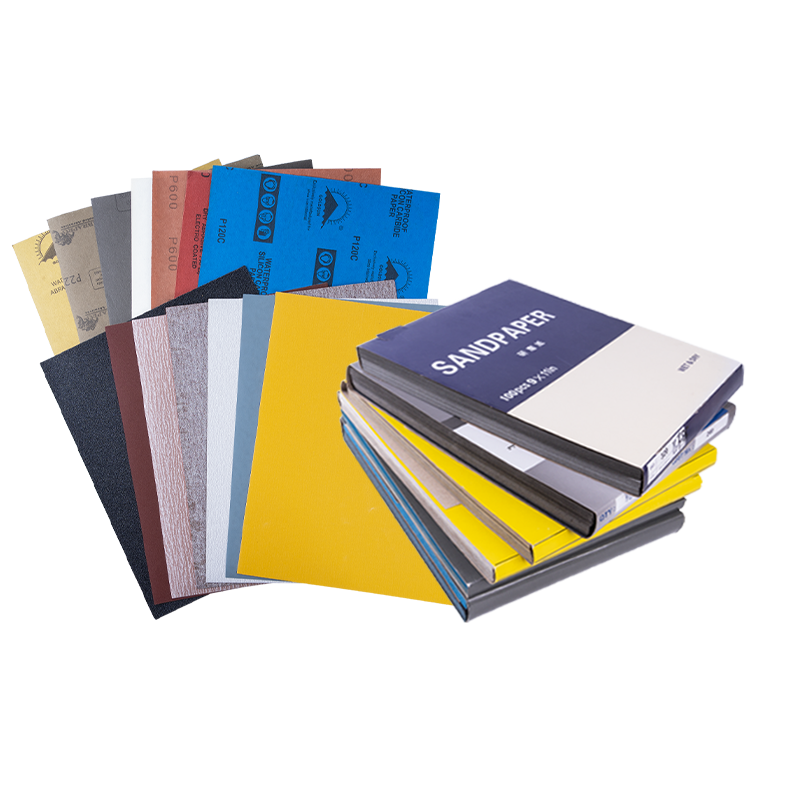
Film and cloth backings behave differently under load. Film resists tearing and produces a more uniform scratch pattern, but it can soften or melt if the disc overheats. Cloth absorbs vibration and lasts longer on rough metal, though it tends to stretch under heavy pressure. Choosing the right backing often has a bigger effect on results than changing grit size.
A hybrid backing with a polyester core and a thin paper layer offers a practical middle ground. The paper keeps the cost reasonable and gives the abrasive coating a stable base, while the polyester adds the tear resistance needed for edge work. In long sanding sessions, this combination tends to show less edge wear and fewer blowouts than paper alone.
Grit Consistency Often Separates Honest Suppliers
In a marketplace crowded with promises, the real difference rarely shows up in the first shipment. It appears on the tenth, the fiftieth, the hundredth—when the same quiet attention to detail holds steady without fanfare. Honest suppliers earn their reputation not through a single flawless delivery, but through the unglamorous repetition of getting things right when no one is watching closely. This kind of grit consistency, worn into daily operations, acts as a quiet filter that gradually separates those who merely talk about integrity from those who live it batch after batch.
Most suppliers can fake quality for a season. They can polish a sample, tighten a deadline, or charm a first-time buyer. But consistency demands something harder: the willingness to keep meeting a standard long after the excitement fades. Honest suppliers don't rely on heroic efforts or lucky streaks. They build systems, habits, and checkpoints that make the right outcome boringly predictable. That predictability becomes a form of trust no marketing campaign can manufacture, and it's precisely what keeps buyers coming back when cheaper, flashier options appear.
Over time, the market itself becomes the judge. Buyers learn to read the small signals—the unchanged tolerance on a machined part, the same thread count in a fabric lot, the identical response time to a complaint. These are not glamorous metrics, but they are honest ones. Suppliers who grind through the repetitive work without cutting corners build a track record that speaks plainly. In the end, grit consistency doesn't just separate honest suppliers from careless ones; it separates those who intend to stay from those who only intended to sell.
Order a Sample Pack Before Trusting the Spec Sheet
A spec sheet can look flawless on screen, but it won't tell you how a material actually behaves in your hands. Thickness, texture, and finish rarely translate through a PDF. That's why pulling a physical sample feels less like a precaution and more like a reality check. You might discover the coating scuffs faster than the spec implies, or that the color shifts under natural light in a way no RGB value can capture. Before committing to a bulk order, get the real thing in front of you — bend it, scratch it, hold it against the product it's meant to protect.
Numbers on paper don't account for the quirks of your production line either. A sheet rated for high tensile strength might still jam in your die-cutter, or the adhesive could bond differently to your substrate than to the test panel used in the lab. Running a quick trial with a sample pack exposes those mismatches early, saving you from a warehouse full of material that underperforms. It's a small investment that pays for itself the moment you avoid a costly reorder or a delayed launch.
Think of it as a hands-on interview before the full-time hire. The spec sheet is the resume; the sample is the working interview. Most suppliers expect you to request one, and the ones that hesitate are telling you something worth paying attention to. When you can feel the weight, see the sheen under your own lights, and run it through your own process, you stop guessing and start deciding.
Custom Requests Reveal More Than a Price List
A standard price list keeps things tidy, but it never tells you what a client actually cares about. The moment someone asks for a tweak, a rush order, or a material swap, they stop being a line item and start showing how they make decisions. Some ask because they want something unique. Others ask because they assume everything is negotiable. The request itself is often more useful than the answer you give.
Over time, these custom requests add up to a rough map of your audience. You notice which boundaries people push, what they are willing to pay extra for, and where they get confused. That information is rarely captured in a catalog or a checkout flow. It lives in the back-and-forth, the hesitant phrasing, the oddly specific note in an order form.
If you only see custom requests as pricing problems, you miss the chance to learn what your standard offer is missing. The person asking for a smaller batch, an earlier delivery, or a different finish is handing you a clue about unmet demand. Treat each request as a small piece of market research, and the next version of your price list will be far more than a list of numbers.
Load Resistance Matters More Than Initial Sharpness
Most people obsess over how easily a blade shaves arm hair or slices paper, but that kind of initial sharpness tells you very little about how the edge will hold up under real pressure. A knife that is measurably sharper out of the box can still roll, chip, or blunt within minutes if its edge lacks the support to handle lateral loads or hard impacts. What you actually feel during prolonged use is not the starting keenness but how long the apex stays aligned and unbroken.
The reason has more to do with geometry and steel behavior than with the grit of your last stone. An extremely thin, highly polished edge may glide through soft material, yet that same thinness makes it vulnerable the moment it encounters bone, knots, or gritty hide. A slightly steeper edge angle with a well-supported shoulder often survives far longer because it distributes force instead of concentrating it on a fragile sliver of steel. Toughness and edge stability matter as much as hardness, and sometimes a less acute, more robust edge will outwork a sharper-looking one by a wide margin.
In practice, this means matching the sharpening goal to the job rather than chasing the finest possible edge. If you cut rope, cardboard, or dirty vegetables all day, a toothier, more stable edge will often stay useful long after a mirror-polished razor edge has degraded. The next time you evaluate a blade, pay less attention to how it feels on the first stroke and more to how it cuts on the fiftieth.
Lead Time Claims Deserve a Second Look
Most supply chain teams treat a supplier's lead time claim as a fixed number, but in practice it is often a starting point for negotiation rather than a reliable promise. Sales teams may quote the shortest possible time to win the order, while production planners quietly add their own safety buffers, leaving procurement with a blended figure that satisfies no one. Taking those numbers at face value leads to either excess inventory or unexpected stockouts, because the official lead time rarely matches the true flow of work.
A second look means tracking actual delivery performance against the claimed lead times and looking for patterns that differ by product line, season, or order size. One supplier might consistently overstate standard components by three days but understate custom builds by a week, and that kind of insight is more valuable than any generic average. Armed with this data, you can renegotiate terms, adjust safety stock levels, or shift volume toward suppliers whose claims are grounded in reality. Challenging lead time claims is not about distrust; it is about turning vague expectations into usable operational intelligence.
FAQ
Ask for the full grit range and whether they offer mixed-grit packs for different stages. Some suppliers list only common grits, but if you need anything finer than 220 or coarser than 40, that's where things get tricky. Also clarify if the grit is applied evenly across the sheet edges, since uneven coating can ruin a fine finish.
Request a spec sheet that mentions the backing weight and type, like paper, film, or cloth. Paper backings are fine for light hand sanding, but if you're using a power sander or working on curved surfaces, you'll want film or cloth with a bit of flex. A supplier who can't tell you the difference in backing materials is a gamble.
The adhesive layer between grit and backing decides how long the sheet lasts under heat and pressure. Resin-bonded sheets handle heat better than glue-bonded ones, especially for power tools or metal work. If the bond breaks down early, you'll see the grit shed before the sheet wears out, which wastes money and time.
Yes, and it's not just about checking grit quality. A sample lets you test how the sheet clogs on different materials, whether it tears at the edges, and if the backing stays flat during use. Don't settle for a tiny 2-inch swatch; ask for at least a full sheet or a few sheets so you can run a realistic sanding session.
Watch out for vague descriptions like 'premium quality' without any specs, or prices that are dramatically lower than the rest. Some suppliers cut costs by using a thinner backing or a single layer of adhesive. Also, ask if the quote includes edge sealing or anti-static treatment, because those little extras affect performance and are often left out to make a price look better.
More than you'd expect from a consumable. If the sheets arrive in flimsy packaging without individual size and grit labels, they can curl, absorb moisture, or get mixed up. Good suppliers pack sheets flat, use moisture-resistant wrapping, and print the grit, size, and batch number clearly on each box or sleeve.
It's a useful signal if you know how to read it. A supplier who gives a firm lead time with a buffer for production breaks is often more honest than one who promises overnight delivery just to win the order. Ask how they handle delays and whether they keep common grits in stock. Realistic lead times usually mean they're not rushing quality checks.
Find out if they cut sheets in-house or outsource it, because outsourced cutting can add days and cause inconsistent hole alignment. Share a dimensional drawing or a sample sheet, and ask about their tolerance range. If they can't hold a tight tolerance on hole spacing, your dust extraction will suffer and the sheet may not fit your sander properly.
Conclusion
Most buyers focus on grit rating and price, but the real differences surface once you check what’s behind the abrasive. A stiff, well-bonded backing prevents the sheet from tearing or curling under pressure, and that’s something a glossy spec sheet won’t tell you. Ask suppliers to describe the backing material and how it behaves on curved surfaces or during wet sanding. Equally telling is whether the grit stays uniform across the sheet and between batches. If one order cuts fast and the next feels dull on the same job, you’ve found an honesty problem, not just a quality hiccup. Before committing to a large quantity, request a sample pack with several grits and backing types. Run them on your actual workpieces—wood, metal, filler, paint—and note how long each sheet lasts. A supplier confident in their product won’t hesitate to send samples, while those pushing only a price list often hide consistency issues.
Custom requests separate vendors who understand your process from those who just stock boxes. Ask for a non-standard grit sequence, a different sheet size, or a specific backing weight and see how they respond. A useful supplier will ask about your sanding machine, pressure, and material before suggesting options; a lazy one will quote a minimum order and go quiet. Pay close attention to load resistance—the ability to keep cutting without clogging when sanding paint, resin, or softwood. High initial sharpness means little if the sheet loads up in minutes and you spend more time cleaning than sanding. Finally, treat lead time claims with healthy skepticism. A promised “ships in two days” may only mean the label prints, not that the product leaves the warehouse. Confirm actual dispatch dates, ask how backorders are handled, and check whether the supplier has local stock or drop-ships from overseas. These small checks before ordering prevent the biggest waste: paying for abrasive that can’t keep up with your hand.
Contact Us
Contact Person: Amanda Wang
Email: [email protected]
Tel/WhatsApp: +86-13602569854
Website: https://www.sunabrasives.com.cn