
Stand-Up Pouch Filling Machine Exporter: Key Factors to Evaluate Before Partnering
2026-11-16
Not every stand-up pouch filling machine exporter delivers what their brochure promises. While a low quote can look tempting, mismatched specifications, weak after-sales service, or vague delivery timelines often turn a 'bargain' into a costly bottleneck. Before you commit, it pays to dig deeper — and that includes looking beyond the usual sales pitch. In this guide, we break down the key factors to evaluate, with insights on how Wanying Machinery stacks up against these critical benchmarks.
What the Warranty Actually Covers Once the Machine Is on the Water
Once your boat finally touches the water, the warranty shifts from a document full of fine print to a set of promises you might actually need. Most builders cover the hull and deck against structural defects like gelcoat blisters, delamination, or sudden cracks that aren’t caused by impact or neglect. But the fine print often draws a hard line at anything that moves: engines, electronics, plumbing, and even factory-installed accessories may fall under their own separate warranties, leaving you to chase down three different companies when something leaks or fails.
The real surprises usually hide in the exclusions. Normal wear and tear, fading from sunlight, corrosion from saltwater, or damage from beaching and trailering are almost never covered once the boat is in use. Some manufacturers also void hull coverage if you exceed the stated horsepower rating, modify the transom, or skip required annual inspections. Water intrusion is a common battleground: if a clamp fails and the bilge fills, you might be covered for the clamp but not for the ruined upholstery or electrical system unless you can prove the failure was a manufacturing defect, not maintenance.
Transferable warranties sound generous until you read the transfer fee and inspection requirements. If you buy a used boat, the remaining coverage may be shortened, or you may need to pay a few hundred dollars within 30 days of purchase to keep it active. The best practical approach is to treat the warranty as a starting point, not a safety net. Document every service, keep photos of the hull before launch, and don’t assume that “bumper to bumper” language from the sales brochure matches what the warranty administrator will actually approve when you’re drifting two miles offshore with a stalled engine.
Testing Filling Accuracy With Your Own Pouch Material Before Signing
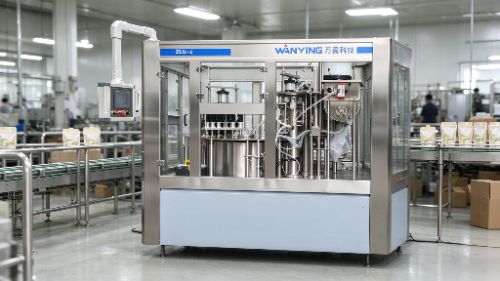
Running a fill test with the exact pouch material you plan to run in production is the only way to catch how that film actually behaves on your equipment. Thinner films may stretch or bounce under the fill head, while stiffer laminates can hold static that makes powders cling to the seal area. Even two films with the same gauge and barrier specs will not drop product the same way once the sealant layer, slip additives, or anti-static coating differ. If you skip this step and rely on a generic material data sheet, you risk weight giveaway, seal contamination, or having to slow the whole line down later.
Take a full roll or at least several hundred pouches from the lot you will actually buy, then run them at your target speed through the normal filling cycle. Check weight variation across the run, look for product dust settling in the seal zone, and measure how often the pouch mouth stays fully open at the fill point. Adjust drop height, vibration, or air assist on your own machine as you would in real production, then record the results alongside the supplier's batch number. That record becomes your benchmark before signing, so any future incoming lot can be compared against something you have already seen perform.
Do not stop the trial after just the fill step. Seal a batch immediately after filling and check the seal strength under the same conditions you would use for a production run. Product dust on the sealant layer often builds up slowly and only shows as weak seals after dozens of cycles, not in the first five pouches. Also watch for film memory issues where a tight roll causes the pouch to curl at the opening, reducing the effective fill window. If you note these details now, you can ask the supplier for a different slip level or anti-static treatment before committing to a purchase order.
Spare Parts Promises vs. a Photo of Their Actual Warehouse
The glossy spec sheet promised "98% of all critical spares shipped within 24 hours." The warehouse photo tells a different story—rows of bare metal racks, a single forklift idle by the dock, and bins labeled with handwritten "out of stock" tags.
What catches the eye isn't just the emptiness, but the mismatch. Half-opened crates hold parts for machines discontinued a decade ago, while the bins for current models sit empty. It suggests the inventory system counts items on paper, not on shelves.
Before signing a service contract, ask for a time-stamped walkthrough video or a live inventory snapshot. A photo from their own warehouse often reveals more than any uptime guarantee.
How They Handle Voltage Drops and Unstable Factory Power
Factory floors rarely see a clean sine wave. When a heavy motor kicks in, voltage can sag enough to make control boards reset or drives trip. The approach here starts with a wide-input power supply that tolerates swings from roughly 90V to 300V without transferring to battery. That means short dips don't trigger an unnecessary switchover, and the connected PLC or IPC keeps running as if nothing happened.
For longer brownouts or chronic instability, a fast-acting automatic voltage regulator steps in before the UPS battery is called upon. It taps the transformer in discrete steps, correcting the incoming level to a usable band. The transition is not perfectly smooth, but it happens in under a few milliseconds and avoids draining the battery for minor corrections. Some setups combine this with an isolation transformer to block common-mode noise that rides in from the same feeder.
The last line of defense is the inverter. When input voltage leaves the acceptable window entirely, the unit transfers to battery with zero break in output. Once utility power returns to a stable range, it waits a short hold-off period before switching back, so it doesn't chatter if the line is still bouncing. Logs record each event with the incoming voltage, duration, and output voltage, which helps maintenance trace which machine on the floor caused the disturbance.
Custom PLC Language Support Without Relying on a Third-Party Translator
When you drop the third-party translator, you're no longer tied to its update cycle or its interpretation quirks. The development environment can parse your custom PLC instructions directly, turning structured text or ladder logic extensions into machine code without an intermediate conversion layer. That means a new instruction you add on Monday is available for simulation and hardware download the same day, not after waiting for a vendor patch.
Building that kind of support means writing your own lexer and parser for the language dialect you actually use in the field. It sounds heavier than it is once you treat the syntax as data instead of chasing a moving external standard. You get to decide how edge cases resolve—whether a tag name with spaces is allowed, how implicit casts behave, or what a failed coil reference reports. Debug symbols stay consistent because the same internal representation drives both the editor and the runtime.
There's also a practical side that rarely makes it into product brochures. By keeping the translation in-house, your logic files never pass through a tool you can't inspect, so proprietary routines stay private and version diffs stay clean. Support engineers can reproduce a customer issue without installing an extra converter, and offline simulation matches online behavior because both use the same compiled artifact.
The True Cost of Freight, Import Duties, and Local Commissioning
Initial price tags rarely tell the whole story when equipment crosses borders. Freight is not a fixed line item—fuel surcharges, port congestion fees, and inland trucking can shift the final number by thousands of dollars depending on the week of shipment. Import duties add another layer of complexity: the same machine can fall under different tariff codes based on minor features, and misclassification leads to penalties or long clearance delays. Local commissioning, often treated as an afterthought, may require specialized technicians, temporary power setups, or even modifications to meet regional safety standards. These expenses accumulate quietly and can easily push the real cost 20–30% above the original quote.
A common example is a production line sourced from Europe for a facility in Southeast Asia. The manufacturer's price looks competitive, but once ocean freight, port handling, customs brokerage, and last-mile delivery are added, the landed cost already rises by a noticeable margin. Then the local authority insists on a different electrical certification, meaning a certified engineer must fly in, stay for several days, and re-test the system before it can run. Every hour of downtime while waiting for a replacement part or a clearance document is a real cost that never appears on the invoice.
Instead of accepting a vague ex-works price, buyers should ask for a detailed landed-cost breakdown before signing anything. Freight forwarders can provide route-specific estimates, customs brokers can confirm the correct HS code and applicable duty rate, and the equipment supplier should specify what local commissioning actually includes—number of days, number of technicians, travel expenses, and any certification work. Laying these numbers side by side reveals whether a seemingly cheap offer is genuinely cheaper, or just hiding its true cost until the equipment is stuck at the port or waiting for a local sign-off.
FAQ
Start with their actual production floor, not the brochure. Ask for a live video walk-through of the assembly area, recent shipment photos, and the names of component brands they use for PLCs, sensors, and sealing jaws. A factory that hesitates to show these details often has something to hide.
Request a real-time video call where the machine runs your exact pouch dimensions, or at least a similar film structure. Pay attention to how the filling nozzles handle dusty or sticky products, whether the sealing temperature stays stable after 20-30 minutes of continuous cycling, and whether they can show the machine's cycle counter or error log. Third-party inspection services can also be brought in for a few hundred dollars.
Look for a written service level agreement that covers response time, remote troubleshooting hours, and availability of spare parts. Ask if they stock critical items like heating elements, thermocouples, and seal jaws locally or in a regional warehouse. If they promise 24/7 support, test it: send an email on a weekend and see how long the reply takes.
For most food and pharmaceutical applications, ask for CE marking documentation or an equivalent safety certification, plus electrical schematics that match the actual wiring. If your market requires UL or cGMP compliance, request proof of past shipments with those standards. Be wary of a generic certificate that lacks the machine model number or serial range.
Give them a real challenge: send samples of your film, zipper, and product, then ask for a test report with filling accuracy, seal strength, and leakage results. An experienced exporter will ask about particle size, bulk density, and moisture sensitivity before recommending nozzle types or auger fillers. If they claim every product works with one machine, that is a warning sign.
Pressure to pay everything upfront, vague answers about lead time, no physical address or verifiable export records, and a reluctance to share existing customer references in your region. Also watch for frequent model changes or 'new technology' claims without documented field performance. A short trial period with a clear return clause can filter out many unreliable suppliers.
It matters more than price. A supplier who has already built machines for stand-up pouches with spouts, zippers, or retort applications will have solved the small engineering issues that cause downtime. Ask for at least two customers in your product category and, if possible, a short video of their machine running the same closure type.
Off-the-shelf machines rarely fit real production needs. A good exporter will propose changes like adjustable sealing pressure, servo-driven augers, gas flushing, or quick-change tooling without doubling the price. Request a detailed deviation list against the standard model, and check whether they charge engineering fees for minor modifications or include them in the base price.
Conclusion
Before you commit to a stand-up pouch filling machine exporter, look past the polished sales materials and ask what the warranty really means once the equipment leaves the port. Promises made in the meeting room often shrink to almost nothing when the machine is already on the water, so pin down exactly which parts, labor hours, and failure scenarios remain covered during transit and after arrival. Even more useful is to test filling accuracy with your own pouch material before signing anything. Your film's stiffness, seal layer, and surface friction can shift fill weights and seal quality in ways a factory demo with their standard pouches will never expose. If the supplier hesitates to run your actual material, take that hesitation as a signal to walk away.
Spare parts availability is another area where words and warehouse photos rarely match. Request a dated picture of their actual stock shelves, not a catalog image, and confirm whether those parts ship from their facility or get drop-shipped from a third party. You also need to understand how the machine copes with voltage drops and unstable factory power, because in many production sites the line voltage swings enough to confuse sensors and servo drives. An exporter should be able to specify the acceptable voltage range and whether an external stabilizer is mandatory. Custom PLC language support matters more than it first seems; if the interface is locked in a language you do not speak, every recipe change becomes guesswork unless the supplier can switch it natively without a third-party translator. Finally, demand a line-by-line breakdown of freight, import duties, and local commissioning. Too many buyers budget only the machine price and are later surprised by port fees, customs bonds, and the cost of flying in a technician. Add all of that before comparing quotes, or the cheapest offer may quietly become the most expensive one.
Contact Us
Contact Person: Tyson
Email: [email protected]
Tel/WhatsApp: +8613396971296
Website: https://www.wanyingmachinery.com