Tire Shredder Manufacturer Qualities That Ensure Long Term Performance
2026-09-06
When choosing a tire shredder, the long-term performance of your equipment hinges on the manufacturer’s commitment to quality. From precision-engineered cutting chambers to wear-resistant materials, every detail matters. Shengzhong Shredder has built a reputation for delivering machines that withstand the toughest recycling demands year after year. In this blog, we’ll explore the key manufacturer qualities that separate durable shredders from costly disappointments—so you can invest with confidence.
Blade Steel and Heat Treatment: The Real Backbone of Tire Shredder Longevity
Blade steel isn't just about picking a hard alloy off a chart. Most tire shredder blades are made from high-carbon, high-chromium tool steels like D2 or proprietary equivalents, but the chemistry alone won't save you. A blade that's too hard—say, above 62 HRC—will hold an edge for a while, then snap or chip when it hits a chunk of steel belt or a rock embedded in the tire. The real trick is balancing hardness with impact toughness, and that balance shifts depending on whether the shredder is chewing through passenger car tires or thick OTR casings.
Heat treatment is where that balance lives or dies. Quenching and tempering are not generic steps; the soak temperature, quench speed, and tempering cycle control how much retained austenite stays in the matrix, how the carbides distribute, and whether the martensite has enough give to absorb shock without cracking. Cryogenic treatment gets tossed around as a buzzword, but if it's not followed by a proper double temper, you end up with a blade that's hard on the surface and brittle underneath. Most premature failures we see aren't from simple wear—they start as micro-cracks in poorly tempered martensite that grow with every revolution.
On the floor, this translates to downtime nobody budgets for. A blade that wears evenly can be rotated or re-ground; a blade that chips or snaps takes out neighboring blades, damages the rotor, and turns a four-hour maintenance window into a two-day teardown. The longest-running tire shredders aren't the ones with the hardest blades—they're the ones where the steel grade and heat treatment were matched to the actual feed material, contamination level, and throughput. That match is the backbone, and everything else is just bolted on top of it.
Precision Machining Tolerances That Extend Rotor and Bearing Life
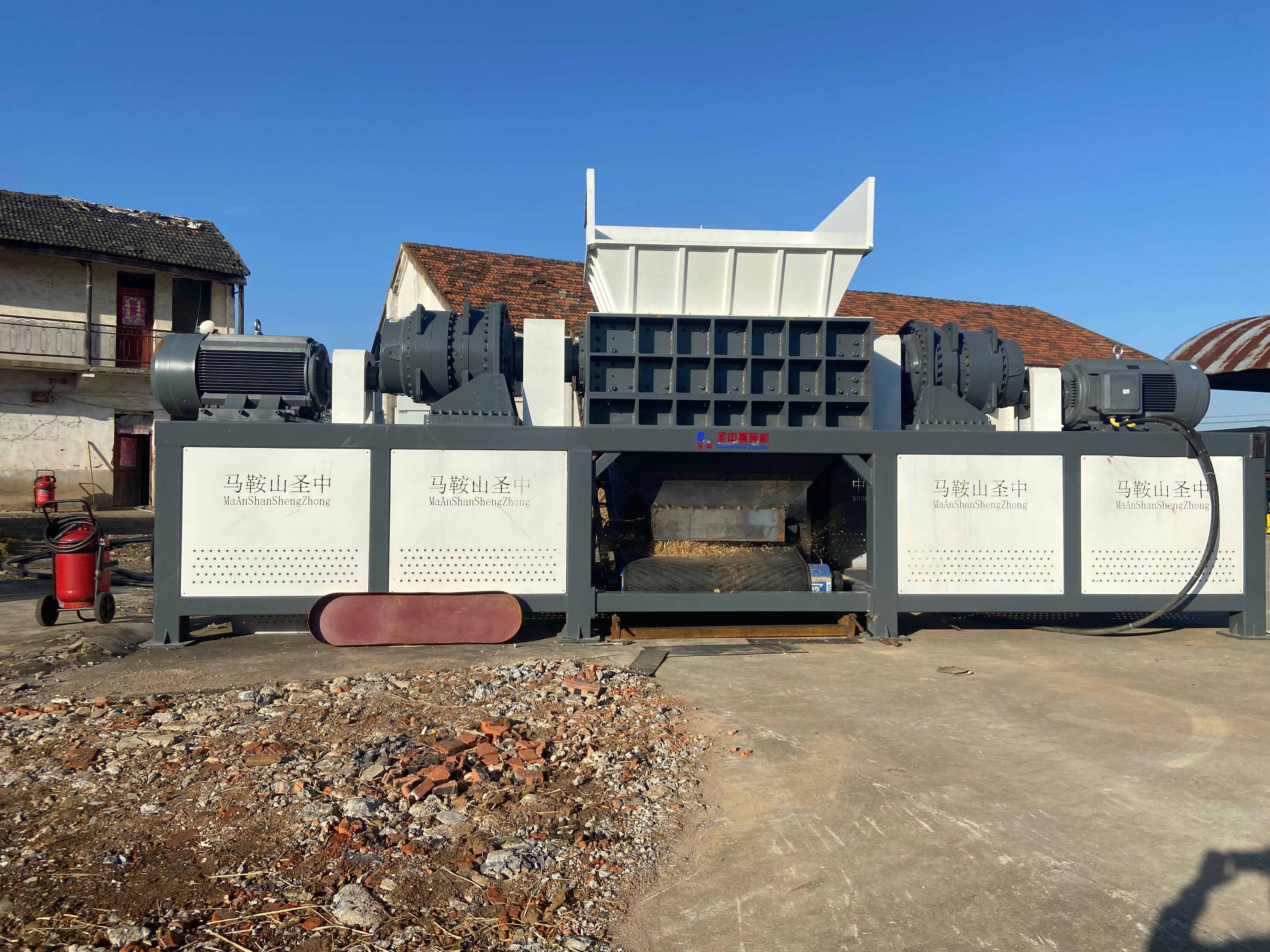
Precision machining tolerances directly control how load distributes across a rotor and its support bearings. When journals are ground to a cylindricity of less than 0.005 mm and surface roughness stays below Ra 0.4 µm, the contact patch remains stable under dynamic imbalance, reducing edge loading that typically initiates spalling or micropitting. Even a few microns of taper or lobing can force the bearing film to thin unevenly, which accelerates wear and shortens service intervals.
For assembled rotors, runout at the bearing seats and coaxiality between shaft ends need to be held within a few microns to avoid cyclic bending. A tolerance stack that allows more than 0.01 mm total indicated runout at critical diameters can turn a balanced rotor into a source of vibration once thermal growth changes clearances. Machining the seats in a single setup, then verifying with air gauging or CMM inspection, helps preserve the geometric relationships that keep oil film thickness consistent.
Shops that target these tighter bands—not just ISO defaults—often see bearing temperatures drop and vibration signatures flatten over long runs. The payoff isn't merely passing inspection; it's a rotor assembly that maintains its balance and clearance margins after thousands of hours, extending the life of both rotor and bearings without extra maintenance.
Field Test Data vs. Lab Specs: Which Better Predicts Shredder Durability?
When a shredder chokes on a credit card or whines through a stack of old tax returns, the last thing on your mind is whether its advertised sheet capacity came from a sterile lab bench or a chaotic real-world office. Yet that distinction matters more than most buyers realize. Lab specs are generated under near-perfect conditions: crisp, unfolded paper, a fresh machine, and a patient operator feeding sheets one at a time. Field test data, by contrast, reflects the messy reality of crumpled envelopes, glossy junk mail, and the occasional staple someone forgot to remove. The gap between these two worlds is where durability claims often unravel.
Lab testing typically follows standardized protocols like ISO or DIN, which hold temperature and humidity constant, use 20-lb bond paper, and measure continuous run time before the motor overheats. These numbers are reproducible and useful for comparing models side by side, but they tell you little about how the shredder will behave after six months of daily use by three different employees, each with their own feeding style. Field data captures that wear-in period, the lint buildup on cutting heads, and the strain of thermal cycling from short bursts followed by long idle stretches. A unit that sails through a 10-minute lab run may trip its thermal cutoff after five minutes of real-world abuse because the paper is slightly damp, the bin is half full, or the user feeds two sheets at a slight angle.
The smart approach is to treat lab specs as a baseline for initial capacity, then look for field test reports, long-term owner reviews, or teardown videos that show how the machine holds up after hundreds of cycles. Some manufacturers now publish accelerated life test results that mimic field conditions by alternating paper types, pausing to clear jams, and running the shredder to thermal shutdown. Ultimately, durability is less about a single impressive number and more about how gracefully a shredder degrades when the conditions are anything but perfect. If you only trust one source, make it field data from real users who have nothing to gain by inflating sheet counts.
Spare Parts Availability as a Window Into Manufacturer Reliability
When a machine sits idle waiting for a part, the real cost isn't just the component itself—it's the halted production line, the missed delivery dates, the overtime scrambling to reroute work. Manufacturers that treat spare parts as an afterthought often leave their customers stranded with vague lead times and backordered inventory. Over years of field work, I've seen companies with polished sales pitches fall apart the moment a gearbox seal or a proprietary sensor fails, because their parts pipeline was built on hope rather than a stocked warehouse.
What separates dependable equipment makers isn't flashy brochures; it's the unglamorous discipline of keeping critical spares on a shelf, coded, and ready to ship the same day. Look at any mature industrial operation and you'll find a parts room with a rhythm: fast movers replenished automatically, slow movers tracked by usage history, and a technical hotline that can identify a part number from a grainy photo without making you feel like an inconvenience. That responsiveness is a signal of how the manufacturer views its own products after the invoice clears.
Next time you're evaluating a supplier, ask for a list of the ten most common failure parts for the machine you're considering, and then ask how many are in stock right now. If they can't answer without a callback, or if every part has a twelve-week lead time, you're not buying reliability—you're buying a future emergency with a premium price tag. The availability of a two-dollar O-ring today tells you more about the company's engineering culture than any spec sheet ever will.
Custom Infeed Systems for Non-Standard Tire Streams
Handling non-standard tire streams demands more than a wider belt or taller side guides. These tires—oversized OTR, agricultural, run-flat, or mixed scrap with wire and debris—tend to jam, bridge, or shift unpredictably. A custom infeed system starts by mapping the actual flow: entry angles, tire diameters, weight distribution, and how they arrive from upstream sorting or shredding. This observation-based design leads to angled rollers, adjustable guide rails, and drive placements that keep irregular tires moving without constant operator intervention.
For streams that mix passenger tires with heavy off-road casings, the infeed must absorb sudden load spikes. We usually reinforce the frame with high-strength steel and use variable-frequency drives so the belt speed adapts when a large tire drops. Instead of relying on standard cleats that can snag sidewalls, custom designs often use low-profile textured belts or segmented chain conveyors that grip without tearing. Where tire diameters swing from 20 to 60 inches, a stepped infeed with a gentle pre-alignment zone helps stagger the flow before it reaches the main processing line.
Another overlooked factor is sensor and automation compatibility. Non-standard tires often trigger false readings on standard photoelectric sensors, so we integrate laser profilometers or vision systems that map each tire's footprint. That data lets the infeed adjust its guides on the fly and flag problematic items before they jam downstream equipment. The goal isn't just moving tires faster—it's reducing downtime caused by misfeeds, which costs more than the conveyor itself over a year of operation.
Continuous Improvement: A Telltale Sign of a Manufacturer Worth Keeping
Any manufacturer can promise quality on day one, but the ones worth holding onto are the ones that treat quality as a moving target. They don't wait for customer complaints or failed audits to trigger changes. Instead, they build feedback loops directly into the production floor—hourly defect tracking, weekly root-cause reviews, and operator-led tweaks that get tested on the next shift. This isn't about grand overhauls; it's about hundreds of small, almost invisible adjustments that compound into a process your competitors can't easily copy.
You can spot this mindset in the details that rarely make it into a brochure. Maybe the packing line was rearranged last month to cut two seconds per carton, or a supplier's material spec was tightened after a subtle variance showed up in a tensile test. The manufacturer won't always announce these changes, but they'll be able to show you the data trail. Ask them what they improved in the last quarter that wasn't driven by a defect. If they pause too long, that's your answer. Real continuous improvement is quiet, relentless, and almost boring—until you compare their reject rate with the industry average.
The payoff for you is predictability. A manufacturer that refines its processes week after week is one that rarely surprises you with late shipments, hidden rework, or sudden quality dips. They've already found and fixed the failure points before you ever saw the first sample. When you're evaluating partners, look for evidence of small, recent changes: updated work instructions with dates, tooling adjustments logged in a maintenance system, or even a suggestion board that's actually used. Those are signs that the factory treats improvement as a daily habit, not a poster on the wall.
FAQ
Look closely at the rotor design and bearing protection. Manufacturers focused on long-term performance use oversized shafts, multiple sealing points, and accessible wear parts instead of hiding behind inflated horsepower figures.
The steel grade and hardening process matter more than most buyers realize. Shredders built with wear-resistant alloys on cutter surfaces and high-yield structural frames hold tolerances far longer under abrasive rubber and steel wire loads.
A manufacturer that offers detailed maintenance schedules, quick spare part access, and real technical help keeps downtime short. Low upfront cost often disappears once you account for weeks of waiting on generic replacement blades or unresolved torque faults.
Ask if every rotor is dynamically balanced and if the gearbox is load-tested at full torque. Shops that skip these checks ship machines that vibrate, leak, or fail within the first year under real scrap tire conditions.
Tire processing varies by feed size, wire content, and desired chip profile. A builder that adapts cutter geometry, screen size, and infeed height to your material avoids unnecessary stress, which directly extends component life.
Direct drives and robust gear reducers with proper service factors handle shock loads without snapping shafts. Underpowered hydraulic systems or undersized couplings are common failure points in machines that look strong on paper but degrade quickly.
Yes. If the manufacturer stocks exchange programs for cutters, screens, and seals, they expect the machine to run for years. Companies that treat wear parts as a one-time sale often leave customers hunting for third-party substitutes that accelerate damage.
Long-term users reveal patterns that spec sheets cannot: whether bearings stay cool, how often cutters need rotation, and if the frame develops cracks. A few candid conversations with operators give a clearer durability picture than any polished brochure.
Conclusion
A tire shredder that still holds tolerance after five brutal seasons owes that survival to choices made long before the first tire hits the knives. Blade steel and heat treatment separate a machine that chews through sidewalls for a decade from one that needs rotor swaps every eighteen months. The best builders don't just quote a hardness number; they match alloy and tempering to the specific rubber mix and contaminants in your feed. That same obsession shows up in machining tolerances. Rotor journals and bearing seats cut to a few ten-thousandths of an inch keep vibration low, which extends bearing life more than any fancy lubrication schedule. But the real proof isn't a lab spec sheet. Field test data gathered from scrap yards and retread plants shows how these tolerances and heat treatments hold up when metallic debris, mud, and frozen rubber enter the chamber. Manufacturers that publish run-hour histories from actual customer sites give you a better read on durability than a polished catalog.
Then there's the quieter side of longevity: what happens after installation. Spare parts availability tells you whether a manufacturer expects to support a shredder for twenty years or just until the next trade show. If knife holders, screens, and shaft assemblies can't ship within days from regional stock, downtime compounds. Equally important is whether the builder can adapt the infeed to your tire stream. A plant processing mostly passenger tires needs different ram geometry than one handling aircraft or OTR casings, and pushing a standard hopper onto both wastes power and accelerates wear. Finally, watch for continuous improvement signals—version changes in the knife clamping design, upgraded seal materials, revised service bulletins. A manufacturer still refining older models is one worth keeping, because that's the only reliable predictor that today's shredder won't be orphaned tomorrow.
Contact Us
Contact Person: Leon
Email: [email protected]
Tel/WhatsApp: 8615385558866
Website: https://www.shred-waste.com