
Top 10 CZ Purlin Roll Forming Machine Companies You Should Know
2026-09-09
Most 'top 10' lists for roll forming machines just recycle the same brand names. We dug deeper. This guide focuses on CZ purlin lines that hold up under real production pressure, not just demo videos. One name that kept surfacing in our research was Beenew, a company worth a closer look if you value build quality over buzzwords. Here are the ten that made our shortlist.
What Sets Leading CZ Purlin Roll Forming Machine Manufacturers Apart
The gap between average and leading CZ purlin roll forming machine builders shows up in the details that affect daily production, not in brochure claims. Top manufacturers control roll pass design with measured strain distribution so that flanges come out square and web stays flat across the full range of gauges they claim to run. They also match the drive system and gearbox sizing to the actual torque required at maximum line speed, which prevents the speed drops and buckling that plague underpowered machines when operators switch from light gauge to heavier coil.
Tooling quality separates serious suppliers from the rest. Leading builders heat-treat and grind the rolls to tight runout tolerances, then test them on real coil before shipping. That pre-delivery testing catches twist and camber issues that would otherwise waste days on a customer's floor. They also design for adjustment, with fine-pitch screw-downs or shimless wedge systems on the side rolls, so operators can correct minor profile drift without calling a technician or waiting for replacement parts.
Support after installation is where many machines fall short. The best manufacturers maintain a documented library of setup parameters for common purlin sizes, keep wear parts and shaft seals in regional stock, and offer short-notice remote diagnostics via video call. They tend to ask about your coil tolerance and punching patterns before quoting, because they know those variables have more impact on finished purlin quality than the number of forming stations listed on a spec sheet.
A Closer Look at the Companies Driving Innovation in CZ Purlin Production
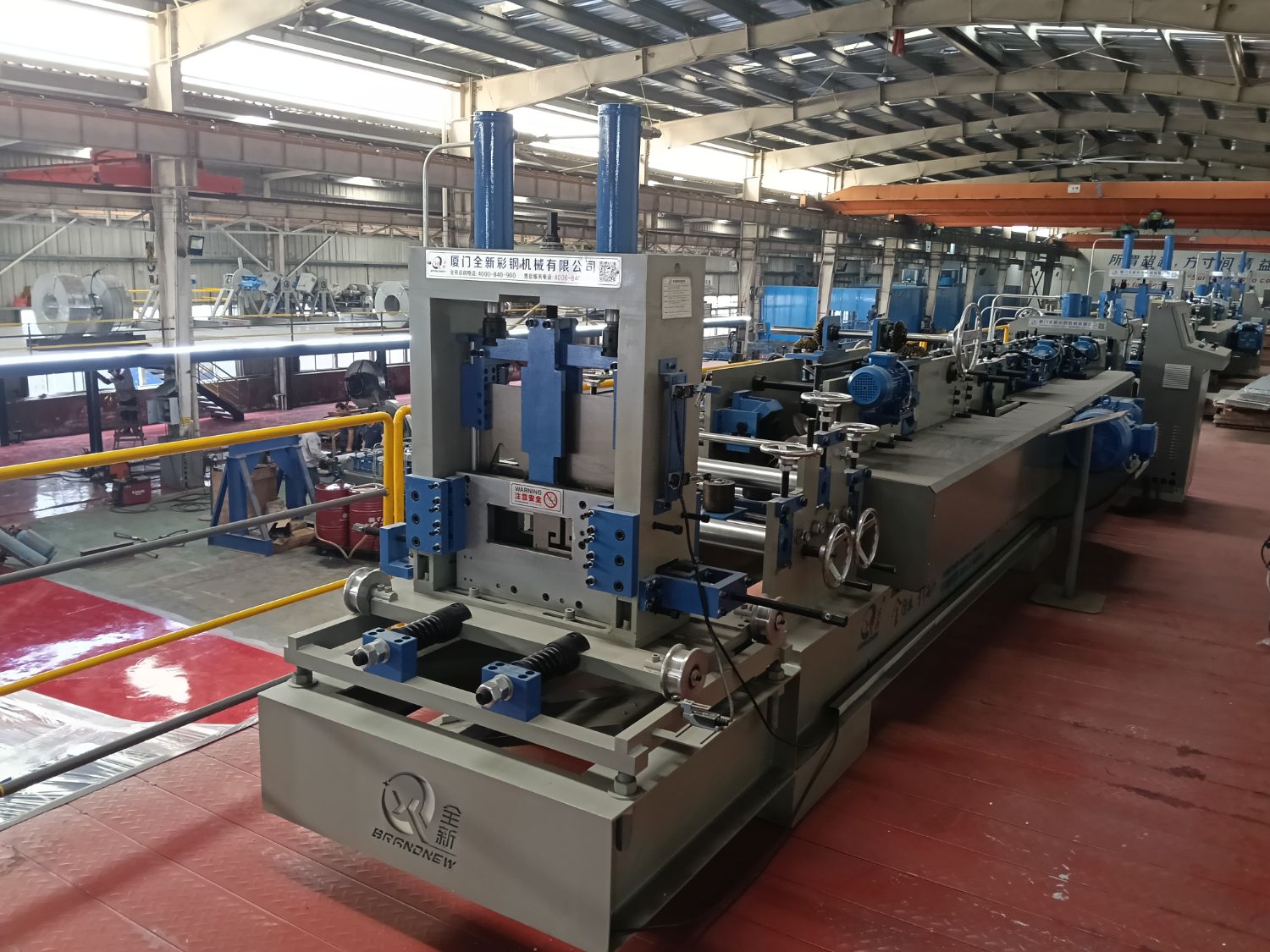
In the world of cold-formed steel components, CZ purlins are often treated as a commodity, but a handful of manufacturers have quietly turned them into a precision product. Companies like Hadley Group and Steelsmith have pushed beyond standard roll-forming lines, integrating laser-guided alignment systems and real-time thickness monitoring into their production cycles. These aren't headline-grabbing changes, but they directly address the industry's most persistent problem: dimensional drift during long runs. By locking down variability earlier in the process, these firms are producing purlins that require fewer shims and less on-site rework, which general contractors notice immediately on tight schedules.
What separates the true innovators from the rest is their willingness to treat galvanizing and punching as part of a single continuous workflow rather than separate stations. A few Asian and European producers have adopted inline hot-dip galvanizing with automated zinc-layer control, cutting both waste and lead time. Meanwhile, companies like Tata Steel's building envelope division have begun using predictive algorithms to adjust punch patterns based on coil thickness and tensile strength, reducing the number of off-spec holes that would otherwise scrap an entire batch. This kind of closed-loop feedback used to be reserved for automotive stamping, but it's now finding its way into light-gauge structural components.
Smaller regional fabricators are also contributing to the shift, often by focusing on service rather than raw speed. Instead of producing standard lengths and forcing customers to cut on site, these companies use nested optimization software to generate cutting schedules that minimize end-of-run scrap while still meeting mixed orders. One fabricator in the Midwest now delivers purlins pre-labeled with erection sequence numbers and pre-punched for specific clip orientations, effectively moving a chunk of engineering coordination from the field back into the plant. That may not sound revolutionary, but for crews working against weather windows, it is the difference between a smooth lift and a morning of rework with a gas-powered drill.
Key Features to Expect from Modern CZ Purlin Roll Forming Equipment
Modern CZ purlin roll forming equipment is no longer just about bending metal; it now integrates automated size changes that allow operators to switch between C and Z profiles without manual tool swaps. This shift reduces downtime dramatically, and the equipment often includes servo-driven stations that adjust web width, flange height, and lip dimensions in under a minute. Such flexibility is especially valuable for fabricators handling varied construction orders in a single day.
Durability and precision remain at the core of these machines, with hardened rollers and pre-loaded guides ensuring consistent profiles across long production runs. Many current models feature real-time monitoring of forming pressure and material feed, alerting teams to potential defects before they affect the finished batch. This proactive approach cuts scrap rates while maintaining tight dimensional tolerances.
Operators also benefit from simplified controls, often through touchscreen interfaces that store multiple profile recipes and automatically reposition the roll stands. Safety interlocks and remote diagnostics have become standard, letting maintenance crews identify issues without opening panels. For shops looking to expand capacity, these machines can be paired with automatic stackers or punching units to create a nearly hands-free production line.
How CZ Purlin Roll Forming Machines Serve Different Construction Needs
CZ purlin roll forming machines are built around a simple idea: one set of rollers can shape metal coil into either a C or a Z cross-section, depending on how the stations are configured. This interchangeable profile capability matters because the two shapes behave differently once installed. A C purlin often works as a straightforward member for wall girts and simpler roof framing, while a Z purlin can nest and overlap at splices, giving designers more options for continuous spans. Having both profiles available on a single machine lets fabricators move between job types without tying up extra floor space or waiting on secondary equipment.
The real value shows up in how different buildings demand different structural approaches. Warehouses and industrial sheds with wide roof spans often benefit from Z purlins because lapped joints create a continuous line of support, letting the steel carry more load over longer distances with less deflection. Smaller commercial or agricultural structures may only need C purlins, where straightforward bolted connections and predictable performance keep erection fast. Rather than forcing one profile into every situation, the roll forming machine can be adjusted for web depth, flange width, lip length, and material thickness, producing sections that match the actual snow load, wind load, and bay spacing of each project.
Portable versions of these machines also change how construction teams manage material. Instead of ordering pre-cut lengths and hoping the site dimensions match the drawings, a crew can form purlins as needed, reducing wasted offcuts and handling damage from long members being shuffled around a site. The ability to punch holes for bolts and service runs in the same forming line further removes handwork. When a design changes after framing has started, the machine can switch to a new size or profile quickly, keeping the job moving without waiting for a new shipment.
Practical Considerations When Choosing a CZ Purlin Roll Forming Machine Supplier
When evaluating suppliers, start by looking beyond the brochure specs. Ask for a production record from at least three existing customers who run the same gauge range and yield strength you plan to process. A machine that performs well on light 0.8 mm sheet may struggle with 3.0 mm high-tensile steel if the frame, shafts, and drive were not sized for it. Visit a running line if possible, or request unedited video showing full profile changes from C to Z, not just steady-state running.
Tooling and changeover time deserve close attention. CZ purlin machines often require swapping or adjusting rolls when switching profiles, and that idle time directly affects your plant's throughput. Ask the supplier to demonstrate a complete changeover under realistic conditions—note whether it takes two workers with crowbars or one operator with quick-change cassettes. Also check the hardness and coating of the roll materials; cheap rolls can wear unevenly and produce twisted or out-of-tolerance purlins within months.
After-sales support often matters more than initial price. Find out where the supplier keeps spare parts, how fast they can ship a replacement PLC or servo drive, and whether they offer remote diagnostics. A machine sold without local service coverage may leave you waiting weeks for a technician. Talk to the supplier's existing customers about their experience with warranty claims and technical response times, not just sales references. The real cost shows up in downtime, not in the purchase order.
Emerging Trends in CZ Purlin Roll Forming Technology
The shift toward servo-driven roll forming lines is quietly transforming how CZ purlins are produced. Instead of relying on fixed mechanical stops and manual adjustments, modern systems use closed-loop feedback to alter flange widths and lip dimensions on the fly. This means a single machine can switch from C to Z profiles with almost no downtime, which is particularly valuable for fabricators handling mixed orders in short runs.
Material handling is also getting smarter. Automated coil loading, laser-based profile measurement, and predictive tooling wear alerts are becoming standard features rather than premium add-ons. These innovations reduce scrap caused by camber or twist, and they let operators run longer batches without sacrificing consistency. In practice, a plant can now keep one line running across different purlin sizes while maintaining tight tolerances that were once only possible with dedicated, single-profile machines.
Another noticeable trend is the move toward modular quick-change cassettes. Instead of swapping individual rollers, entire forming stations are pre-set offline and rolled into place. This cuts changeover time from hours to minutes and makes it easier for smaller shops to justify investing in flexible roll forming technology. Combined with lighter, high-strength steel coils, these advances are pushing CZ purlin production toward leaner, faster, and more responsive workflows.
FAQ
It shapes coiled steel into C or Z cross-section purlins by swapping or adjusting forming stations. C sections are often used for simple spans, while Z sections can nest and work well for continuous lapped systems.
A single interchangeable machine saves floor space and reduces changeover downtime. You can switch between profiles in minutes instead of keeping two separate lines, which matters when job orders vary week to week.
The better-known builders tend to balance both. Some focus on quicker cycle times for light-gauge residential work, while others put more emphasis on thicker material for commercial or industrial buildings. The strongest options give you adjustable speed and gauge range without sacrificing accuracy.
Look beyond brochure numbers. Check the frame rigidity, how the roll stations are aligned, the quality of the cutting system, and whether the control interface lets you store common profile settings. Real-world support for spare parts and troubleshooting often matters more than minor speed differences.
Most established suppliers do, but the flexibility varies. Some use quick-change punch dies, others rely on servo-driven positioning. Ask how long a pattern change takes and whether you can run custom punch layouts without stopping the line for manual adjustments.
It is usually the deciding factor for repeat buyers. Even a robust machine will need consumable parts, alignment checks, and occasional software updates. A company with responsive local service or clear remote diagnostics can prevent a two-day downtime from becoming a two-week one.
You can find both. Semi-automatic lines with manual decoilers and basic controls are common in smaller shops. Larger fabricators often choose fully automated systems with auto stackers, servo feeders, and integrated length measurement. The best of the top ten can configure the level of automation to your production volume.
Many handle roughly 1.5 mm to 3.0 mm mild steel, but some extend to 4.0 mm or higher with reinforced frames. Confirm the yield strength rating as well—higher-strength steel like G450 or G550 can be harder on tooling and drives, so a machine rated for mild steel may not hold up on those jobs.
Conclusion
The companies that consistently rank among the top ten in CZ purlin roll forming share a refusal to treat these machines as commodity equipment. Instead of relying on off-the-shelf designs, they invest in proprietary drive systems, modular tooling that switches between C and Z profiles without manual re-alignment, and digital controls that let operators store dozens of profile recipes. What separates the leaders is not just hardware but how they handle material variability—high-tensile steel, thin gauges, and coil camber—without sacrificing straightness or hole placement. Several of the most innovative firms now embed laser measurement feedback directly into the forming line, automatically adjusting roll gaps mid-run. That level of responsiveness matters because modern construction demands purlins that fit perfectly into pre-engineered building kits, not just approximate lengths.
On the practical side, choosing a supplier means looking past glossy spec sheets at things like changeover time between sizes, availability of local service engineers, and whether the control software can integrate with existing ERP systems. Users in agricultural and industrial building often need machines that can run both light gauge and heavy structural sections, while commercial projects lean toward high-speed lines with minimal downtime. A noticeable shift is toward servo-driven punching and notching, which eliminates hydraulic maintenance and reduces noise. Another trend is the growing use of cloud-based diagnostics, but this should be evaluated carefully—remote access is only valuable if the supplier has a proven response protocol. Ultimately, the best companies distinguish themselves by treating the machine as part of a longer production ecosystem, offering training, tooling upgrades, and honest guidance on throughput expectations instead of one-time sales pitches.
Contact Us
Contact Person: Sophie
Email: [email protected]
Tel/WhatsApp: 8615959271231
Website: https://www.beenew-rollformer.com/