
Top 10 Trusted Solar Panel Nut Bolt Suppliers in China
2026-11-16
If you’ve ever had a solar panel bolt shear during installation or discovered rust streaks after one monsoon season, you already know the hardware is not a minor detail. China dominates the global supply of solar mounting fasteners, but the gap between a genuinely certified supplier and a trading company with a polished website is enormous. That’s exactly why we dug through export data, ISO certifications, and real field feedback to shortlist the top 10 trusted solar panel nut and bolt suppliers in China. One name that kept surfacing among EPCs and project owners is Topfencesolar—not because of marketing, but because their fasteners consistently pass salt-spray and torque tests that cheaper alternatives fail. Before you place your next order, see who else made the cut and what separates them from the noise.
Signs You’re Dealing With a Solar Fastener Supplier That Actually Understands Field Conditions
The first clue usually shows up long before installation starts. A supplier who understands field conditions will ask about roof type, wind zone, and whether the array sits within ten miles of saltwater, because those variables change fastener specs more than any datasheet. They won't push a one-size-fits-all stainless screw. Instead, you'll hear them talk about thread geometry, coating thickness, and which torque settings hold up on a standing seam versus a corrugated metal roof. That kind of conversation feels less like a sales pitch and more like a site walk.
Another sign is how they handle the unexpected. Crews regularly run into undersized purlins, hidden corrosion, or clamps that won't seat flush. A knowledgeable supplier will send a revised batch with different washers or a modified thread pattern without making you fill out three change-order forms. They also stock spare components that match what you already have, so you're not mixing two brands of bolts on the same rail. When the answer to a field problem is "give me an hour and I'll call you back," that's usually the real test.
Inside the Forging and Coating Methods That Keep Nut and Bolt Sets From Rusting Out
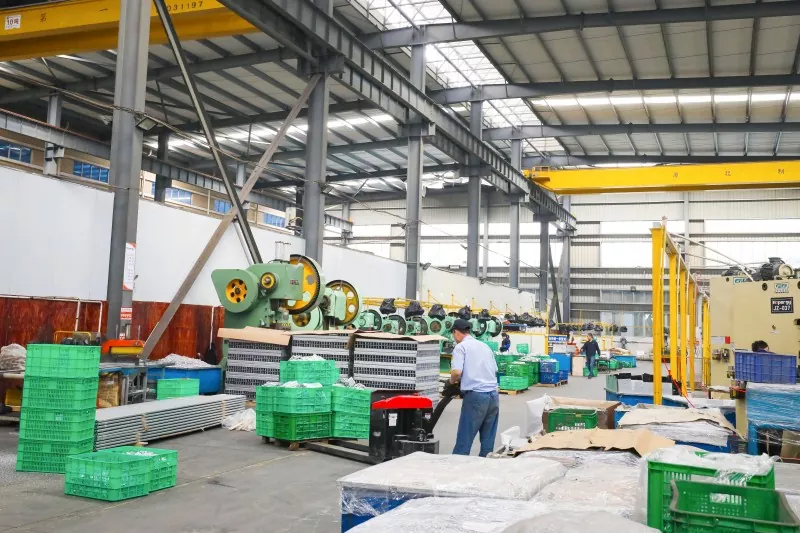
Most people never think about what keeps a nut and bolt set from turning into a pile of rust after a few seasons outdoors. The answer starts with the forging process itself. Instead of casting metal into shape, quality fasteners are formed under extreme pressure, which aligns the internal grain structure and closes up microscopic voids. That alone makes the surface far less inviting to moisture and oxygen. But the real magic happens when the still-warm parts are shot-blasted to remove scale, then immediately moved to the coating line before any flash rust can form.
Coating isn't just a single dip in generic paint. Many durable sets get a layered treatment: a base layer of zinc phosphate for bite, followed by a corrosion-resistant topcoat that can be anything from a baked-on organic finish to a hot-dip galvanizing bath. Some manufacturers use a mechanical plating process that tumbles the fasteners in a drum with zinc powder and glass beads, letting the impact fuse the coating without heat distortion. The result is a shell that sacrifices itself slowly over time, protecting the steel core underneath.
What separates a set that lasts five years from one that falls apart in two often comes down to edge coverage. Threads and sharp corners are notorious for thin plating, which is why top-tier lines use rotating racks or controlled immersion speeds to keep coating thickness uniform. A quick salt-spray test can reveal weak spots, but buyers rarely see that data. Instead, look for fasteners that show a consistent, slightly matte finish with no visible drips or bare edges under the head. That's a practical sign the forging and coating steps were done with more care than the budget imports.
How to Read a Solar Panel Fastener Datasheet Without Getting Misled
Many fastener datasheets lead with tensile strength numbers that look impressive on paper, but those figures often come from idealized lab conditions using freshly machined samples. A better approach is to scroll past the headline value and look for the testing standard cited—ASTM, ISO, or DIN—and whether the data reflects a batch average or a single best result. If the datasheet doesn't specify sample size, temperature, or load rate, treat that strength rating as a rough guess rather than an engineering guarantee.
Torque specs are another common trap. A manufacturer might list a maximum seating torque for a bolt, but real solar installations involve aluminum rails, thin sheet metal, and sometimes plastic spacers that deform well below the bolt's yield point. Blindly following the datasheet number can strip threads or crack anodized coatings. Instead, run a small torque-to-failure test on your actual stack-up, and note that lubrication, washers, and even thread locker change the clamping force dramatically at the same torque reading.
Pay close attention to the corrosion resistance claims. A datasheet may boast 1,000 hours of salt spray testing, but that doesn't tell you how the fastener performs under cyclic wet-dry conditions or with galvanic coupling to a copper grounding lug. Check whether the plating thickness is given in microns for each surface, and verify the base material—304 stainless behaves very differently from 316 in coastal environments. If the vendor can't provide a mill certificate or an independent lab report, assume the coating is thinner than implied and plan for more frequent inspections.
What Skilled Chinese Suppliers Do Differently With Thread Tolerances and Torque Specs
Experienced Chinese suppliers typically separate thread functions—locating, load-bearing, or sealing—before setting tolerance bands. They do not blindly follow a default ISO 2768 fit. Instead, they adjust the pitch diameter allowance based on the actual plating thickness and assembly method. For example, zinc plating can add 0.01–0.02 mm to an external thread's pitch diameter. If this is not reserved, a go gauge may fail after plating, so they often shift the pre-plating tolerance upward or suggest a 6e/6f fit for the customer.
On torque specs, these suppliers rely on measured data rather than handbook values. The same M10 bolt can have a friction coefficient ranging from 0.12 to 0.25 depending on whether it is dry, oiled, or electroplated. That means the torque required for the same preload can differ by a factor of two. Skilled shops run torque-preload calibration on batch samples and then give an installation torque range, instead of copying a single static number from a drawing.
Another practical difference shows up in handling borderline results. If thread gauges are marginal or torque scatter is too wide, experienced factories will quarantine the batch, re-roll or re-tap the threads, and re-check torque before shipping. They keep pitch diameter inspection records and torque test data aligned by batch, which makes it much easier to trace an assembly problem quickly if one appears at the customer's line.
The Hidden Costs of Cheap Solar Mounting Hardware You Only Notice After Installation
The first invoice rarely tells the truth. You save a few hundred dollars on racks and clamps, then spend a weekend discovering that the pre-drilled holes don't line up, the aluminum is thinner than promised, and the stainless steel starts showing rust spots before the first storm season ends. That's when the real cost creeps in—extra trips to the hardware store, replacement parts, and hours lost on a roof under a hot sun.
What stings more is the slow failure you can't see from the ground. Cheap mounting hardware often uses mixed metals or weak coatings, and over time galvanic corrosion eats away at the joints. A year or two later, panels shift slightly, micro-cracks form, and your energy output dips without an obvious cause. By then, the warranty on the mounting system is either void or impossible to claim because the manufacturer has disappeared or points to 'improper installation.'
And then there's the safety factor. A strong gust of wind or a heavy snow load exposes the difference between engineered brackets and flimsy imitations. When a panel comes loose or a rail bends, the repair bill dwarfs what you initially saved. The hidden cost isn't just money—it's the constant worry every time the weather turns, knowing you built your system on hardware that was never meant to last.
Questions a Trustworthy Solar Nut and Bolt Factory Will Answer Without Hesitation
Ask a solar fastener supplier about raw material certificates, and you'll quickly separate the real factory from the trading company. A trustworthy nut and bolt manufacturer will hand over mill test reports, salt spray results, and torque-tension data without asking why you need them. They know that solar racking systems live outdoors for 25 years, so they treat every batch as if it will be inspected by a structural engineer.
Beyond the paperwork, a direct factory can explain how they control thread rolling tolerances and heat treatment consistency. You won't hear vague claims like "we use high-quality steel"—instead, they'll tell you the exact grade, the coating thickness in microns, and how they prevent hydrogen embrittlement after plating. They'll also share real production lot data, not marketing gloss.
Finally, ask about traceability and after-sales support. A factory that stands behind its bolts will provide furnace numbers, test coupons, and even allow third-party inspections with short notice. If the answers come back slow or evasive, you're probably talking to a middleman, not the shop floor.
FAQ
Material quality matters most, usually stainless steel SS304 or SS316, or hot dipped galvanized carbon steel. Check for ISO 9001 certification, ask for salt spray test reports, and confirm dimensional tolerances like thread fit. A sample order or third party factory audit is often worth the extra effort.
The main hubs are Hebei province, especially Yongnian district near Handan, plus Ningbo in Zhejiang, Wuxi in Jiangsu, and Dongguan in Guangdong. Hebei is strong in general fasteners, while Zhejiang and Jiangsu have many factories focused on solar racking and mounting kits.
Ask for their business license, export history, and relevant certifications. Request a live video tour of the production line, or hire a third party inspection service. Starting with a smaller trial order and checking how they handle packaging and documentation can reveal a lot about their professionalism.
Focusing only on the lowest quote often leads to substandard material that rusts within months. Other mistakes include ignoring thread standards, not specifying torque requirements, skipping moisture proof packaging, and forgetting to clarify warranty terms before payment.
Most can produce according to your drawings or samples, including special lengths, head types, thread pitches, and surface treatments like dacromet or hot dip galvanizing. Custom orders normally come with a minimum order quantity, but it is often lower than many buyers expect.
For high salt environments, choose stainless steel 316, or carbon steel with hot dip galvanizing of at least 65 microns. Dacromet coating also works well. Regular electro galvanizing is generally not enough for long term exposure near the ocean.
If the dies and molds already exist, standard items can be ready in 7 to 15 days. Fully custom dimensions may take 20 to 35 days. Ocean freight to Europe or North America usually adds another 15 to 30 days depending on the destination port.
Yes, most suppliers are willing to send samples. Some offer free samples while others charge a small fee, with shipping usually paid by the buyer. Testing the samples for thread engagement and corrosion resistance is a smart step before signing a large contract.
Conclusion
Field experience matters more than glossy catalogs. The most dependable Chinese solar nut and bolt suppliers earn their place by asking about installation torque, thermal cycling, and racking movement before quoting a price. They don’t treat threads as an afterthought — they control pitch diameter, coating thickness, and proof load so that field crews aren’t fighting cross-threaded bolts or snapping heads on a windy roof. In terms of corrosion, the difference is visible from the inside out: decent factories use hot-dip galvanizing or zinc-nickel plating with proper hydrogen embrittlement relief, not a thin wash that flakes off after one monsoon.
Reading a datasheet from a trusted supplier should not feel like deciphering marketing copy. They state the exact ISO or DIN standard, salt spray hours, and whether the bolt’s torque spec applies to dry or lubricated threads. Cheap mounting hardware often looks identical in photos, but the hidden cost shows up later — seized hardware, rust bleeding onto panels, or a failed clamp that voids a module warranty. When you ask a factory about their thread tolerances or ask them to explain a coating failure from three years ago, the honest ones answer with data instead of deflecting. That willingness is what separates a supplier who has earned repeat business from one who is just renting a warehouse and a website.
Contact Us
Contact Person: Nancy
Email: [email protected]
Tel/WhatsApp: +86-13365923720
Website: https://www.topfencesolar.com/