

Top Phenylacetonitrile Intermediate: Key Insights for Chemical Synthesis
2026-08-06
In the intricate world of chemical synthesis, few intermediates carry as much subtle influence as top-grade phenylacetonitrile. This versatile building block quietly shapes routes to pharmaceuticals, agrochemicals, and fine chemicals, yet its critical role often goes unnoticed. With shifting supply chains and rising quality demands, the question isn’t just about finding phenylacetonitrile—it’s about securing a partner who ensures purity, consistency, and technical depth. At DSL Chemicals, we’ve seen how the right intermediate can transform a synthesis pathway from precarious to predictable. What makes this nitrile so indispensable, and how can chemists unlock its full potential? Let’s explore the insights that turn a reagent into a strategic advantage.
Unveiling the Role of Phenylacetonitrile in Modern Synthesis
Phenylacetonitrile, often abbreviated as PAN, has quietly cemented its position as a linchpin in contemporary organic synthesis. Its seemingly simple structure—a benzyl group attached to a nitrile—conceals a remarkable versatility that chemists have harnessed for decades. The nitrile moiety serves as a robust handle for further elaboration, while the adjacent benzylic position offers an acidic proton, enabling a cascade of carbon-carbon bond-forming reactions. From the early stages of drug discovery to the large-scale production of fine chemicals, PAN’s ability to act as both an electrophile and a nucleophilic precursor makes it an indispensable building block.
One of the most captivating aspects of phenylacetonitrile is its role in the synthesis of heterocyclic compounds, which are ubiquitous in pharmaceuticals and agrochemicals. Through straightforward transformations like cyclizations and condensations, PAN readily participates in the construction of complex architectures such as indoles, isoquinolines, and triazoles. For instance, the venerable Bischler–Napieralski reaction leverages the nitrile group to forge the isoquinoline skeleton, a motif found in numerous bioactive alkaloids. Moreover, the hydrolysis or reduction of the nitrile opens pathways to amides, carboxylic acids, or primary amines, allowing medicinal chemists to fine-tune physicochemical properties without switching to entirely different synthetic routes.
In recent years, the utility of phenylacetonitrile has been amplified by advances in catalytic methods that promote selective functionalizations at the benzylic position. Metal-catalyzed cross-couplings, photoredox processes, and organocatalytic asymmetric alkylations have breathed new life into this classic reagent, enabling enantioselective syntheses that were once challenging. For example, palladium-catalyzed α-arylation of PAN derivatives provides direct access to diarylmethanamine cores, which are prevalent in antimuscarinic agents and antidepressants. This resurgence underscores how a traditional substrate, when paired with modern catalytic strategies, can address the ever-growing demand for molecular complexity with improved efficiency and selectivity. Phenylacetonitrile, far from being a relic of early 20th-century synthesis, continues to inspire innovative pathways that shape the future of molecule creation.
Synthetic Pathways: Accessing High-Purity Phenylacetonitrile
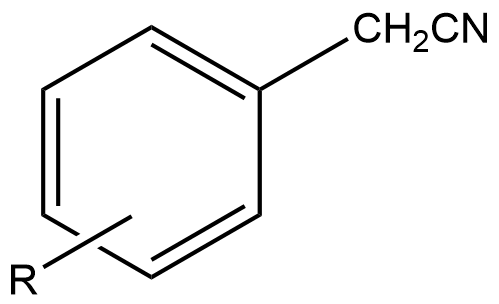
The industrial preparation of phenylacetonitrile typically hinges on the reaction between benzyl chloride and sodium cyanide in a biphasic system. This nucleophilic substitution proceeds smoothly under phase-transfer catalysis, often with a quaternary ammonium salt, to afford the nitrile in high yield. Careful control of pH and temperature minimizes the hydrolysis of the cyanide ion, while an inert atmosphere prevents oxidative side reactions. Washing the organic phase with water and brine removes residual salts, setting the stage for subsequent purification.
To reach the demanding purity levels required for pharmaceutical intermediates or fragrance synthesis, fractional distillation under reduced pressure is the workhorse technique. A packed column with a high number of theoretical plates separates phenylacetonitrile from close-boiling impurities like benzyl alcohol and unreacted benzyl chloride. For applications with even tighter specifications, a short-path distillation or a treatment with activated charcoal prior to distillation can reduce color bodies and resinous byproducts that ordinary fractionation might miss.
An alternative pathway that avoids cyanide salts starts from benzaldehyde, employing the Henry reaction with nitromethane followed by dehydration of the resulting nitrostyrene intermediate. Although this route adds a step, the hydrogenation or chemical reduction of the nitrostyrene to the amine and subsequent diazotization–cyanide displacement can produce phenylacetonitrile without direct handling of hydrogen cyanide precursors. When fine-tuned, this approach offers a robust route to material with exceptionally low levels of halogenated contaminants, a critical consideration for certain catalytic processes downstream.
Reactivity at the Nitrile Group: Transformations and Utility
The nitrile group sits at a fascinating crossroads in organic chemistry, behaving like a rigid triple bond with an electron‑withdrawing pull that shapes its every reaction. It’s not just a spectator; its polar nature invites nucleophiles to attack the electrophilic carbon, while the lone pair on nitrogen can coordinate metals or grab protons. This dual character means a nitrile can be transformed into a carboxylic acid through hydrolysis, reduced to an amine with hydride donors, or even turned into a ketone via Grignard additions. Each transformation hinges on a delicate balance between the group’s inherent stability and the right push from reagents or catalysts, making it a cornerstone for building more complex molecules.
What makes nitriles truly stand out is their chameleon‑like ability to adapt in multistep syntheses. They slide smoothly into roles that other functional groups can’t handle as gracefully. Take the Thorpe reaction, where a nitrile enolate snaps onto another nitrile carbon, forging a new carbon‑carbon bond and setting the stage for enaminonitriles—versatile intermediates in heterocyclic synthesis. Or consider how they participate in cycloadditions, like the [3+2] click reaction with azides to yield tetrazoles, a transformation that occurs with startling efficiency under mild conditions. The nitrile’s moderate electrophilicity avoids the over‑reactivity that plagues aldehydes, yet it remains hungry enough to engage when the right partner comes along.
Beyond the flask, the utility of nitrile chemistry radiates into materials, agrochemicals, and drug design. The cyano group’s compact size and strong dipole moment can tweak the electronic profile of a pharmaceutical candidate, improving binding affinity without drastically altering molecular shape. In polymer science, polyacrylonitrile is the precursor to carbon fibers, where the nitrile groups undergo cyclization and dehydrogenation under heat, locking chains into a ladder structure that delivers remarkable strength. This practical reach, combined with the near‑endless ways to twist the reactivity of the cyano unit, keeps nitriles firmly embedded in the synthetic toolbox—not as a relic of classical chemistry but as a dynamic pivot point for modern innovation.
From Lab Scale to Industrial Production: Handling Challenges
Scaling a process from a bench-top setup to full industrial production is rarely a straightforward multiplication of volumes. What works smoothly in a controlled lab environment often behaves unpredictably when subjected to the realities of large-scale manufacturing—think mixing inefficiencies, heat transfer limitations, and raw material variability that were negligible at smaller scales. The first true hurdle is identifying which parameters genuinely control the outcome, because the ones that mattered most in the lab might fade in significance once the process is supersized.
Beyond the engineering puzzle, there’s a human element that can blindside even the most technically prepared teams. Operators accustomed to batch-to-batch flexibility may resist the tighter specifications needed for consistent large-scale output. Meanwhile, quality assurance protocols designed for pilot runs can collapse under the weight of sampling rates and traceability demands. The fix often lies in bridging these gaps early—embedding process development engineers alongside production staff and running extended stability trials that mimic real-world supply chain fluctuations, not just ideal conditions.
Perhaps the most overlooked challenge is the shift in economic and regulatory thinking. In the lab, an extra purification step is a minor inconvenience; in production, it’s a bottleneck that eats into margins and capacity. Regulatory bodies expect not just a scalable recipe but a thoroughly understood control strategy that proves product quality is built in, not tested in. Successful transitions depend on treating scale-up as a distinct discipline—blending first-principles modeling with empirical iteration, and accepting that the process you launch with will evolve as real-time data pours in.
Beyond the Basics: Advanced Applications in Drug Development
The leap from target identification to clinical candidate often hinges on unconventional thinking. For instance, leveraging phenotypic screening with patient-derived organoids has allowed teams to bypass the limitations of target-based approaches in diseases where the underlying biology is poorly understood. This method doesn't just identify active compounds—it captures functional responses in a disease-relevant context, enabling the discovery of first-in-class therapies that might otherwise go unnoticed.
Another frontier is the integration of computational models that predict drug–drug interactions and off-target effects early in the pipeline. By training these models on real-world evidence and pharmacovigilance data, researchers can flag potential safety risks before they derail clinical trials. This proactive strategy reduces late-stage failures, shifting the paradigm from reactive safety monitoring to preventive risk mitigation.
Advanced applications also extend into manufacturing, where continuous processing and real-time release testing are reshaping supply chains. A notable example is the use of portable, modular production units for on-demand synthesis of personalized cell therapies. This not only shortens delivery times but also minimizes contamination risks, making complex treatments more accessible to patients in remote settings.
Navigating Safety and Stability: Practical Considerations
When designing systems that need to stay up and running, it’s the small, unglamorous choices that often make the biggest difference. You can have the most elegant architecture, but if you haven’t thought through what happens when a single component fails—or how your team will respond at 3 a.m.—you’re gambling with your users’ trust. Practical stability starts with accepting that failures aren’t hypothetical; they’re just waiting for the worst possible moment.
One of the first things I look at is how a system handles overload. Too many teams rely on auto-scaling alone, forgetting that it takes time to spin up new instances. That gap can cascade into timeouts, retry storms, and eventually a full-blown outage. Simple defensive measures—like request queuing with sensible limits, early rejection of excess traffic, and backpressure signals—can keep things stable long enough for scaling to kick in. And never underestimate the value of a well-tested runbook: during a crisis, decision fatigue is real, and having clear, practiced steps reduces the risk of human error.
Beyond the technical layers, I’ve learned that stability is also a cultural habit. If your post-incident reviews focus on blame instead of blameless learning, you’re missing the point. Encourage honest reflection, document the unexpected interactions, and invest in small fixes that prevent recurrence. Over time, these iterative improvements create a system that’s resilient not just in design, but in operation. After all, safety isn’t a checkbox—it’s a continuous practice.
FAQ
Phenylacetonitrile, also known as benzyl cyanide, is an aromatic nitrile that serves as a highly versatile building block. Its reactivity stems from the activated methylene group adjacent to both the phenyl ring and the nitrile, enabling a wide range of transformations such as alkylations, hydrolyses, and cyclizations. This makes it indispensable for constructing complex molecules in pharmaceuticals, agrochemicals, and fragrance ingredients.
The molecule features a phenyl ring and a cyano group separated by a single carbon. This arrangement creates an acidic methylene proton (pKa ~21.9 in DMSO) due to the electron-withdrawing effect of the nitrile, allowing it to form a resonance-stabilized carbanion. This anion can then participate in nucleophilic substitutions, condensations, and other carbon–carbon bond-forming reactions, giving it exceptional synthetic utility.
Phenylacetonitrile is heavily utilized in the manufacture of bulk and fine chemicals. It is a key precursor to phenylacetic acid (via hydrolysis), which is used in penicillin production and perfumery. It is also employed in the synthesis of pharmaceuticals like barbiturates, stimulants, and various heterocycles. In agrochemicals, it contributes to the production of pyrethroid insecticides and other crop protection agents.
The most straightforward laboratory preparation involves the reaction of benzyl chloride with sodium cyanide in an aqueous-organic solvent mixture under phase-transfer catalysis. Industrially, it can be produced by the ammoxidation of toluene or by the catalytic dehydration of phenylacetamide. Another route is the reaction of benzyl bromide with potassium cyanide in a polar aprotic solvent like DMSO.
Phenylacetonitrile is toxic and flammable. It releases highly toxic hydrogen cyanide upon decomposition or contact with acids. Proper personal protective equipment (gloves, goggles, lab coat) is mandatory. All work must be conducted in a well-ventilated fume hood, and strict controls must prevent any contact with acids or water in storage. In case of inhalation or skin contact, immediate medical attention is required due to its cyanogenic potential.
Unlike simple aliphatic nitriles such as acetonitrile, phenylacetonitrile provides a benzylic position that offers enhanced nucleophilicity and the possibility for further functionalization through the aromatic ring. Compared to benzonitrile, which lacks an α-hydrogen, phenylacetonitrile can be easily alkylated or condensed, making it far more versatile for building molecular complexity.
Growing research into novel CNS-active pharmaceuticals and environmentally safer pesticides is fueling the need for phenylacetonitrile. Additionally, the push for continuous flow chemistry and greener processes has led to innovative uses of this intermediate in telescoped syntheses, minimizing isolation steps and improving atom economy.
Phenylacetonitrile is used in the synthesis of the tranquilizer phenobarbital, the antispasmodic adiphenine, and the antidepressant venlafaxine. It also features in the construction of naturally occurring alkaloids and amino acids, as well as in the preparation of stilbene derivatives that are studied for their antioxidant and anticancer properties.
Conclusion
Phenylacetonitrile has carved out a reputation as a workhorse intermediate in modern chemical synthesis, bridging classic methodologies with cutting‑edge applications. Its ability to participate in a wide range of transformations—rooted in the versatile reactivity of the nitrile group—makes it indispensable for constructing complex molecular frameworks. Synthetic chemists have refined multiple routes to access high‑purity phenylacetonitrile, from the benzyl chloride–cyanide exchange to catalytic approaches that minimize by‑products. Once in hand, the nitrile functionality serves as a gateway to amines, acids, heterocycles, and more, enabling streamlined routes to targets that would otherwise demand lengthy sequences. The nuanced control of reaction conditions can selectively unlock these pathways, highlighting the compound’s strategic value in retrosynthetic planning.
Moving from milligram‑scale experiments to multi‑kilogram production reveals a different set of demands—handling challenges, safety protocols, and process robustness become paramount. Phenylacetonitrile’s relatively high boiling point and moderate toxicity profile call for careful engineering to ensure safe, scalable operations. These practical considerations have not dampened its adoption in pharmaceutical development, where it appears in the synthesis of active pharmaceutical ingredients ranging from anticoagulants to antivirals. Advanced applications now extend beyond traditional drug scaffolds, probing its utility in designing targeted covalent inhibitors and novel CNS agents. Maintaining stability during storage and handling—protection from moisture and light—completes the picture of a reagent that, when respected, delivers exceptional value.
Contact Us
Contact Person: Wei Zhang
Email: [email protected]
Tel/WhatsApp: 862163529955
Website: https://www.dslchem.com