
Yushui Village Dongba Culture: A Journey into Naxi Heritage Near Jade Dragon Snow Mountain
2026-09-06
Most travelers see Jade Dragon Snow Mountain from a distance, but few know that at its base sits a village where Naxi culture isn't a museum display—it's a daily rhythm. Jade Water Village (Yushui) quietly guards the last living Dongba traditions: pictographic manuscripts, shamanic rituals, and a language that still breathes in stone and water. This is not a replica heritage park. Walk past the old wooden houses, watch a Dongba priest paint symbols that predate the script you're reading now, and you'll understand why this corner of Yunnan keeps pulling curious travelers away from the crowds. Here's what awaits—and why the detour matters.
Where the Dongba Script Still Breathes in Stone
Up in the foothills above Lijiang, a few cracked limestone slabs still hold lines of pictographs that most visitors walk straight past. The characters are cut shallow, almost shy, as if the stone itself was reluctant to give them up. Some mark water sources or burial grounds; others record vows between clans that have long since scattered. Touch the grooves with a fingertip and the old Dongba glyphs feel less like writing than like a pulse kept under the skin of the mountain.
The carvers were not monument builders. They worked at the edges of fields, beside wells, on boulders half-swallowed by moss, leaving messages meant for the land rather than for crowds. At one site above Baisha, a single deer-headed figure stands beside a circle of sun rays, and local elders still point to it when explaining how a village once settled a dispute over grazing rights. Rain and wind have softened the edges, but that softening is part of the point: the script breathes through erosion, not despite it.
What survives in the rock is often simpler than the painted manuscripts kept in archives. There are no long epic cycles here, no elaborate colours. Instead you get a single character for “spirit,” a row of three peaks, a stick-figure man with a line through his chest meaning “boundary.” Seen together, they map a landscape of obligations and warnings that textbooks cannot reconstruct. Visit after a light rain and the grooves darken, the whole surface turns legible again, as though the cliff is rereading itself to whoever has the patience to stop.
A Naxi Village Below the Snow Dragon's Shadow
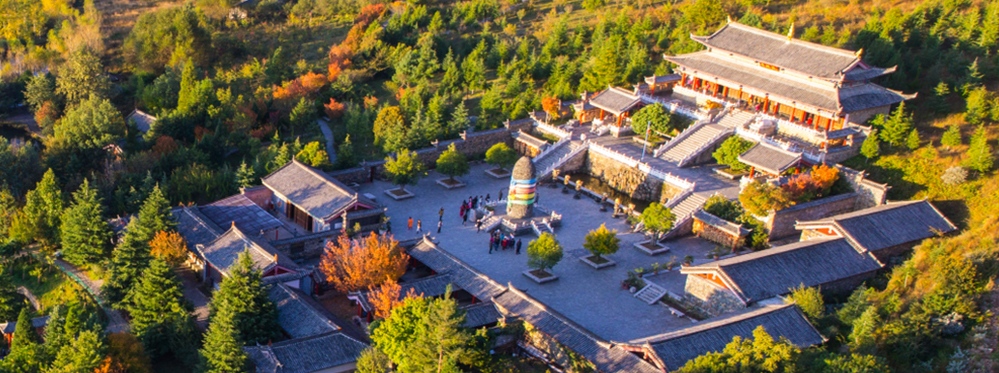
Tucked into the northern reaches of Lijiang, where the Jade Dragon Snow Mountain looms so close you can almost trace the ridgelines from a courtyard wall, sits a village that seems to breathe with the valley itself. Stone paths wander past timber houses carved with wooden eaves, each one angled to catch the morning light spilling over the glacier. Chickens scratch at the edges of terraced fields, and the sound of a distant bell drifts down from a hillside temple. This is not a place that performs its culture for outsiders; it simply lives it.
The Naxi people here have long read the mountain as a guardian, not merely a backdrop. You'll notice it in the way a grandmother pauses to point at a cloud formation, explaining in a soft dialect that the snow dragon is moving his tail. In spring, the village orchards turn white with pear blossoms, and the mountain's meltwater channels through narrow stone gutters, feeding vegetable plots and washing basins with the same unhurried rhythm as generations before. There is no rush to package any of this into a tour bus stop, and that reluctance is exactly what makes it stay with you.
If you arrive in late afternoon, climb the low ridge behind the last house. From there, the village shrinks to a collection of gray roofs tucked under the mountain's shadow, while the wind pushes through the pines with a sound like far-off chanting. You might not see another traveler the whole time. You'll probably see an old man repairing a wooden plow, a child carrying water, smoke rising from a stone hearth. Under that snow dragon's gaze, the ordinary moments become the whole story.
Walking the Waterways That Whisper Naxi Myths
The old town unravels in a murmur of narrow canals, their stone banks worn smooth by centuries of footfall and water. Each turn brings you to a low bridge where the current carries voices—not of people, but of the Naxi stories that have soaked into the cobblestones. You learn to walk slowly here, because the waterways are alive with half-forgotten tales of love between mortals and mountain spirits, of dragons coaxed from the snowmelt, of songs that kept the village safe when the Jade Dragon turned its back on the valley.
Morning is the best time to trace these liquid threads. The water runs clear and cold from the peaks, and if you stop where three channels cross, you can almost hear the old priests chanting the origin of the streams. Locals still leave small offerings at the springheads—a handful of rice, a folded leaf—not out of habit, but because the Naxi believe the waterways remember everything. Walking them becomes less like sightseeing and more like reading a story written in ripples, where every bridge is a stanza and every bend a held breath.
Inside a Courtyard Where Gods and Ancestors Sit Together
The courtyard breathes with the weight of centuries, yet nothing here feels static. Stone deities lean against moss-covered plinths, their weathered faces turned toward the same sun that once warmed the hands of those who carved them. Ancestors are not distant here; their presence hangs in the still air like woodsmoke after a festival. You don't visit this place so much as step into an ongoing conversation, one that has never paused for rain or empire.
What surprises most is the lack of hierarchy. A crude clay figurine of a forgotten household spirit sits inches from a finely chiseled guardian lion, both dusted with the same red powder from the morning's offerings. The boundaries between divine and human, past and present, blur in the dappled shade of an old banyan tree that has grown through the paving stones. Here, the sacred doesn't demand silence; it invites the rustle of leaves, the murmur of a caretaker sweeping, the occasional clink of a rice bowl left for a guest no one can see.
Even at midday, when the sun sharpens every edge, the courtyard keeps its cool hush. It is a space made not for processions or sermons but for the slow, unspectacular act of being together. Gods and ancestors do not sit on thrones; they sit on the same low stone benches where villagers gather to shell peas or argue about the harvest. To enter is to become part of the gathering, to feel that the line between the living and the remembered is thinner than a shadow at dusk.
The Dongba Keepers Who Read Nature's Signs
In the foothills of the Jade Dragon Snow Mountain, Dongba keepers still walk the old paths with an attention that most of us have forgotten. A shift in wind direction, the sudden flight of a flock of crows, the way moss grows thicker on one side of a pine—these are not random details. For a Dongba, each one is a line in a living manuscript. They read the landscape the way a scribe reads script, translating the language of clouds, insects, and water flow into decisions about planting, travel, and ritual timing.
This practice rests on a belief that nature does not hide its intentions; it simply speaks in a dialect too quiet for hurried ears. Dongba keepers spend years apprenticed to elders, learning to match the patterns of animal behavior with seasonal shifts. A late-blooming rhododendron might delay a mountain ceremony. The first call of a particular thrush can signal the moment to open certain irrigation channels. Their knowledge is not written in a single book but layered across memory, observation, and the hand-drawn pictographs of Dongba scriptures, which often depict trees, birds, and rivers as active participants in human affairs.
Today, fewer young people take up the mantle, but those who do carry more than tradition—they carry a quiet form of ecological literacy. When a Dongba keeper reads the cracked mud of a riverbed or notices that bees are building hives lower than usual, they are not forecasting in a modern scientific sense. They are listening to a conversation that has been going on for centuries, and reminding the rest of us that the natural world is still speaking, if only someone will pause long enough to hear it.
From Barley Fields to Bonfire Chants: A Day in Yushui
Dawn over the barley fields arrives soft and grey, the soil still holding last night's rain. You can hear water moving in the irrigation ditches before you see it, a low gurgle that draws you past the first green shoots pushing through straw-colored stubble. In Yushui, the start of spring is not a date on a calendar but a smell—wet earth, crushed wild garlic, and woodsmoke from a stove already lit in the farmhouse.
By midday, the villagers trade their hoes for bundles of dry reed and split bamboo. They build the bonfire on the flat stone clearing where barley was threshed in autumn. There is no script, no amplified welcome. Someone begins a tune that follows the cadence of planting songs, and others join in, stamping their boots against the ground until the rhythm feels older than the hills. The fire does not roar; it crackles and pops, sending sparks into a sky that has begun to drizzle again.
What sticks with you afterward is the quiet between the chants, the way a stranger hands you a cup of hot barley tea without asking where you are from. The flames dwindle, the rain beads on wool sleeves, and for a long moment no one speaks—just the hiss of embers and the first night birds calling from the field's edge. You leave with your shoes caked in mud and a sense that the day was not performed for visitors but simply lived.
FAQ
Yushui Village is a living cultural site in the Lijiang basin, built around a natural spring that feeds the surrounding farmland. It preserves and demonstrates Naxi Dongba traditions—ritual texts, pictographic writing, and ceremonial practices—that would otherwise be scattered across remote mountain villages.
The village sits at the southern foot of Jade Dragon Snow Mountain, so the snowmelt feeds its springs and streams. Many Dongba rituals reference the mountain as a sacred ancestor, and the clear water flowing through the village is considered a direct gift from the peak.
Yes, on most days there are Dongba practitioners performing blessing ceremonies, chanting, or demonstrating divination near the central altar. They are not actors in costume; many are initiated practitioners who still train younger apprentices in the village.
Dongba script is one of the few still-used pictographic writing systems, where symbols resemble the objects or ideas they represent—trees, birds, spirits, and actions. It is not a dead museum script; villagers use it for ritual manuscripts, banners, and even teaching children basic Naxi concepts.
You can try making Dongba paper from local mulberry bark, grind ink, and copy a simple pictograph under guidance. Some workshops also teach basic Naxi phrases or let you press a woodblock print of a protective deity.
Naxi traditional religion is animistic and places heavy emphasis on harmony between humans, ancestors, and nature spirits. The spring and old trees inside the village are treated as living entities, so washing hands or feet directly in the sacred pools is considered disrespectful.
It is about 30 to 40 minutes by car or local bus from Lijiang Old Town. Many people combine it with a morning at Baisha Village or a short hike near the lower slopes of Jade Dragon Snow Mountain, then spend two to three hours in Yushui itself.
The small stone shrines tucked along the spring-fed channels are not decorative. Each one marks a spot where water is diverted for a specific family or field, and offerings are left to the water spirit. Slowing down to read these shrines changes the whole experience.
Conclusion
Yushui village sits on the slope beneath Jade Dragon Snow Mountain, where the cold meltwater runs through stone channels older than memory. Here the Dongba script does not live in museums—it is scratched into boulders along the path, each pictograph a small wound that still bleeds meaning. A figure with a bird's head and a man's body tells you which spring to drink from; a sun with three rays warns of the afternoon wind. Walking these lanes, you feel the mountain's shadow move across your shoulders like a hand. The Naxi houses are built from the same grey rock as the cliffs, their tiled roofs curving upward as if trying to lift the village into the clouds. This is not a place that performs its heritage for cameras. The script is simply still there, cut into the stone the way a farmer cuts a furrow—because it belongs to the soil, the water, and the people who read both.
Inside a courtyard, the ancestors' tablets lean against the wall beside a small stove where tea is always brewing. The Dongba priests—often older men with sun-cracked hands—do not separate gods from daily chores. They watch the barley fields for signs: the first green shoot after rain, the way a crow lands on a fence post, the direction of smoke from a neighbor's fire. These are not superstitions but a grammar of living with the mountain. By evening, the chants begin around a bonfire, not as a show but as a thank-you to the fields and the water canals that whisper the same myths the stones carry. You might be offered a bowl of roasted barley flour and a cup of strong tea. Nobody explains the ritual to you. You either feel it in your spine or you don't. That honesty is what makes Yushui different—it doesn't translate its soul for visitors. It simply keeps feeding the fire.
Contact Us
Contact Person: Changhong He
Email: [email protected]
Tel/WhatsApp: 086-0888-5190152
Website: https://vip.e-baixing.com/ysh