
Can an Expandable Container House Really Replace Traditional Buildings?
2025-12-26
When I first started looking into flexible housing solutions, I kept running into one concept that sounded almost too convenient to be real. That curiosity eventually led me to explore the Expandable Container House market more seriously, especially after seeing how Ante has been gradually redefining what modular living can look like in real projects rather than brochures. What I discovered is not a gimmick, but a practical response to very real construction pain points.
Why Are So Many Buyers Reconsidering Conventional Construction?
I have spoken with developers, contractors, and even private buyers who all share the same frustrations. Traditional buildings demand long timelines, unpredictable labor costs, and ongoing maintenance that never truly ends. An Expandable Container House challenges those assumptions by offering speed, flexibility, and cost clarity from day one.
- Rising labor and material costs make budgeting difficult
- Construction delays disrupt business and living plans
- Permanent buildings lack adaptability for future changes
- Remote locations often lack skilled construction teams
From my perspective, these are not small inconveniences. They are structural problems that modular housing was designed to solve.
How Does an Expandable Container House Adapt to Different Scenarios?
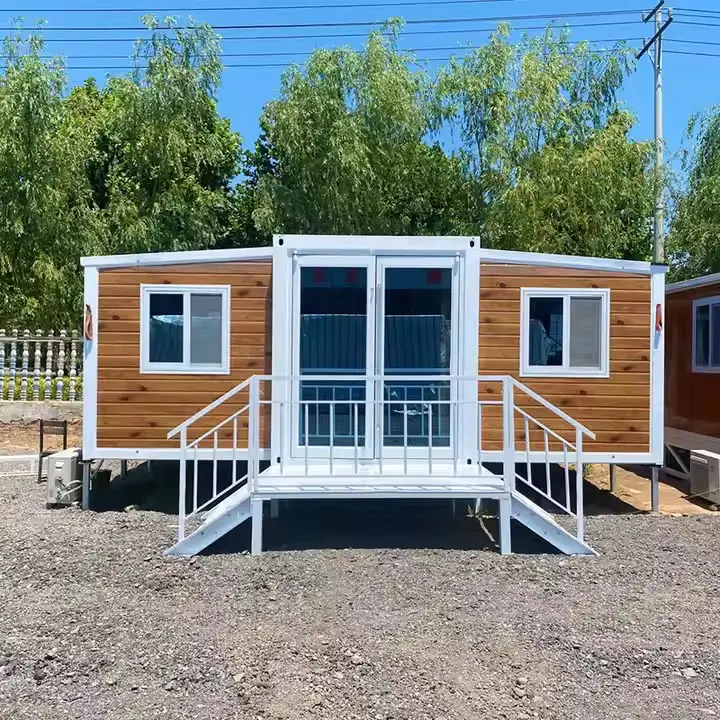
One reason I find the Expandable Container House concept compelling is its versatility. Unlike fixed-size modular units, expandable designs allow interior space to grow once the unit is deployed. This means transportation remains efficient, while on-site usability increases dramatically.
| Application Scenario | Expandable Advantage | Practical Outcome |
|---|---|---|
| Temporary Workforce Housing | Fast setup and relocation | Reduced downtime and labor expenses |
| Emergency Accommodation | Compact transport and rapid expansion | Immediate shelter without complex construction |
| Commercial Offices | Flexible internal layout | Space adapts as team size changes |
| Remote Project Sites | Minimal on-site work required | Reliable housing in challenging environments |
What Makes an Expandable Container House More Cost Predictable?
In my experience, cost predictability is often overlooked in marketing materials, yet it matters most to decision-makers. With an Expandable Container House, most expenses are defined upfront. Manufacturing takes place in controlled environments, which significantly reduces unexpected overruns.
- Factory-controlled production limits material waste
- Shorter installation timelines reduce labor exposure
- Standardized components simplify maintenance planning
- Transport-efficient dimensions lower logistics costs
This level of transparency is why more procurement teams are starting to consider modular expansion systems instead of traditional builds.
Can an Expandable Container House Meet Modern Comfort Expectations?
One misconception I often hear is that modular means uncomfortable. That assumption does not hold up when you look closely at a well-designed Expandable Container House. Insulation systems, electrical layouts, plumbing integration, and interior finishes can all be tailored to local standards and climate requirements.
From residential use to professional workspaces, these units can be equipped to feel permanent without sacrificing mobility. That balance is difficult to achieve with conventional buildings.
Why Am I Seeing Growing Demand for Expandable Container Houses Globally?
Global demand trends tell a clear story. Urban expansion, disaster response planning, and decentralized work environments all require structures that move as fast as reality does. An Expandable Container House fits neatly into that shift by offering scalability without locking buyers into irreversible decisions.
From what I have observed, buyers are no longer asking whether modular housing works. They are asking how quickly it can be deployed and how reliably it can adapt.
Is Now the Right Time to Explore an Expandable Container House Solution?
If flexibility, speed, and cost control matter to your project, waiting often costs more than acting. I encourage decision-makers to evaluate real use cases rather than assumptions. A thoughtfully engineered Expandable Container House can bridge the gap between temporary and permanent solutions more effectively than traditional construction ever could.
If you are exploring modular housing options or planning a project that demands adaptability, this is the moment to take the next step. Reach out to discuss specifications, applications, and timelines. Contact us today to request detailed information or submit your inquiry and see how an expandable solution can work for you.